Mount Merapi National Park
Indonesia
Merapi is the active volcano above Yogyakarta in central Java, and the way most people visit it is the jeep tour:…
71 tickets & tours
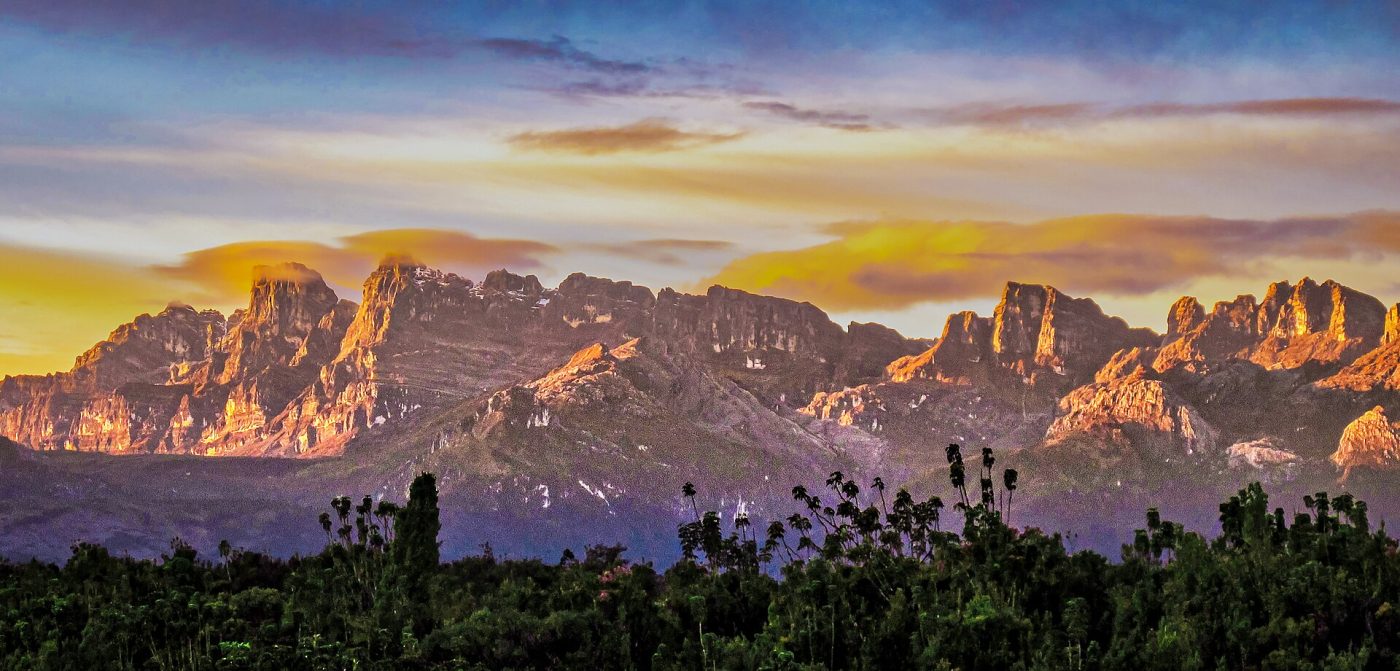
Photo: Ganjarmustika1904, CC BY-SA 4.0
Lorentz, in the Indonesian half of the island of New Guinea, is the largest protected area in South-East Asia and the only one in the world to extend in a single unbroken transect from the snow of equatorial glaciers down to a tropical sea, and it is also among the least accessible of all the places that bear the name of national park. It has no entrance, no visitor facilities, virtually no roads and no ordinary tourism. Foreigners travelling in Indonesian Papua are required to obtain a police travel permit listing the districts they intend to visit, the region has a long-running armed separatist conflict which has worsened in recent years, with attacks and kidnappings in the central highlands, and most governments advise against travel to much of it; anyone contemplating a journey must take expert and current advice. In practice the park has been approached, by the very few who go, in three ways, all organised by specialised expedition companies with local guides and porters.
Mountaineers bound for the Carstensz Pyramid, the highest summit of Oceania and one of the so-called seven summits, fly from the coastal towns of Timika or Nabire, usually by helicopter to a base camp at about 4,300 metres, the trek of five or six days through the jungle from the villages of Sugapa or Ilaga having been largely abandoned for reasons of security; the climb itself is a serious rock route. Trekkers fly from Jayapura to Wamena, in the Baliem valley, just outside the park's north-eastern edge, from which walks of several days lead through the villages of the Dani and Yali peoples and up to Lake Habbema, a high alpine lake beneath Mount Trikora, reachable also by a rough road. And river expeditions from Timika or Agats explore the mangrove coast and the lowland swamps of the Asmat people. Each requires weeks, considerable expense and a tolerance of uncertainty.
The area was first protected by the Dutch colonial government in 1919, was declared a national park by Indonesia in 1997, and was inscribed as a World Heritage Site in 1999; it covers about 23,500 square kilometres, more than half the size of the Netherlands. It is named after Hendrikus Lorentz, a Dutch explorer who in 1909, on his second attempt, after weeks of cutting through the forest, reached the snowline of the central range. New Guinea stands at the collision of the Australian and Pacific plates, and its central cordillera, the Sudirman range, which is still rising, has been thrust up from the sea floor, so that fossils of marine creatures lie at the summits. It culminates in Puncak Jaya, or the Carstensz Pyramid, 4,884 metres, a fin of grey limestone, the highest mountain between the Himalaya and the Andes and the highest on any island on earth. The Dutch navigator Jan Carstensz reported in 1623 that he had seen snow on mountains near the equator, and was ridiculed for it in Europe; the summit was first climbed in 1962 by an expedition led by the Austrian Heinrich Harrer. The glaciers that Carstensz saw are among the very few in the tropics, and they are vanishing: they covered nearly twenty square kilometres in 1850, had shrunk to a fraction of a square kilometre by the 2020s, and are expected to disappear entirely within a few years.
From these heights the park descends through every zone of vegetation, alpine grassland and heath with tree ferns, subalpine forest, mossy cloud forest, montane forest of southern beech and conifers, a vast belt of lowland rainforest, freshwater and peat swamp forest threaded by meandering rivers, and, on the shore of the Arafura Sea, one of the most extensive mangrove forests in the world. Its fauna is that of Australasia, not of Asia: there are no monkeys or cats, their places being taken by marsupials, tree kangaroos, among them the dingiso, a black and white ground-living species discovered only in 1994, cuscuses, possums and quolls, and by two species of egg-laying mammal, the long-beaked echidnas. More than 630 species of birds have been recorded, including cassowaries, more than twenty birds of paradise, bowerbirds, crowned pigeons, the pesquet's parrot and the snow mountain quail, and both the saltwater and the New Guinea crocodile inhabit the rivers. The park is also the home of some eight or nine indigenous peoples, highland farmers of sweet potato and pigs such as the Amungme, the Dani, the Nduga and the Moni, and lowland peoples such as the Asmat, famous for their woodcarving, and the Kamoro, for all of whom the mountains are ancestral and sacred land. Immediately outside its western boundary, and visible from the summit of Carstensz, lies the Grasberg mine, one of the largest gold and copper mines on earth, whose tailings, discharged into the rivers, and whose social consequences have been the subject of controversy for half a century.
The climate is equatorial, wet at all seasons, with some of the heaviest rainfall on earth on the southern slopes, more than five metres a year, and there is no true dry season, though the months from about May to October are generally somewhat less wet in the highlands and are preferred for trekking and climbing. On the high mountain it rains, hails or snows on most afternoons, and climbers start in the small hours to be off the rock by midday;
temperatures at base camp hover near freezing at night. In the lowlands it is hot and very humid, 27 to 33 degrees. Malaria is present throughout the lowlands and up to about 1,600 metres, and prophylaxis is essential; altitude sickness is a serious risk for those flown directly to base camp. Permits, security clearances, flights and helicopters are all liable to be cancelled at short notice. Allow two weeks for the Carstensz Pyramid, ten days for the Baliem valley and Lake Habbema.
No online tour for Lorentz National Park is listed on GetYourGuide; entry, where it is charged, is paid at the gate or through the park authority. Nearby parks with bookable tours are listed on this page.
Allow two weeks for the Carstensz Pyramid, ten days for the Baliem valley and Lake Habbema.
Lorentz National Park covers 23 500 km².
Lorentz National Park was established in 1997.
Lorentz National Park is in Indonesia. The map on this page shows the exact spot.
Indonesia
Merapi is the active volcano above Yogyakarta in central Java, and the way most people visit it is the jeep tour:…
71 tickets & tours
Indonesia
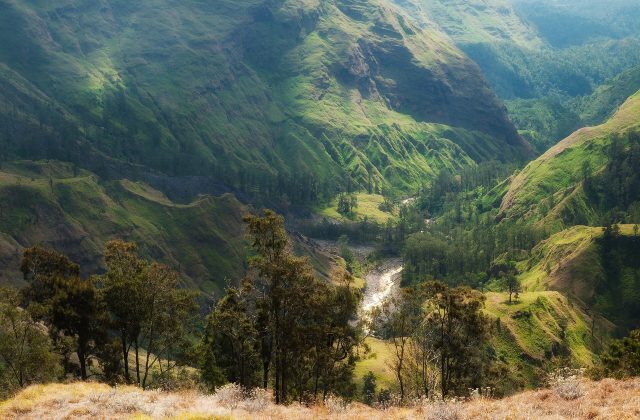
Mount Rinjani is the volcano that fills the north of Lombok, Indonesia's second highest peak, and the park exists…
54 tickets & tours
Indonesia
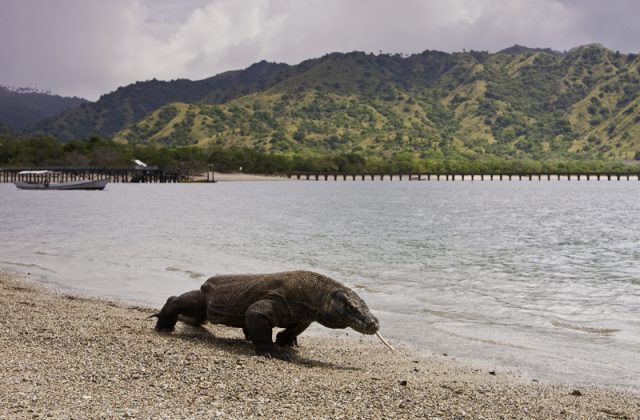
Komodo is the dragon park in the islands between Sumbawa and Flores, reached from Labuan Bajo on Flores, an hour and a…
16 tickets & tours
Indonesia
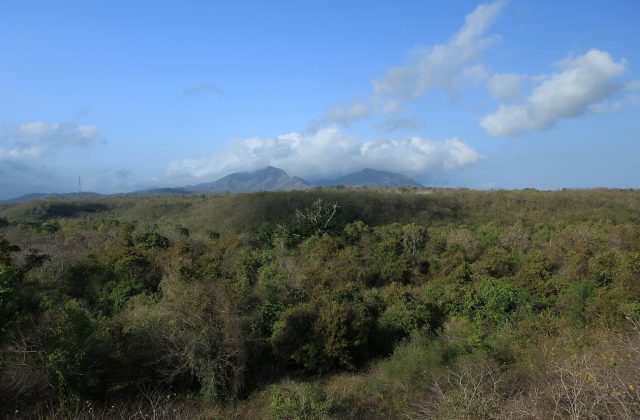
West Bali is the wild north-western tip of the island, four hours from the southern resorts and half an hour from the…
15 tickets & tours
Indonesia
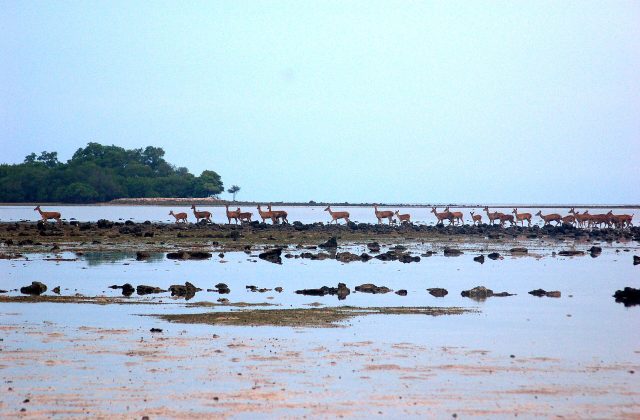
Baluran is the dry savanna at the north-eastern corner of Java, marketed as the Africa of Java, an hour's drive…
7 tickets & tours
Indonesia
Bromo is the most famous volcano in Indonesia, a smoking crater standing in a vast plain of grey sand inside an older…
7 tickets & tours