Arrecifes de Cozumel National Park
Mexico
The reefs of Cozumel, off the Caribbean coast of the Yucatan peninsula of Mexico, are among the most celebrated diving…
75 tickets & tours
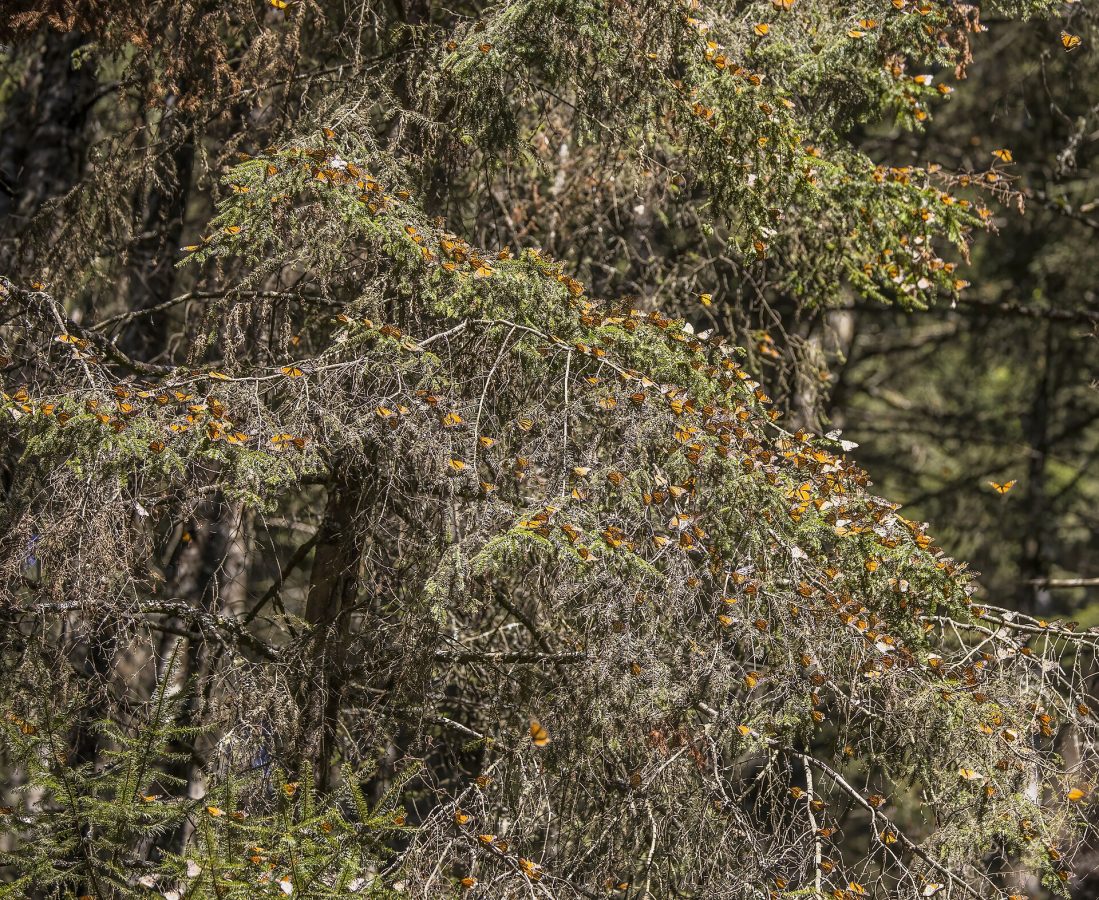
Photo: Charles J. Sharp, CC BY-SA 4.0
The monarch butterflies of eastern North America spend the winter in a few patches of high fir forest on the border of Michoacán and the State of Mexico, a hundred kilometres west of Mexico City, and visiting them means choosing one of the sanctuaries that the reserve opens to the public each season. El Rosario, above the mining town of Angangueo, is the largest colony and the busiest, with a long stairway path; Sierra Chincua, nearby, is quieter and gentler; both are in Michoacán, three to three and a half hours from the capital and two and a half from Morelia. In the State of Mexico, Piedra Herrada, half an hour from the lake resort of Valle de Bravo, is the nearest to Mexico City, about two hours, and Cerro Pelón, above the village of Macheros, is the wildest and steepest, reached on horseback with guides from a family guesthouse.
The day tours from Mexico City, leaving at six or seven, go to Piedra Herrada with lunch in Valle de Bravo, or make the longer run to El Rosario or Chincua; tours from Morelia serve the Michoacán sanctuaries, and a few week-long tours are devoted to the butterflies alone. At every sanctuary the entrance fee goes to the ejido, the farming community that owns the forest, a local guide accompanies each group, and horses are for hire for the climb, which, at 3,000 metres and more, is harder on the lungs than the legs. Near the colony the rules are silence, no flash, no touching, a marked distance and a limited stay. Staying a night in Angangueo, Zitácuaro or Macheros allows a second visit, in better weather if need be.
Live dates and prices from GetYourGuide. Free cancellation on most tickets.
The reserve was decreed in its present form in 2000, enlarging protections of 1980 and 1986, covers 562 square kilometres with a core of 135, and was inscribed as a World Heritage Site in 2008. Each autumn the last generation of monarchs born that summer across the eastern United States and southern Canada, butterflies weighing half a gram that have never made the journey, fly up to 4,500 kilometres south-west to the same dozen mountaintops of the Trans-Mexican volcanic belt, arriving around the Day of the Dead at the start of November, which is why people here have long taken them for the returning souls of the departed. They settle in stands of oyamel, the sacred fir, between about 2,900 and 3,300 metres, where the canopy acts as a blanket and an umbrella, cold enough to keep them torpid and sparing of their fat, not so cold as to kill them, and cluster by the tens of thousands on each tree until trunks and branches are furred orange-brown and boughs bend and sometimes break under the weight.
On a cold, overcast day they hang motionless, wings closed, like dead leaves. When the sun reaches them and the air warms past about thirteen degrees, they take off in a rush, fill the clearings, drink at streams and wet meadows, and the sound of millions of wings is like light rain. In March they mate and fly north to Texas to lay eggs on milkweed and die; it takes three or four short-lived generations to reach Canada again. Scientists learned where the monarchs went only in January 1975, when Ken Brugger and Catalina Aguado, working for the Canadian zoologist Fred Urquhart, found the colonies that local people had always known. The population is measured by the hectares of forest occupied, which have fallen from eighteen in the 1990s to one to six in recent winters, under pressure from illegal logging here and herbicides and lost milkweed in the north.
The sanctuaries are open daily from about 9 am to 5 pm, from mid-November to late March only. The colonies are densest and most tightly clustered in December and January; the best flying displays come from late January to early March, as the days warm, and especially on sunny days between about eleven and three; by the third week of March the butterflies are streaming north.
Weekday visits are calmer than weekends, when El Rosario fills with Mexican families. It is cold in the morning at 3,000 metres, often near freezing, and warm by noon, so dress in layers, and allow for the altitude. Allow a full day from Mexico City or Morelia. Valle de Bravo, Angangueo, the old mining town of Tlalpujahua with its Christmas-ornament workshops, and Morelia are the places to stay.
Yes. GetYourGuide lists 6 tickets and tours for Monarch Butterfly Biosphere Reserve, with live dates and prices and free cancellation on most of them.
At every sanctuary the entrance fee goes to the ejido, the farming community that owns the forest, a local guide accompanies each group, and horses are for hire for the climb, which, at 3,000 metres and more, is harder on the lungs than the legs.
The sanctuaries are open daily from about 9 am to 5 pm, from mid-November to late March only.
Allow a full day from Mexico City or Morelia.
Monarch Butterfly Biosphere Reserve covers 562 km².
Monarch Butterfly Biosphere Reserve was established in 2000.
Monarch Butterfly Biosphere Reserve is in Mexico. The map on this page shows the exact spot.
Mexico
The reefs of Cozumel, off the Caribbean coast of the Yucatan peninsula of Mexico, are among the most celebrated diving…
75 tickets & tours
Mexico
Puerto Morelos is the fishing village between Cancún and Playa del Carmen whose reef, part of the Mesoamerican barrier…
45 tickets & tours
Mexico
Ría Lagartos is the flamingo lagoon on the northern tip of Yucatán, two hours from Valladolid and three from Cancún or…
28 tickets & tours
Mexico
Los Arcos are the granite islets with the arches off Mismaloya, twelve kilometres south of Puerto Vallarta, and the…
16 tickets & tours
Mexico
Cabo Pulmo is a village of a few hundred people on the East Cape of Baja California Sur, on the Gulf of California,…
8 tickets & tours
Mexico
Iztaccihuatl and Popocatepetl, the second and third highest mountains of Mexico, stand side by side on the eastern rim…
6 tickets & tours


