
Wadi Al-Hitan (Whale Valley)
Egypt
Wadi Al-Hitan, the valley of the whales, is a fossil site in the Western Desert of Egypt, in the governorate of Fayoum,…
2 tickets & tours
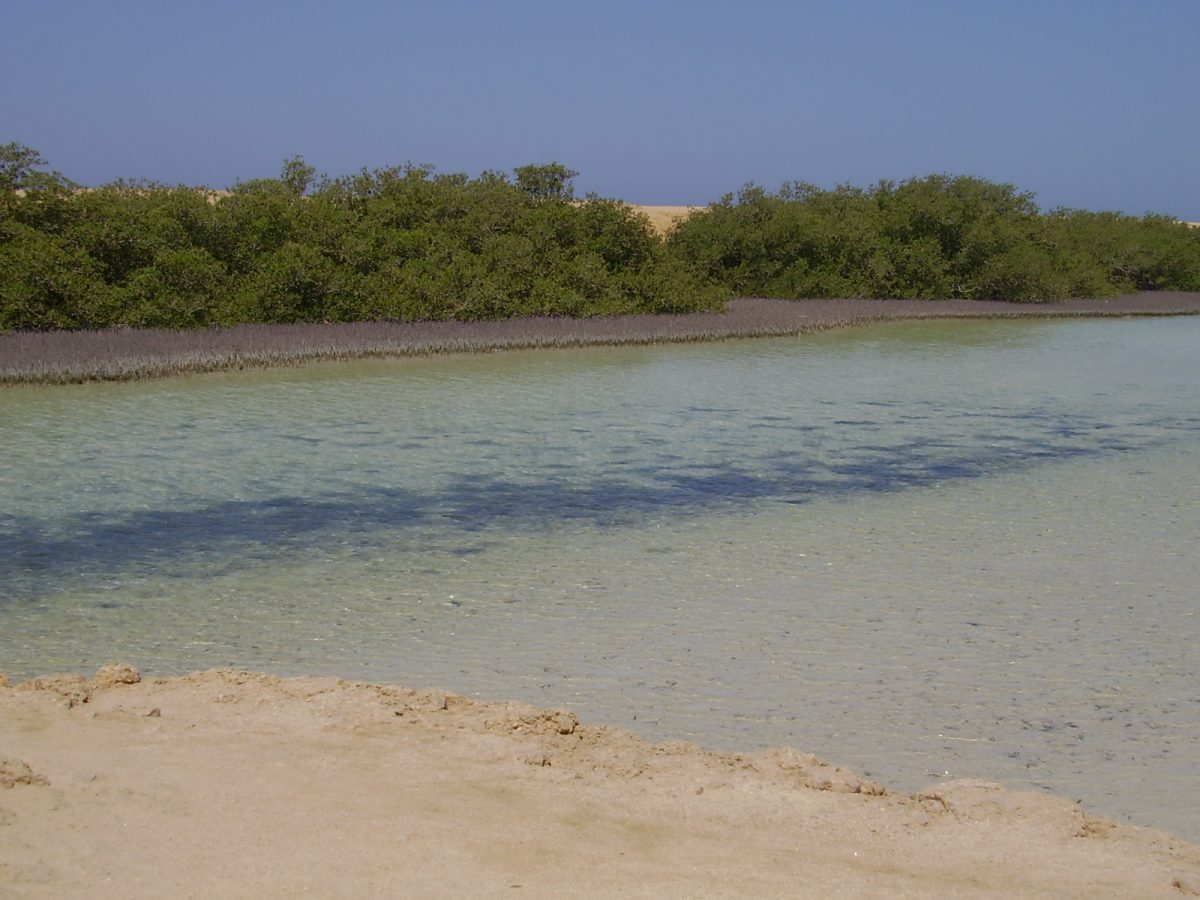
Photo: CC BY-SA 3.0
Ras Muhammad is the headland at the very southern tip of the Sinai peninsula, in Egypt, where the gulfs of Suez and Aqaba meet the Red Sea, and the coral reefs that surround it are generally counted among the finest in the world; it lies only about twenty kilometres, half an hour by road, south-west of the resort city of Sharm El Sheikh, whose airport receives flights from all over Europe, and a trip to it is the standard excursion of every holiday there. It can be made in two ways. The commoner is by boat: large day boats leave the marinas of Sharm each morning, carrying snorkellers and divers together, sail for an hour or more to the park, moor at two or three sites during the day, and return in the late afternoon, with lunch on board, and the dive centres run the same trip for certified divers, who come here above all for the two outer reefs.
The other is by land, by minibus, jeep or hired car, through the park gate, where an entrance fee is charged in foreign currency and passports must be shown, since a full Egyptian visa, and not merely the free Sinai stamp given on arrival at Sharm, is officially required to enter the park; a network of tracks, marked by coloured arrows, leads across the desert to a series of beaches and bays from which one can wade into the water and snorkel along the edge of the reef, the favourites being the Main Beach, Aqaba Beach and Yolanda Bay, and to the other sights of the peninsula, a viewpoint on the cliff top, the mangrove channel, a salt lake popularly called the magic lake, and a pair of fissures opened by earthquakes. The land tours, usually of half a day or a day, often cheaper than the boats, suit families and non-swimmers, and camping is allowed at designated places with a permit. The visitor centre, near the entrance, has a modest exhibition.
Live dates and prices from GetYourGuide. Free cancellation on most tickets.
Ras Muhammad was declared in 1983, a year after Israel returned Sinai to Egypt, as the first national park in the country, largely on the initiative of Egyptian and foreign marine biologists alarmed by the prospect of uncontrolled development and fishing, and it has been enlarged to about 480 square kilometres, of which a little over a quarter is land; it includes the islands of Tiran and Sanafir, at the mouth of the gulf of Aqaba, whose sovereignty Egypt transferred to Saudi Arabia in 2017. The headland, whose name means the cape of Muhammad, is a raised fossil coral reef, a low plateau of dazzling pale limestone ending in cliffs some sixty metres high, which fall directly into very deep water: the sea floor plunges within a short distance of the shore to seven and eight hundred metres and beyond. The Red Sea, enclosed, warm, exceptionally salty and with very clear water, since no river enters it and almost no rain falls, has developed over millions of years a reef fauna of great richness, with many species found nowhere else, and at Ras Muhammad the meeting of the waters of the two gulfs creates strong currents, rich in plankton, that bring together the life of the reef and the life of the open ocean. More than two hundred species of hard and soft corals and over a thousand species of fish have been recorded here.
The most celebrated dive sites are two pinnacles just off the tip of the cape, Shark Reef and Yolanda Reef, joined by a saddle, which rise sheer from the depths: divers drift along a vertical wall covered with soft corals in red, pink and purple and with huge sea fans, through schools of thousands of snappers, batfish, unicornfish and barracuda, which gather here to spawn in summer, watched by grey reef sharks, with Napoleon wrasse, giant moray eels, turtles and jacks, and end among the scattered cargo of the Yolanda, a Cypriot freighter that ran on to the reef in 1980, consisting of lavatory bowls, bathtubs and rolls of wallpaper, the ship herself having since slid into the abyss. A few hours' sailing to the north-west, in the strait of Gubal, lies the most famous wreck in the Red Sea, the British armed merchantman Thistlegorm, sunk by German bombers in October 1941 with a cargo of lorries, motorcycles, rifles, aircraft parts and two locomotives, which Jacques Cousteau found in the 1950s. On land the park is a desert of gravel plains, dunes and wadis, where foxes, gazelles and ibex are occasionally seen, and its shore has a stand of grey mangroves, among the most northerly in the world, growing along a tidal channel, which filters salt through its leaves. In late summer, white storks in tens of thousands, on their way from Europe to Africa, rest on the headland, which lies on one of the great migration routes of soaring birds, together with raptors, herons and ospreys, which nest here. The inhabitants of the surrounding desert are Bedouin of the Muzeina tribe.
The park is open daily from sunrise to sunset. It can be visited throughout the year, the water temperature ranging from about 21 degrees in February to 28 or 29 in August, and the visibility is good at all seasons, often thirty metres and more. Spring and autumn, from March to May and from late September to November, offer the most comfortable air temperatures, 25 to 32 degrees; the summer, from June to August, is ferociously hot on land, above 40 degrees, but is the best time under water, when the great shoals of fish assemble at Shark Reef and the sea is calm and warm;
in winter the air is pleasant, 20 to 23 degrees, the water feels cool and a wetsuit is needed, and a northerly wind can make the crossing rough. Currents at the outer reefs can be strong, and snorkellers should stay with their guide. Wear a shirt in the water against the sun, use sunscreen that does not harm coral, never touch or stand on the reef, and do not feed the fish. Bring your passport, water and shade. Allow a full day. Sharm El Sheikh is half an hour away, the monastery of St Catherine and Mount Sinai three hours, and Dahab an hour and a half.
Yes. GetYourGuide lists 20 tickets and tours for Ras Muhammad National Park, with live dates and prices and free cancellation on most of them.
The park is open daily from sunrise to sunset.
Ras Muhammad National Park covers 480 km².
Ras Muhammad National Park was established in 1983.
Ras Muhammad National Park is in Egypt. The map on this page shows the exact spot.
Egypt
Wadi Al-Hitan, the valley of the whales, is a fossil site in the Western Desert of Egypt, in the governorate of Fayoum,…
2 tickets & tours
Egypt
Wadi El Gemal, the valley of the camels, is a large protected area on the Red Sea coast of southern Egypt, beginning…
1 ticket or tour
