Ras Muhammad National Park
Egypt
Ras Muhammad is the headland at the very southern tip of the Sinai peninsula, in Egypt, where the gulfs of Suez and…
20 tickets & tours
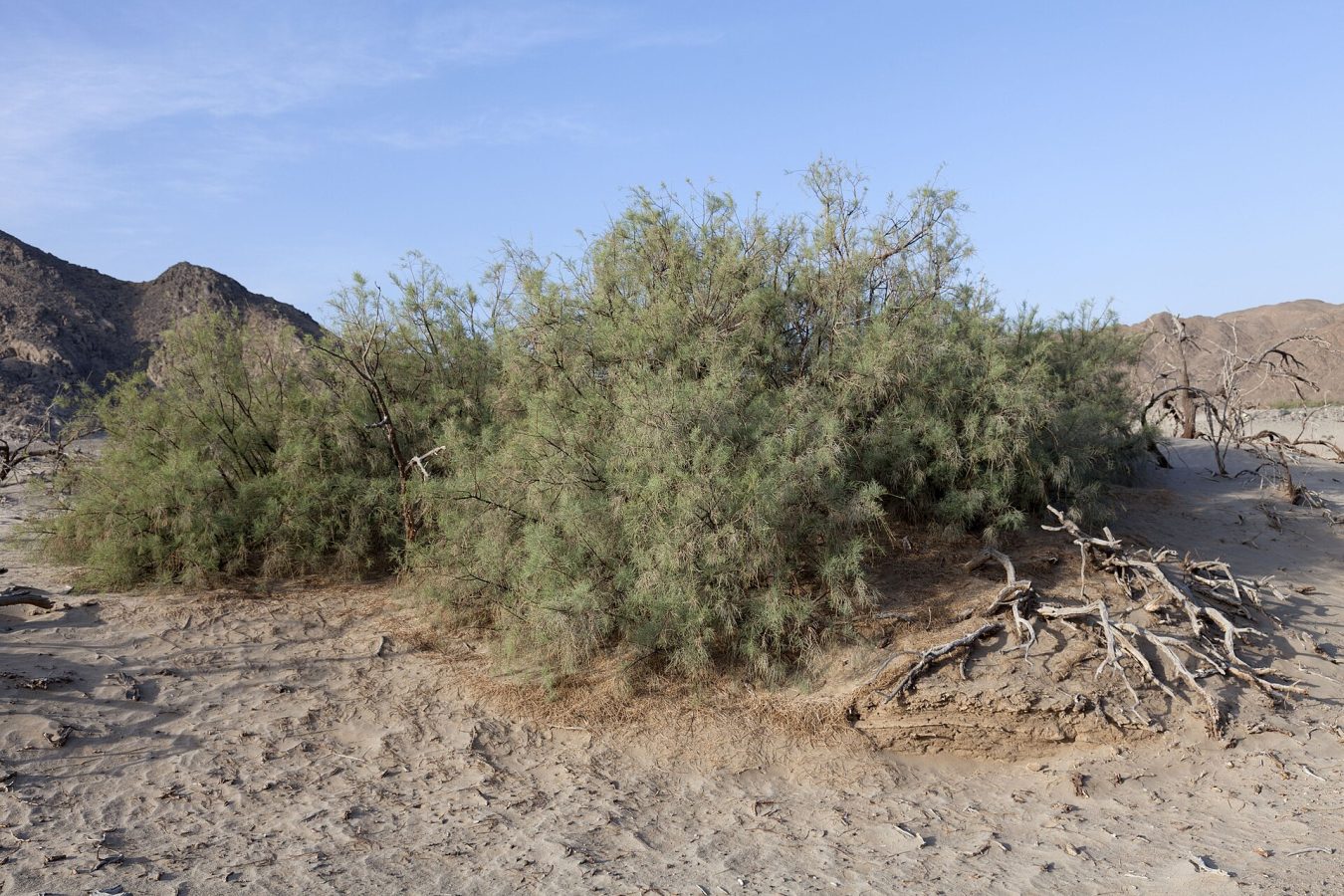
Photo: Roland Unger, CC BY-SA 4.0
Wadi El Gemal, the valley of the camels, is a large protected area on the Red Sea coast of southern Egypt, beginning about forty-five kilometres south of the resort town of Marsa Alam, whose airport, a further sixty kilometres to the north, receives charter flights from Europe, and it combines a stretch of mountainous desert, the coast with its mangroves and beaches, and the coral reefs and islands offshore. The coastal highway to the Sudanese border runs through it, and a small entrance fee is collected at a gate or by the operators. Visitors come almost entirely on excursions from the hotels of the Marsa Alam coast, of which there are two kinds. The desert tours, by four-wheel drive, generally in the afternoon, turn inland up the broad, sandy bed of the main wadi, among acacia trees and granite hills, stop to look for gazelles and at the remains of Roman buildings, visit a family of the Ababda people to drink their coffee, and end with a dinner cooked over the fire and a look at the stars before the drive back;
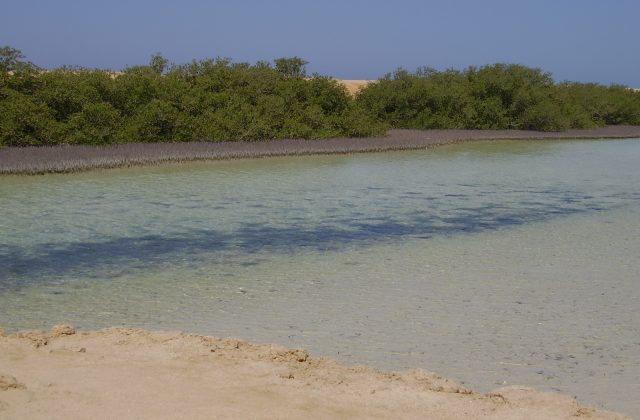
longer expeditions, of a full day or with a night's camping, reach the ancient emerald-mining settlements deep in the mountains, which are the most interesting thing in the park but lie some forty kilometres from the road over rough tracks. The sea tours go by boat from the small harbour of Hamata, in the south of the park, to the Hamata or Qulaan islands, a group of low sand cays with turquoise shallows, for snorkelling over the reefs and lunch on board, or by land to the beach of Sharm El Luli, a shallow, sheltered bay of white sand and brilliantly clear water with coral close to the shore, often cited among the finest beaches in Egypt, which has no shade, shops or facilities of any kind, and to the mangrove lagoon of Qulaan.
Live dates and prices from GetYourGuide. Free cancellation on most tickets.
The national park was declared in 2003 and covers about 7,450 square kilometres, of which some 4,770 are land and the rest sea, extending along 120 kilometres of coast and inland to the watershed of the Red Sea mountains. The wadi from which it takes its name is one of the largest dry valleys of the Eastern Desert, the third largest draining to the Red Sea, which collects the rare rains of a vast catchment among peaks of granite and metamorphic rock that reach 1,977 metres at Gebel Hamata, and carries them, as flash floods once in several years and as groundwater at other times, to a delta on the coast, where there is a grove of doum and date palms, tamarisk, reeds and mangroves. The groundwater supports, along the valley floor, an open woodland of acacias, the desert date and the toothbrush tree, whose twigs have been used for cleaning the teeth since antiquity, a vegetation far richer than is usual in this desert, on which depend the dorcas gazelle, which is often seen, the Nubian ibex, on the crags, the rock hyrax, the wild ass in the remotest part, foxes and sand cats. In the mountains lie the only emerald mines known to the ancient world. At Sikait, Nugrus, Umm Kabu and Gebel Zabara, the mons smaragdus of the Romans, beryl was mined from the time of the Ptolemies, intensively under the Romans, and on until the Middle Ages, when the better stones of India and then of Colombia put an end to it;
the miners' settlements survive astonishingly well, whole villages of dry-stone houses standing to the height of the lintels on the slopes, with administrative buildings, and at Sikait two small temples cut into the rock, with columns and Greek inscriptions. Guides attach the name of Cleopatra to the mines, as to everything. The people of the park are the Ababda, a Beja tribe of camel and goat herders, who have lived in this desert for thousands of years, speak Arabic now, and practise a coffee ceremony of their own, roasting the green beans over the embers, pounding them with ginger, and brewing the result in a small round clay flask called a jabana, from which it is poured into tiny cups at least three times; a number of them work as rangers, guides and drivers. The coast has the most extensive mangroves of the Egyptian Red Sea, beds of seagrass grazed by dugongs and green turtles, which nest on the islands and beaches, and fringing reefs with some 450 species of coral and more than a thousand of fish. Wadi El Gemal island, off the delta, holds one of the largest known breeding colonies of the sooty falcon, a slender grey falcon that nests in late summer in order to feed its young on migrating songbirds, together with ospreys, white-eyed gulls, spoonbills, reef herons and Caspian terns.
The park can be visited all year, since it almost never rains, but the seasons differ greatly in comfort. From October to April the days are sunny and warm, 24 to 30 degrees, the nights in the desert cool to cold, and this is the time for the desert tours and for the long trips to the emerald mines; the sea remains at 22 to 25 degrees in winter, and a north wind can make boat trips choppy from December to February.
From May to September the heat is extreme, 38 to 45 degrees inland, and desert trips are confined to the late afternoon and evening, though the sea, at 28 to 30 degrees, is at its calmest and clearest; turtles nest in summer, and the sooty falcons breed from July to October, when landing on their island is prohibited. Bring a hat, sunscreen safe for reefs, water shoes, a mask and snorkel, a warm layer for desert evenings in winter, and take away all rubbish. Allow a day for the desert and another for the sea. Marsa Alam is forty-five minutes north, and the dolphin reef of Sataya lies off Hamata.
Yes. GetYourGuide lists one ticket or tour for Wadi El Gemal National Park, with live dates and prices and free cancellation on most of them.
The coastal highway to the Sudanese border runs through it, and a small entrance fee is collected at a gate or by the operators.
Allow a day for the desert and another for the sea.
Wadi El Gemal National Park covers 7 450 km².
Wadi El Gemal National Park was established in 2003.
Wadi El Gemal National Park is in Egypt. The map on this page shows the exact spot.
Egypt
Ras Muhammad is the headland at the very southern tip of the Sinai peninsula, in Egypt, where the gulfs of Suez and…
20 tickets & tours
Egypt
Wadi Al-Hitan, the valley of the whales, is a fossil site in the Western Desert of Egypt, in the governorate of Fayoum,…
2 tickets & tours
