Nambung National Park
Western Australia, Australia
Nambung is a coastal park on the Indian Ocean about two hundred kilometres north of Perth, the capital of Western…
19 tickets & tours
Forest Park · Western Australia · Australia
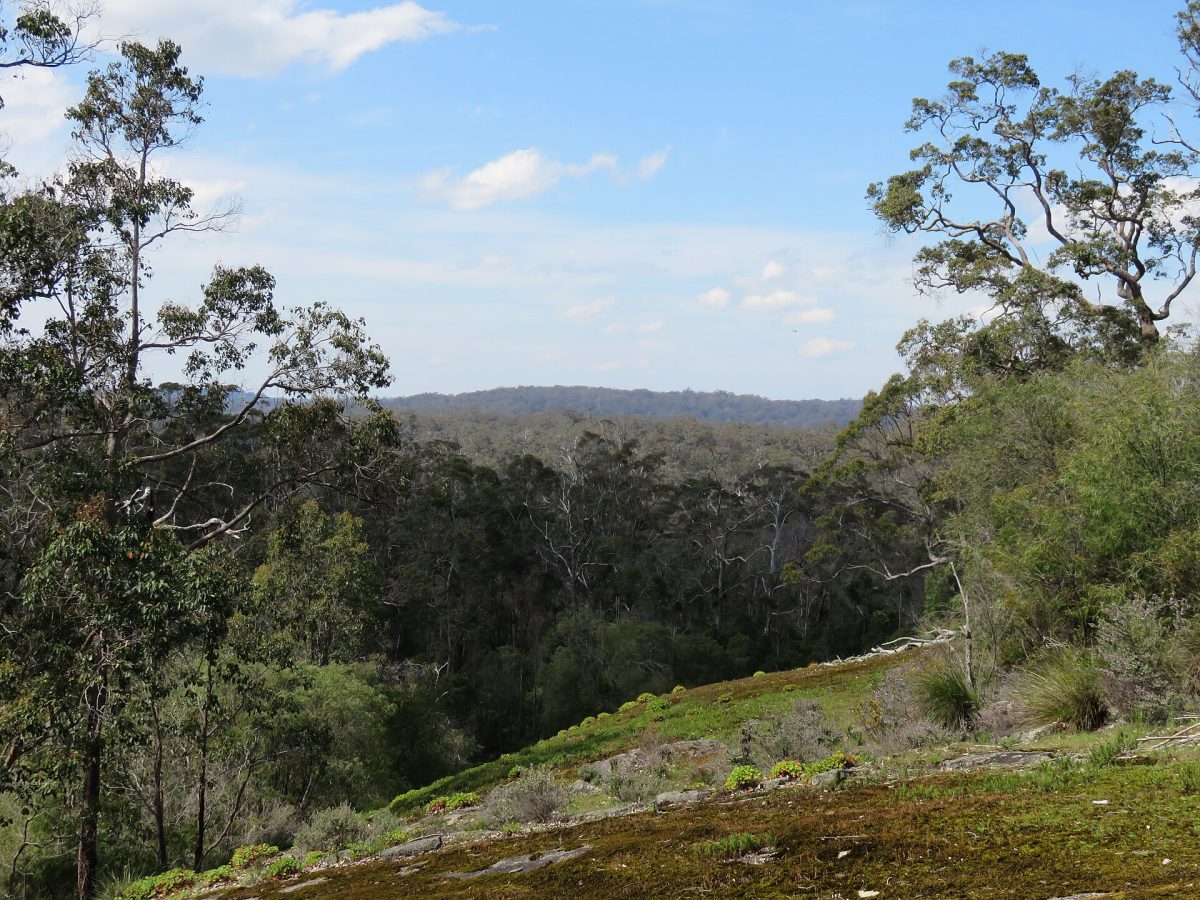
Photo: Aussie Oc at English Wikipedia, CC BY-SA 3.0
Shannon National Park lies in the far south-west of Western Australia, in the country of the giant karri trees, about 350 kilometres, four hours by road, south of Perth, and fifty-five kilometres south-east of the timber town of Manjimup, midway between the forest village of Pemberton and the coastal town of Walpole, and it is a place for those who like tall trees, quiet and a night in the bush, without any of the engineered attractions of its better-known neighbours. The South Western Highway runs straight through it, so that everyone driving between Pemberton and Walpole passes through the park, often without noticing. There is no public transport, and entry is free, only camping being charged for. The centre of the park is the site of a former sawmilling town, just off the highway, which has been turned into a large, well-equipped campground among the trees, with caravan and tent sites, hot showers heated by wood-fired boilers, camp kitchens, two simple huts for hire, and a day-use area with picnic shelters and barbecues beside the old town dam;
an information shelter tells the story of the town. From here start the walks: the Shannon Dam trail, an easy loop of about three and a half kilometres to the dam on the river, part of it suitable for wheelchairs; the Rocks trail, five and a half kilometres, climbing through the karri to granite outcrops and a lookout above the forest; and a shorter walk to Mokare's Rock, with a boardwalk over the fragile mosses. The chief attraction for motorists is the Great Forest Trees Drive, a one-way circuit of forty-eight kilometres on good gravel roads, signposted from the highway, with a series of stopping places, short walks and a local radio commentary broadcast at marked points, which explains the forest as one goes. The long-distance Bibbulmun walking track crosses the park. Canoeing and fishing on the river are possible in winter and spring.
Live prices from GetYourGuide for tours whose route includes this park. Free cancellation on most of them.
The national park was declared in December 1988, covers 526 square kilometres, and takes in almost the entire catchment of the Shannon river, from its source to the broad, shallow Broke Inlet on the Southern Ocean, which makes it one of the few river basins in the south-west of Australia to be protected as a whole; in 2004 it became part of the greater Walpole Wilderness, a chain of parks and reserves covering more than three thousand square kilometres. The karri is one of the great trees of the world, a eucalypt found only in this wet corner of Western Australia, where more than a metre of rain falls each year, which grows to ninety metres, among the tallest flowering plants on earth, with a straight, smooth, branchless trunk that sheds its bark each autumn in long strips, changing from salmon pink and orange to grey and white. It grows here in pure stands on the deep red loams, with marri and jarrah on the poorer soils, and beneath it a dense understorey of karri wattle, karri hazel, tree hovea, which turns the forest floor purple in spring, and the creeper called coral vine. The Shannon basin was one of the last areas of the karri forest to be opened to logging, because it was so remote. During the Second World War, when timber was desperately short, the state sawmills pushed a road and then a railway into it, and in the late 1940s built a mill and a complete town, Shannon, with some ninety houses, a hall, a school, a church, a store, a post office and a nursing station, to house the workers and their families, supplied with water from a dam on the river;
at its height it was one of the largest mills in the state. It closed in 1968, the houses were sold and carted away to other towns, and the forest has grown back over the streets, of which the campground occupies the site. From the 1970s the future of the basin became one of the fiercest conservation disputes in Western Australia, conservationists arguing that one whole karri river system should be kept unlogged, and in 1983 a newly elected state government halted logging in it, the park following five years later; large parts of it are therefore regrowth of various ages, beside patches of old-growth forest, with trees several centuries old. The forest shelters the quokka, the small wallaby better known from Rottnest island, which survives on the mainland in the dense swamp thickets here, the western grey kangaroo, the brush wallaby, the chuditch, a spotted marsupial carnivore, the western ringtail possum, the mardo and the honey possum, and its birds include the red-tailed black cockatoo, Baudin's cockatoo, the purple-crowned lorikeet, the white-breasted robin, the red-winged fairy-wren and the splendid fairy-wren. Towards the coast the forest gives way to sedge flats, peat swamps, heath and the granite domes of the Broke Inlet country, reached only by four-wheel-drive tracks.
The park is open all year. Spring, from September to November, is the best season, when the understorey is in flower, the wattles gold and the hoveas purple, the birds are nesting and the days are mild, 17 to 22 degrees; the wild flowers of the heath nearer the coast are at their height in October. Summer, from December to March, is warm and dry, 25 to 30 degrees, pleasant under the trees, the busiest time at the campground, especially at Christmas and Easter, and the season of bushfire risk, when campfires are banned and the park may be closed on dangerous days.
Autumn is settled and still, with the karri shedding its bark. Winter, from June to August, is cool, 8 to 16 degrees, and very wet, the forest dripping and misty, fungi everywhere, the river running strongly and some gravel roads closed or slippery. March flies and mosquitoes can be troublesome in summer, and ticks are present. Fuel and supplies should be bought in Manjimup, Pemberton or Walpole. Allow half a day, or a night. The Gloucester Tree at Pemberton is forty-five minutes away, and the Valley of the Giants treetop walk near Walpole an hour.
Yes. GetYourGuide sells tickets and guided tours whose route includes Shannon National Park; live prices are shown on this page.
There is no public transport, and entry is free, only camping being charged for.
The park is open all year.
Allow half a day, or a night.
Spring, from September to November, is the best season, when the understorey is in flower, the wattles gold and the hoveas purple, the birds are nesting and the days are mild, 17 to 22 degrees; the wild flowers of the heath nearer the coast are at their height in October.
Shannon National Park covers 526 km².
Shannon National Park was established in 1988.
Shannon National Park is in Western Australia, Australia. The map on this page shows the exact spot.
Western Australia, Australia
Nambung is a coastal park on the Indian Ocean about two hundred kilometres north of Perth, the capital of Western…
19 tickets & tours
Western Australia, Australia
Cape Range is the limestone range and the beaches of the North West Cape at Exmouth in Western Australia, with the…
4 tickets & tours
Western Australia, Australia
Francois Peron National Park occupies the northern end of the Peron peninsula, which juts into the middle of Shark Bay,…
1 ticket or tour
Western Australia, Australia
Cape Le Grand is a park of granite headlands and beaches of blinding whiteness on the remote south coast of Western…
No online ticket
Western Australia, Australia
Purnululu, in the East Kimberley region of the far north of Western Australia, contains the Bungle Bungle range, a maze…
No online ticket
Western Australia, Australia
Torndirrup is a park of granite sea cliffs, wind-swept heath and white beaches on the peninsula that shelters the…
No online ticket