Nambung National Park
Western Australia, Australia
Nambung is a coastal park on the Indian Ocean about two hundred kilometres north of Perth, the capital of Western…
19 tickets & tours
Marine Park · Western Australia · Australia
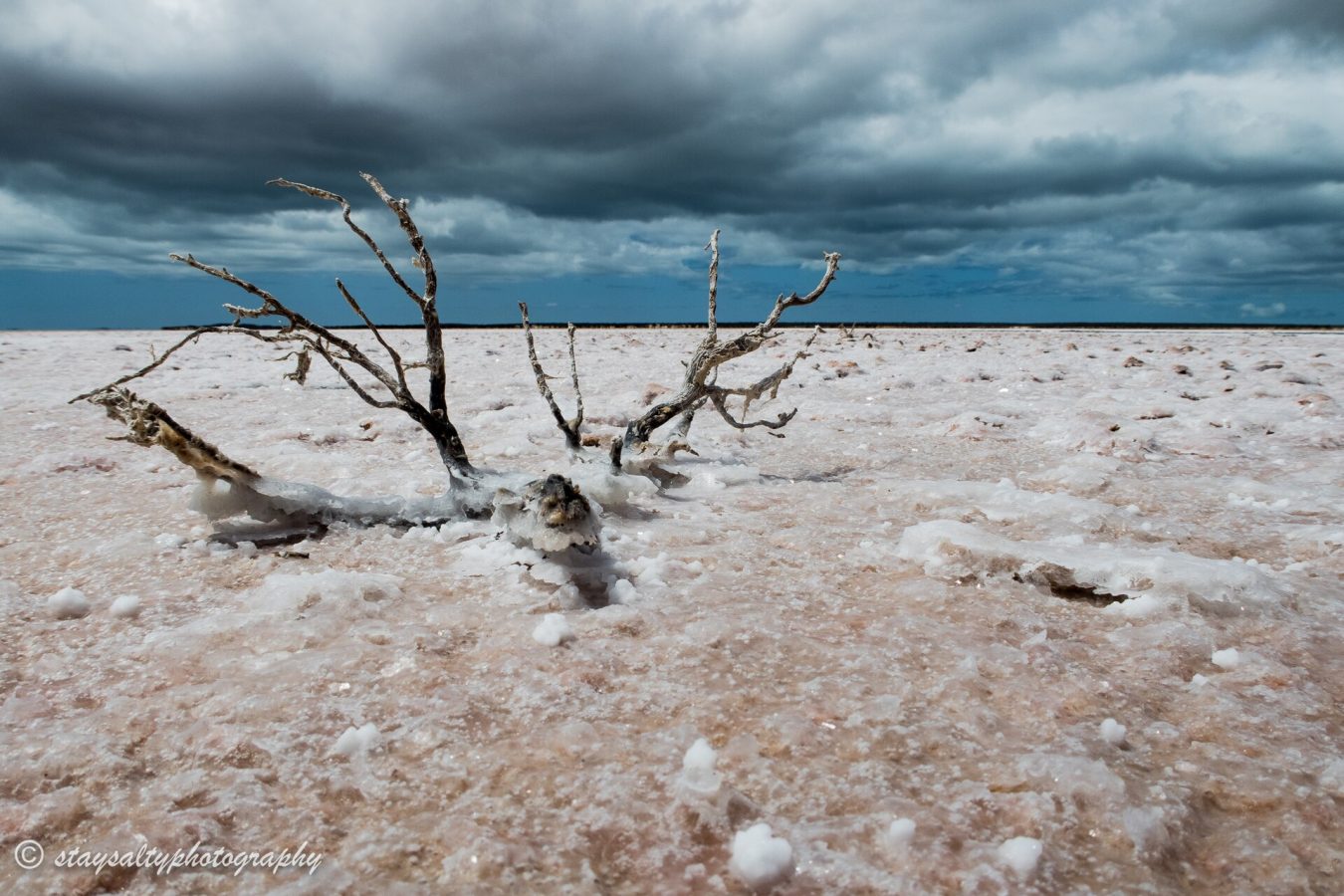
Photo: Mason Sullivan, CC BY-SA 4.0
Francois Peron National Park occupies the northern end of the Peron peninsula, which juts into the middle of Shark Bay, on the coast of Western Australia some 830 kilometres, nine to ten hours by road, north of Perth; the little town of Denham, the most westerly in Australia, lies just outside its southern boundary, and the famous dolphin beach of Monkey Mia is twenty-five minutes away. There are flights to Shark Bay's airstrip from Perth. The park divides sharply into what can be reached in an ordinary car and what cannot. A two-wheel-drive vehicle can follow the unsealed road for six kilometres from the Monkey Mia road to the Peron Heritage Precinct, the homestead of the former sheep station, where there are a small interpretive centre, the old shearing shed and shearers' quarters, a self-guided walk, picnic lawns and an artesian hot tub, fed by bore water at about forty degrees, in which to soak under the stars.
Beyond the homestead the tracks are of deep, soft red sand, and only high-clearance four-wheel drives are permitted; there is a station at which tyres must be let down on the way in and pumped up on the way out, and drivers without experience of sand regularly have to be dug out. For most visitors the sensible course is one of the guided four-wheel-drive day tours from Denham or Monkey Mia, which cover the fifty kilometres to Cape Peron and back in eight hours or so, with stops at Big Lagoon, at the cliff-top lookouts of Skipjack Point, at the cape itself, with a walk along the Wanamalu trail, a kilometre and a half along the cliff edge between the two, and at a beach for a swim and lunch; some are led by Malgana guides, the traditional owners, and kayaking and camping tours are also offered. A per-vehicle entry fee is payable. Simple bush campsites lie at Big Lagoon, Gregories, Bottle Bay and Herald Bight.
Live dates and prices from GetYourGuide. Free cancellation on most tickets.
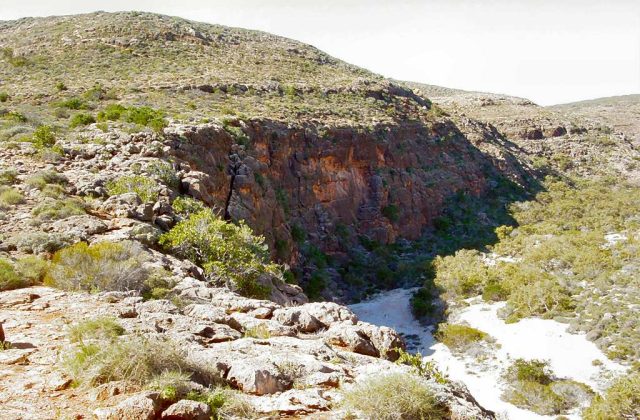
The park was created in 1993 and covers 52,500 hectares, the whole northern part of the peninsula, which had been run since the 1880s as a sheep station and which the state government bought in 1990; it lies within the Shark Bay World Heritage area, inscribed in 1991 as one of the very few places on earth to satisfy all four natural criteria. It is named after Francois Peron, the young zoologist of Nicolas Baudin's French expedition, which explored this coast in 1801 and 1803, and who collected and described here a great number of animals new to science. To the Malgana people the bay is Gutharraguda, two waters. What visitors remember is colour: the peninsula is a low plateau of red Peron sandstone and rust-red dunes covered with grey-green acacia scrub, and at the coast the red cliffs fall directly on to beaches of pure white sand, beyond which lies shallow water of turquoise shading to deep blue, a meeting of three vivid bands that is at its most startling at Cape Peron, where two currents visibly collide, and at Bottle Bay. Scattered through the interior are birridas, circular claypans of gypsum that were salt lakes when the sea stood higher, some of which, breached by the sea, have become lagoons, like Big Lagoon, a system of sheltered, tidal, brilliantly coloured inlets that serves as a nursery for fish;
their crusts look solid and are not, and vehicles that drive on to them sink to the axles. From the two timber lookouts at Skipjack Point, on the cliff edge, one looks straight down into clear water in which, with patience, one may watch manta rays, eagle rays, several kinds of shark, loggerhead and green turtles, dugongs, which graze the bay's vast seagrass meadows in a population of some ten thousand, bottlenose dolphins, shoals of fish and cormorants diving among them. In the 1990s the park became the scene of Project Eden, one of the most ambitious conservation experiments in Australia: an electrified fence three and a half kilometres long was built across the narrow neck of the peninsula, with a recorded barking dog at the road grid, and foxes, feral cats, goats and sheep were poisoned, trapped and mustered out, in order to reintroduce native mammals that had vanished from the mainland, the bilby, the woylie, the banded hare-wallaby and the malleefowl among them. Foxes were eliminated, cats could not be, and the results were mixed, the bilby and the malleefowl establishing themselves and others failing, but the lessons shaped later projects across the country. Thorny devils, a small lizard covered in spikes, bobtails, monitors, emus, echidnas, euros and wedge-tailed eagles are commonly seen, and the wildflowers after winter rain are remarkable.
The park is open all year. The best period is from April to October, the southern autumn, winter and spring, with sunny days of 22 to 28 degrees, cool nights, calmer winds in autumn and winter, and wildflowers from July to September; the school holidays in July and at Easter are busy, and tours and campsites should be booked. From November to March it is very hot, often above 40 degrees, with strong southerly winds, swarms of bush flies and the risk of cyclones from the north, and the sand is at its softest.
After heavy rain the tracks are closed. Independent drivers must carry a tyre gauge and compressor, recovery gear, ample water and fuel, and tell someone their plans, since there is no telephone signal; there is no drinking water in the park. Wear a fly net in summer. Allow a full day. Denham is ten minutes from the homestead turning, Monkey Mia twenty-five, Shell Beach and the Hamelin Pool stromatolites forty-five minutes to an hour and a half south.
Yes. GetYourGuide lists one ticket or tour for Francois Peron National Park, with live dates and prices and free cancellation on most of them.
A per-vehicle entry fee is payable.
The park is open all year.
The best period is from April to October, the southern autumn, winter and spring, with sunny days of 22 to 28 degrees, cool nights, calmer winds in autumn and winter, and wildflowers from July to September; the school holidays in July and at Easter are busy, and tours and campsites should be booked.
Francois Peron National Park covers 525 km².
Francois Peron National Park was established in 1993.
Francois Peron National Park is in Western Australia, Australia. The map on this page shows the exact spot.
Western Australia, Australia
Nambung is a coastal park on the Indian Ocean about two hundred kilometres north of Perth, the capital of Western…
19 tickets & tours
Western Australia, Australia
Cape Range is the limestone range and the beaches of the North West Cape at Exmouth in Western Australia, with the…
4 tickets & tours
Western Australia, Australia
Cape Le Grand is a park of granite headlands and beaches of blinding whiteness on the remote south coast of Western…
No online ticket
Western Australia, Australia
Purnululu, in the East Kimberley region of the far north of Western Australia, contains the Bungle Bungle range, a maze…
No online ticket
Western Australia, Australia
Shannon National Park lies in the far south-west of Western Australia, in the country of the giant karri trees, about…
No online ticket
Western Australia, Australia
Torndirrup is a park of granite sea cliffs, wind-swept heath and white beaches on the peninsula that shelters the…
No online ticket