Arrecifes de Cozumel National Park
Mexico
The reefs of Cozumel, off the Caribbean coast of the Yucatan peninsula of Mexico, are among the most celebrated diving…
75 tickets & tours
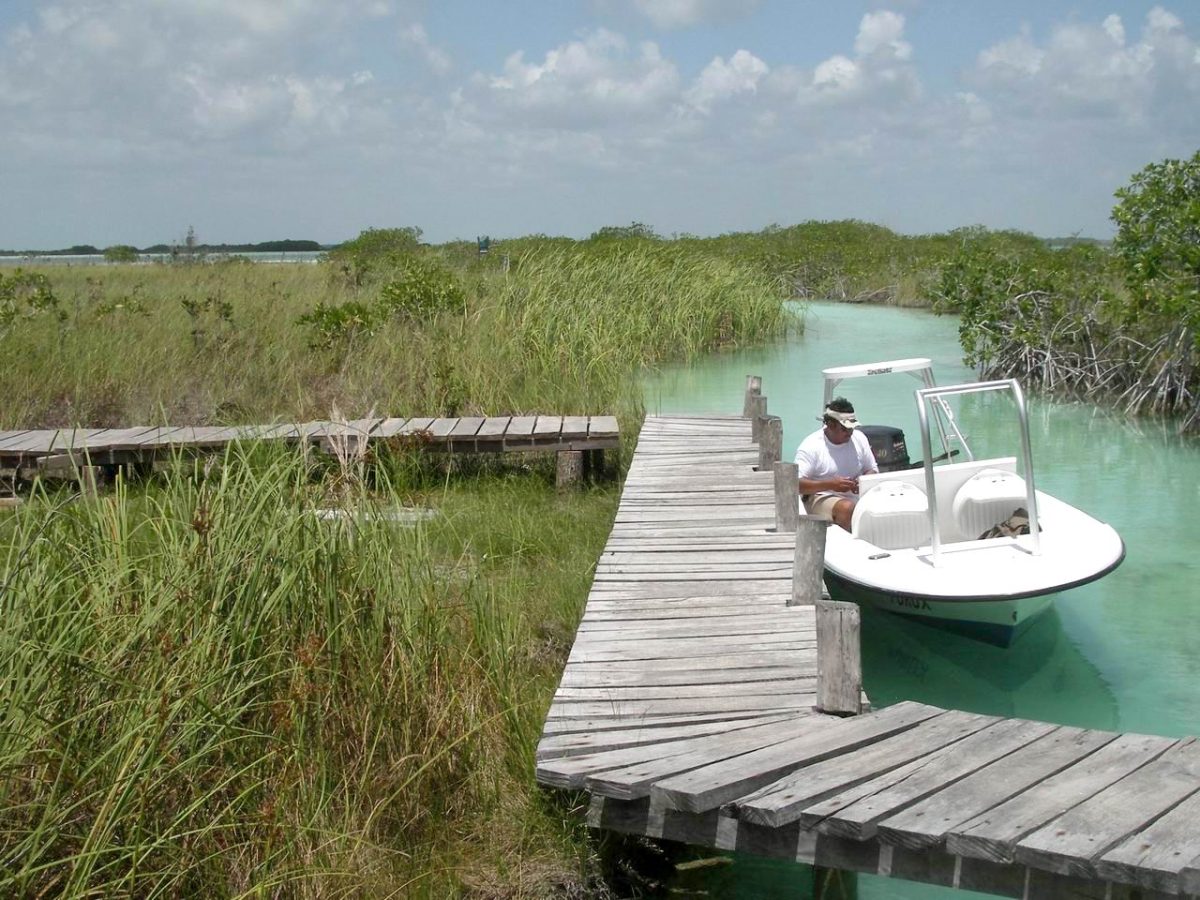
Photo: Tschips, CC BY-SA 3.0
Sian Ka'an begins where the hotel strip of Tulum ends, on the Caribbean coast of the Yucatán peninsula, and the first thing to settle is which of its two entrances a tour uses, because they give quite different days. The Muyil entrance, twenty minutes south of Tulum on the main highway, is the easy and gentle one: a small Maya site in the forest with a steep pyramid, a boardwalk through the jungle with a lookout tower, to the shore of a lagoon, where a community cooperative's boats cross two lagoons and enter a narrow canal dug by the ancient Maya for their trading canoes, at which point visitors put on life jackets, worn like nappies for buoyancy, and float on the gentle current for half an hour through mangroves and clear fresh water, the experience for which people come; this is a half-day, suitable for children, and is what most tours from Tulum and Playa del Carmen mean.
The other entrance is the coast road south from Tulum's beach through the arch at the reserve boundary and on to the fishing village of Punta Allen at the tip of a long sand spit: fifty kilometres of potholes that take two to three hours in a hired jeep or a tour's 4×4, followed by a boat trip in the bay with local fishermen to look for bottlenose dolphins, green and loggerhead turtles, manatees with luck, and nesting frigatebirds, a snorkel on the reef, a swim in a shallow sandbank they call the natural pool, and a lobster lunch. It is a long, bumpy and memorable full day. Kayak tours and guided birdwatching, fly-fishing for bonefish and permit from Punta Allen's lodges, and visits run by the Maya community organisation are the specialist options. An entrance fee or bracelet is charged.
Live dates and prices from GetYourGuide. Free cancellation on most tickets.
Sian Ka'an was decreed in 1986 and inscribed as a World Heritage Site in 1987, and with later additions it protects about 5,280 square kilometres, some 650,000 hectares counting its marine zone, the largest protected area on Mexico's Caribbean coast, stretching 120 kilometres along the shore south of Tulum. Its name is Yucatec Maya, commonly translated as the place where the sky is born. About a third is tropical forest, low and semi-evergreen, a third is wetland, savanna, marsh and mangrove, and a third is sea, two great shallow bays, Ascensión and Espíritu Santo, and a stretch of the Mesoamerican barrier reef, the second longest in the world. The ground is flat, porous limestone, without rivers on the surface; fresh water moves through it underground and wells up in cenotes, which here often open in the middle of the swamp, surrounded by hummocks of taller forest called petenes, a formation known only in Yucatán, Florida and Cuba.
The channels between the lagoons of Muyil and Chunyaxché were dug or improved by the Maya more than a thousand years ago as part of a canoe trade route between the coast and the inland cities, and twenty-three archaeological sites are recorded in the reserve, the little customs-house temple beside the canal among them. Jaguars, pumas, ocelots, margays and jaguarundis, Baird's tapir, both peccaries, howler and spider monkeys, West Indian manatees and both the American and Morelet's crocodiles live here, and more than 330 species of birds, including jabiru storks, roseate spoonbills, reddish egrets, wood storks, boat-billed herons and, in the bay, thousands of magnificent frigatebirds; four species of sea turtle nest on the beaches. About two thousand people, mostly lobster fishermen of Maya descent organised in cooperatives with a well-managed fishery, live inside the reserve. Sargassum seaweed and the advance of Tulum's development towards its boundary are its troubles.
Tours run daily throughout the year, starting early. The dry season, from November to April, is the most comfortable, with less heat and fewer mosquitoes, and the peak crowds and prices from Christmas to Easter; from May to October it is hot and humid with afternoon downpours, the road to Punta Allen deteriorates into lakes of mud, turtles nest on the beaches, and September and October are the heart of the hurricane season.
Wear biodegradable sunscreen, or better a long-sleeved shirt, since ordinary sunscreen is banned in the water, and bring repellent for the forest sections. Allow a half-day for Muyil, a very full day for Punta Allen. Tulum and its ruins adjoin the reserve, the Cobá ruins are forty-five minutes inland, and the cenotes of Dos Ojos and Gran Cenote are nearby.
Yes. GetYourGuide lists 6 tickets and tours for Sian Ka’an Biosphere Reserve, with live dates and prices and free cancellation on most of them.
An entrance fee or bracelet is charged.
Allow a half-day for Muyil, a very full day for Punta Allen.
Sian Ka’an Biosphere Reserve covers 5 280 km².
Sian Ka’an Biosphere Reserve was established in 1986.
Sian Ka’an Biosphere Reserve is in Mexico. The map on this page shows the exact spot.
Mexico
The reefs of Cozumel, off the Caribbean coast of the Yucatan peninsula of Mexico, are among the most celebrated diving…
75 tickets & tours
Mexico
Puerto Morelos is the fishing village between Cancún and Playa del Carmen whose reef, part of the Mesoamerican barrier…
45 tickets & tours
Mexico
Ría Lagartos is the flamingo lagoon on the northern tip of Yucatán, two hours from Valladolid and three from Cancún or…
28 tickets & tours
Mexico
Los Arcos are the granite islets with the arches off Mismaloya, twelve kilometres south of Puerto Vallarta, and the…
16 tickets & tours
Mexico
Cabo Pulmo is a village of a few hundred people on the East Cape of Baja California Sur, on the Gulf of California,…
8 tickets & tours
Mexico
Iztaccihuatl and Popocatepetl, the second and third highest mountains of Mexico, stand side by side on the eastern rim…
6 tickets & tours


