Joshua Tree National Park
California, United States
Joshua Tree is the desert park where the Mojave and the Colorado deserts meet, two and a half hours east of Los Angeles…
11 tickets & tours
Canyon Park · California · United States

Photo: Thomas Wolf, www.foto-tw.de, CC BY-SA 3.0
Yosemite lies on the western slope of the Sierra Nevada, in central California, about four hours by road from San Francisco and six from Los Angeles, and although the park is as large as a small country, the image that the world has of it, the granite cliffs and waterfalls, comes from one valley, eleven kilometres long and barely a kilometre and a half wide, in which nearly all its four million annual visitors gather. A car is the usual means of arrival, by one of three western entrances, from Merced, Oakhurst or Groveland, though public buses connect with the railway at Merced and run in summer over the mountains from Mammoth Lakes; the entrance fee, per vehicle, is valid for seven days, and in recent years a reservation for a timed entry has been required in addition on the busiest summer days and on certain weekends in February, a system that has changed every season and must be checked before travelling.
Once in Yosemite Valley, it is best to leave the car and use the free shuttle buses, bicycles, which can be hired, or one's feet. The essential sights are close to the road: the view from the Tunnel on arriving, with El Capitan, Bridalveil fall and Half Dome composed as in a painting; the foot of Yosemite Falls, a level walk of twenty minutes; El Capitan meadow, from which climbers can be watched on the wall; and Mirror Lake, an easy three kilometres return beneath the face of Half Dome. The most popular hike, the Mist trail, climbs steeply beside the Merced river to the top of Vernal fall, five kilometres return, and on to Nevada fall. Glacier Point, reached by a road open from about late May to October, looks straight down a thousand metres into the valley. The giant sequoias of the Mariposa grove, near the south entrance, the high country of Tuolumne meadows, along the Tioga road, and the Hetch Hetchy reservoir are the park's other regions. The ascent of Half Dome by its cables requires a permit won by lottery.
Live dates and prices from GetYourGuide. Free cancellation on most tickets.
Yosemite has a claim to be the birthplace of the idea of the national park. On 30 June 1864, in the middle of the civil war, President Lincoln signed an act granting Yosemite Valley and the Mariposa grove to the state of California, to be held for public use, resort and recreation, inalienable for all time, the first occasion on which any government had set aside wild land purely for its beauty; the surrounding mountains were made a national park in 1890, the third in the country, largely through the writings of John Muir, the Scottish-born naturalist who had arrived as a shepherd in 1868 and became the valley's prophet, and the valley itself was returned to federal control in 1906, after Muir had camped for three nights with President Theodore Roosevelt among the sequoias and at Glacier Point. The park now covers about 3,080 square kilometres, nearly all of it wilderness, and has been a World Heritage Site since 1984. The valley is a trench cut into a vast body of granite, first by the Merced river and then, repeatedly, by glaciers, which deepened and widened it to a U-shaped profile with vertical walls, left the tributary valleys hanging high above, from which the waterfalls leap, and deposited a moraine that impounded a lake, since filled in to form the flat, meadowed floor.
The granite, which solidified deep underground about a hundred million years ago, has few joints, and therefore forms sheer, unbroken faces and great rounded domes, from which the rock peels in curved sheets like the layers of an onion. El Capitan is a single monolith rising 914 metres from the valley floor, the largest exposed granite face in the world, first climbed in 1958 over forty-seven days and, in 2017, by Alex Honnold in under four hours, alone and without a rope. Half Dome, 2,693 metres, looks as though it had been sliced in two by a knife. Yosemite Falls, 739 metres in three leaps, is the highest waterfall in North America, a thundering column in May and a dry stain on the rock by late summer. In the Mariposa grove stand some five hundred mature giant sequoias, the most massive living things on earth, the oldest of which, the Grizzly Giant, is about three thousand years old. The valley was the home of the Ahwahneechee, a Miwok-speaking people, for some four thousand years, until in 1851 a battalion of militia, sent to punish them during the gold rush, entered it, the first whites to do so, and drove them out; the name Yosemite, taken from a Miwok word for their enemies, was given by that battalion. The photographer Ansel Adams, who first came as a boy of fourteen in 1916 and returned every year of his life, fixed its image for ever. Black bears, which have learned to break into cars for food, mule deer, coyotes, bobcats, the rare Sierra Nevada bighorn and the great grey owl inhabit the park.
The valley is open all year. May and early June are the finest time, when the snowmelt makes the waterfalls tremendous, the dogwoods flower and the meadows are green, though the high roads are still closed; from July to September the weather is hot and dry, 28 to 33 degrees in the valley, the falls dwindle, Yosemite Falls often drying up completely by August, the Tioga and Glacier Point roads are open, giving access to the cool high country, and the crowds and the traffic are at their worst, with car parks full by nine in the morning, while smoke from forest fires has become a regular feature of late summer.
October brings autumn colour and quiet. From November to April the valley is often under snow, serene and uncrowded, with chains required on the roads, a small ski area at Badger Pass, and, for about two weeks in mid-February, the phenomenon of the firefall, when the setting sun lights Horsetail fall like molten metal. Lodging and campsites within the park are reserved many months ahead. Store all food in the bear-proof lockers provided. Allow three days.
Yes. GetYourGuide lists 17 tickets and tours for Yosemite National Park, with live dates and prices and free cancellation on most of them.
Glacier Point, reached by a road open from about late May to October, looks straight down a thousand metres into the valley.
Yosemite National Park covers 3 079 km².
Yosemite National Park was established in 1890.
Yosemite National Park receives about 4.1 million a year (2024).
Yosemite National Park is in California, United States. The map on this page shows the exact spot.
California, United States
Joshua Tree is the desert park where the Mojave and the Colorado deserts meet, two and a half hours east of Los Angeles…
11 tickets & tours
California, United States
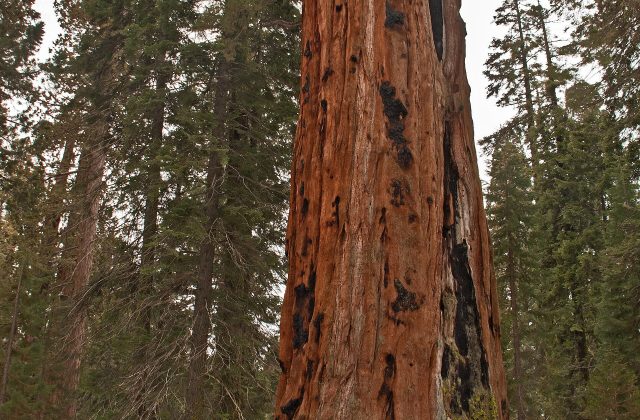
Sequoia is the southern of the twin Sierra Nevada parks administered as one with Kings Canyon, an hour from Visalia by…
8 tickets & tours
California, United States
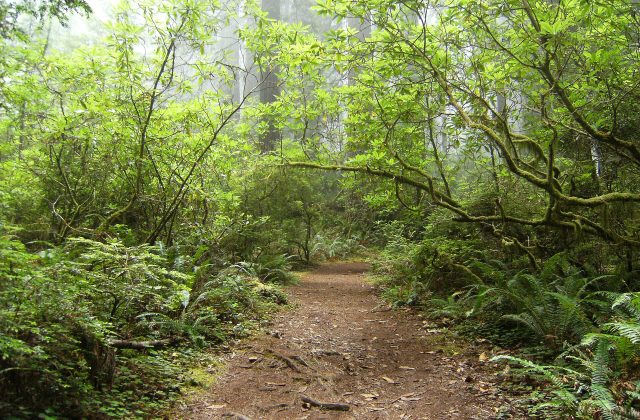
The Redwood parks are a chain of one national and three California state parks strung for some eighty kilometres along…
3 tickets & tours
California, United States
Kings Canyon is the northern half of the twin Sierra Nevada parks that the National Park Service runs as one, Sequoia…
2 tickets & tours
California, United States
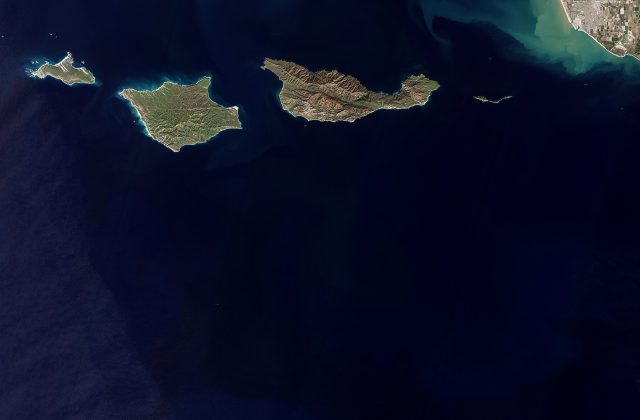
The Channel Islands lie off the coast of southern California between Santa Barbara and Los Angeles, in sight of the…
1 ticket or tour
California, United States
Death Valley lies in eastern California, against the Nevada line, and the usual way to reach it is from Las Vegas, two…
1 ticket or tour