Los Glaciares National Park
Argentina
Los Glaciares is the park of the Perito Moreno glacier and the Fitz Roy massif in Argentine Patagonia, and it is…
52 tickets & tours
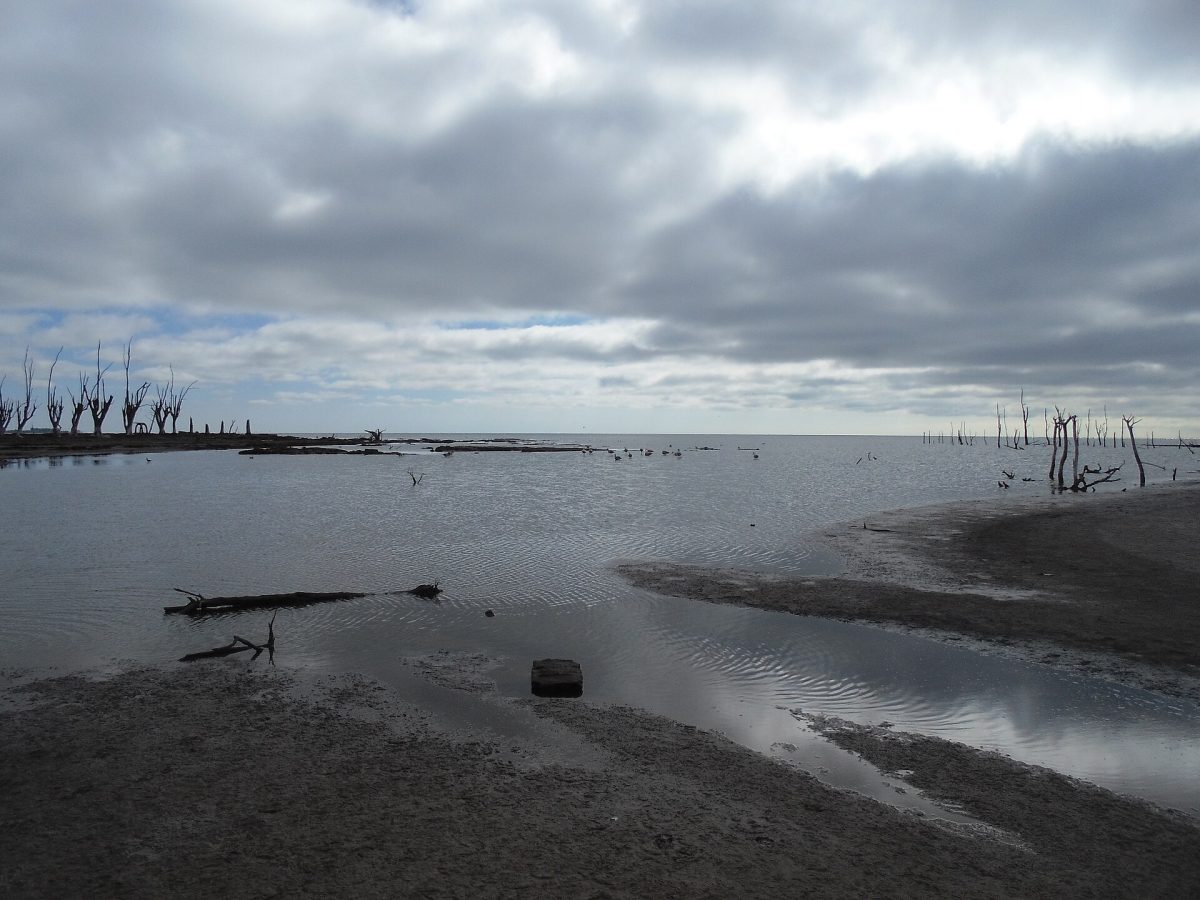
Photo: María Beatriz Littvin, CC BY-SA 4.0
Ansenuza is one of the newest national parks of Argentina and protects Mar Chiquita, an immense salt lake in the north-east of the province of Cordoba, on the flat plains of the centre of the country, together with the marshes of the river that feeds it. The base for visiting it is Miramar de Ansenuza, a small resort and the only town on the lake shore, about two hundred kilometres, three hours by road, north-east of the city of Cordoba, from which buses run and long day tours are offered, though a night or two in the town, which has hotels, a casino, a waterfront promenade and a good deal of faded charm, is a better plan. The park is so recent that it has as yet almost no facilities of its own, no gates and no entrance fee, and the visit is organised from Miramar.
Boat excursions, of an hour or two, leave from the town's pier, weather permitting, to cruise along the shore, past the skeletons of drowned trees and the ruins of the flooded town, to the places where flamingos are feeding, the evening departures being timed for the sunset over a horizon of water that really does look like the sea. Local birdwatching guides, several of them trained through the conservation programme that led to the park's creation, take visitors by vehicle to the mouth of the Segundo river, the lagoon of the Plata and other points along the southern shore, where the waders and flamingos concentrate, and there are hides and short boardwalks near the town. Bicycles and kayaks can be hired. In Miramar itself are a museum of the region's natural history and photographs, and the ruined Gran Hotel Viena, open for guided visits by day and by night. People also come, as they have for a century, to float in the dense salt water and to plaster themselves in the black mud of the shore.
Live dates and prices from GetYourGuide. Free cancellation on most tickets.
The national park and its attached national reserve were created by an act of the Argentine congress in June 2022, covering about 6,600 square kilometres, after a campaign of several years led by the country's bird conservation society with the provincial government and financed largely by a foreign philanthropic foundation, which bought private land for donation to the state. Mar Chiquita, the little sea, is the largest lake in Argentina, the largest salt lake in South America and one of the largest in the world, a closed basin with no outlet, fed from the north by the Dulce river, which spreads out before reaching it into a vast seasonal marsh of grassland, reed beds and lagoons, and from the south by the Primero and Segundo rivers from the hills of Cordoba; it has been a Ramsar wetland since 2002 and a site of hemispheric importance in the shorebird reserve network. Ansenuza is the older name, that of a goddess of the waters in the legends of the Sanaviron people, whose tears for a dying warrior turned the lake salt and whose gift turned him into the first flamingo. The lake is extremely variable. In the 1970s a series of wet years caused it to rise by some eight metres and to treble in area, to nearly six thousand square kilometres, and from 1977 the water advanced into Miramar, then a prosperous spa, and over the following years destroyed the greater part of it, more than a hundred hotels and boarding houses among them, the ruins being finally dynamited in 1992.
The Gran Hotel Viena, a huge, luxurious establishment built between 1940 and 1945 by a German family, with its own power station, bakery and medical wing, which operated for only a few seasons and about whose guests legends of fugitive Nazis inevitably gather, survived on slightly higher ground as an empty shell. Since 2003 the lake has been shrinking again, chiefly because of irrigation upstream, salinity is rising, and storms lift clouds of salt dust from the exposed bed. It is the birds that justify the park. All three South American flamingos occur: the Chilean flamingo breeds here in colonies that in good years hold tens of thousands of pairs, a large share of the world's population, and the Andean and the puna flamingo, both rare, descend from the high Andes to winter. From the northern hemisphere come, in the austral summer, up to half a million Wilson's phalaropes, perhaps a third of all that exist, with lesser yellowlegs, white-rumped and pectoral sandpipers, golden plovers and others, some 380 species of birds having been recorded in all. The marshes and the dry woodland round them shelter the maned wolf, a tall, red, long-legged fox-like animal, with capybaras, coypus, pampas foxes, Geoffroy's cats and rheas.
The area can be visited all year, and what is seen depends on the season. From October to March, the southern spring and summer, the migrant shorebirds from North America are present in their hundreds of thousands and the flamingos are nesting, and this is the best time for birdwatchers, though it is hot, above 35 degrees in January, with thunderstorms and mosquitoes, and January and February are the Argentine holiday season, when Miramar fills up.
From May to September it is mild, dry and sunny by day and cold at night, the Andean flamingos are down from the mountains, and the town is quiet. The lake is shallow, and wind quickly raises a chop that cancels the boats, so allow a spare day. Bring binoculars, a telescope if possible, a hat, sunscreen, repellent and sandals for the mud. Allow two days. Cordoba is three hours away, the Jesuit estancias of Jesus Maria and Colonia Caroya, a World Heritage Site, two hours on the way, and the hills of the Sierras Chicas beyond.
Yes. GetYourGuide lists one ticket or tour for Ansenuza National Park, with live dates and prices and free cancellation on most of them.
The park is so recent that it has as yet almost no facilities of its own, no gates and no entrance fee, and the visit is organised from Miramar.
The park is so recent that it has as yet almost no facilities of its own, no gates and no entrance fee, and the visit is organised from Miramar.
Ansenuza National Park covers 6 614 km².
Ansenuza National Park was established in 2022.
Ansenuza National Park is in Argentina. The map on this page shows the exact spot.
Argentina
Los Glaciares is the park of the Perito Moreno glacier and the Fitz Roy massif in Argentine Patagonia, and it is…
52 tickets & tours
Argentina
The park is twelve kilometres west of Ushuaia and is the standard half-day excursion for everyone passing through the…
36 tickets & tours
Argentina
Iguazú National Park is the Argentine side of the falls, twenty minutes from Puerto Iguazú, and it is entered with a…
11 tickets & tours
Argentina
Nahuel Huapi is the lake-and-mountain park of northern Patagonia, and the city of San Carlos de Bariloche, two hours by…
5 tickets & tours
Argentina
Villavicencio is a private nature reserve in the dry foothills of the Andes, its entrance about forty-five kilometres,…
4 tickets & tours
Argentina
Los Cardones is a high desert park in the province of Salta, in the north-west of Argentina, and nearly everyone sees…
1 ticket or tour