Los Glaciares National Park
Argentina
Los Glaciares is the park of the Perito Moreno glacier and the Fitz Roy massif in Argentine Patagonia, and it is…
52 tickets & tours

Photo: Klaus 15, CC BY-SA 2.5
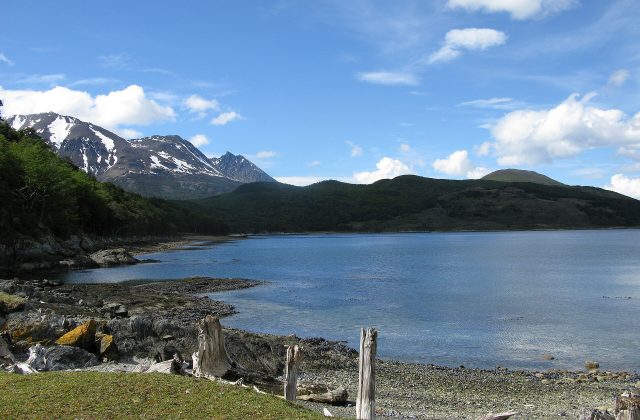
Nahuel Huapi is the lake-and-mountain park of northern Patagonia, and the city of San Carlos de Bariloche, two hours by air from Buenos Aires, lies inside it, on the lake's southern shore, so that almost everything a visitor does from Bariloche takes place in the park, mostly without any entrance fee, which is charged only at certain points such as Puerto Pañuelo's boat excursions, the Tronador road and Isla Victoria. The classic excursion is the Circuito Chico, a sixty-kilometre loop west of the city along the lake, done in half a day by tour bus, by hired car, by bicycle for the energetic, or on the public bus number 20: it takes in the chairlift up Cerro Campanario, whose summit panorama of lakes, islands and peaks is among the best views in South America for the least effort, the Llao Llao peninsula with its grand hotel, its little wooden chapel and its forest trails, and Bahía López.
The boat excursions from Puerto Pañuelo go to Isla Victoria and the Arrayanes forest, or across Lake Blest to Puerto Blest and the Cántaros waterfall, or all the way over the Andes to Chile by the lake-crossing route. A full day by road reaches Cerro Tronador, the Black Glacier and the Garganta del Diablo falls, on a gravel road with one-way traffic hours. The Seven Lakes road north to Villa La Angostura and San Martín de los Andes is another full day. Kayaking on Nahuel Huapi or the calmer Moreno lake, sailing, fly-fishing, rafting on the Manso, and hut-to-hut trekking from Cerro Catedral to Refugio Frey and beyond complete the offer.
Live dates and prices from GetYourGuide. Free cancellation on most tickets.
This is the oldest national park in Argentina. In 1903 the explorer and scientist Francisco Moreno, the Perito, gave back to the nation three square leagues of land near Puerto Blest that the state had granted him for his work on the frontier with Chile, on condition that they be kept unchanged for future generations; they became the Parque Nacional del Sud in 1922 and Nahuel Huapi in 1934, which now covers about 7,050 square kilometres of Río Negro and Neuquén provinces along the Chilean border. The lake at its centre, whose Mapuche name means the island of the jaguar, is a glacial trough of 557 square kilometres, with seven long fjord-like arms, water of a deep, cold blue and a depth of more than 460 metres, at 770 metres above the sea. To the west the Andes catch the Pacific storms, and at Puerto Blest more than 3,000 millimetres of rain a year feed a temperate Valdivian rainforest of coihue, alerce, which lives for three thousand years, bamboo thickets and ferns;
eastwards, within eighty kilometres, the rain falls to 300 millimetres and the forest gives way through cypress and ñire to the brown Patagonian steppe. Cerro Tronador, the thunderer, 3,491 metres, an extinct volcano on the frontier and the highest mountain of the region, is named for the roar of ice falling from its glaciers, one of which, the Ventisquero Negro, is black with the rock and sediment it carries. On the Quetrihué peninsula and Isla Victoria grow the only real forests of arrayán, a myrtle with cold, smooth, cinnamon-coloured bark, some trees six centuries old, protected within their own small national park. The huemul, the rare Andean deer, the pudú, the smallest deer in the world, pumas, the endemic huillín otter, condors, Magellanic woodpeckers and torrent ducks are native; the red deer, wild boar, trout and salmon were introduced. Bariloche's stone-and-timber civic centre of the 1930s, its chocolate shops and its Swiss air are part of the scene.
The park is open all year. December to March is summer, with long days, temperatures of 20 to 25 degrees, swimming for the brave, all trails and huts open, and in January and February heavy crowds of Argentine holidaymakers and gusty westerly winds; March and April bring calm weather and the lenga forests turning red and gold, the loveliest weeks;
June to September is the ski season at Cerro Catedral, the largest resort in South America, when the Tronador road may be closed by snow; spring, October and November, has wildflowers, broom in yellow flower and few visitors. The weather changes fast, and the view from Campanario needs a clear morning. Allow three to five days. Villa La Angostura is an hour and a half north, El Bolsón two hours south, and Chile's Puerto Varas a day away by the lakes crossing.
Yes. GetYourGuide lists 5 tickets and tours for Nahuel Huapi National Park, with live dates and prices and free cancellation on most of them.
The park is open all year.
Allow three to five days.
Nahuel Huapi National Park covers 7 050 km².
Nahuel Huapi National Park was established in 1934.
Nahuel Huapi National Park is in Argentina. The map on this page shows the exact spot.
Argentina
Los Glaciares is the park of the Perito Moreno glacier and the Fitz Roy massif in Argentine Patagonia, and it is…
52 tickets & tours
Argentina
The park is twelve kilometres west of Ushuaia and is the standard half-day excursion for everyone passing through the…
36 tickets & tours
Argentina
Iguazú National Park is the Argentine side of the falls, twenty minutes from Puerto Iguazú, and it is entered with a…
11 tickets & tours
Argentina
Villavicencio is a private nature reserve in the dry foothills of the Andes, its entrance about forty-five kilometres,…
4 tickets & tours
Argentina
Ansenuza is one of the newest national parks of Argentina and protects Mar Chiquita, an immense salt lake in the…
1 ticket or tour
Argentina
Los Cardones is a high desert park in the province of Salta, in the north-west of Argentina, and nearly everyone sees…
1 ticket or tour