Scandola Nature Reserve
France
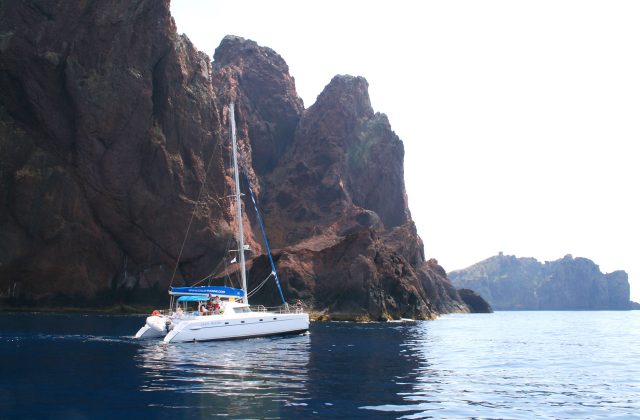
Scandola is the red-rock peninsula on the west coast of Corsica, and the reserve is closed to walkers and to anchoring,…
17 tickets & tours

Photo: Fritz Geller-Grimm, CC BY-SA 2.5
The Camargue is the Rhône delta south of Arles, an hour from Avignon and Montpellier, and its regional park is visited on safaris that are not safaris: jeep tours in open 4x4s along the dyke tracks and the marsh edges from Saintes-Maries-de-la-Mer, Arles and Aigues-Mortes, with a guide who stops for the flamingos, the black bulls and the white horses, in half-day and full-day versions, and the electric versions in silent vehicles or on e-bikes that reach the same tracks without the noise. The horse rides from the manades, the bull-and-horse ranches along the roads to the sea, are the Camargue's own way through the marsh, in an hour or a day on the white horses with a gardian;
the boat trips on the Petit Rhône from Saintes-Maries and the lagoon cruises go for the birds. The Pont de Gau ornithological park, with the flamingos at a few metres from its boardwalks, and the Petit Rhône reserve are the two entrance tickets in a park that is otherwise free, and the day tours from Avignon and Arles combine one of them with the jeep or the ride and the walled town of Aigues-Mortes or the church of Saintes-Maries. Independent visitors drive the D570 and the dyke roads, walk the Vaccarès lagoon's shore at La Capelière, cycle the sea dyke from Saintes-Maries to the Gacholle lighthouse, and book a ride at any manade; the park's centres at Pont de Gau and the Mas du Pont de Rousty explain the delta.
Live dates and prices from GetYourGuide. Free cancellation on most tickets.
The park was created in 1970 and covers about 1,000 square kilometres of the Rhône delta between the two arms of the river, from Arles to the sea, the largest river delta in western Europe and a biosphere reserve, with the Vaccarès lagoon, 6,500 hectares of shallow salt water at its centre, inside a national nature reserve of 1927 that is one of the oldest in France. It is a flat land of marshes, reed beds, salt steppes, rice fields, dunes and the sea, held between the river's dykes and the sea wall, where the fresh water of the Rhône and the salt of the Mediterranean mix, and its three symbols are the greater flamingos, some 10,000 pairs breeding on the Fangassier salt pans in the only colony in France and feeding in every lagoon in pink lines; the Camargue horses, small, white and semi-feral, ridden by the gardians, the herdsmen of the delta; and the black Camargue bulls, raised in the manades for the course camarguaise, the bloodless bull game of the Provençal arenas, and grazing the marsh with the egrets on their backs.
The birds are the park's substance, 400 species with the wintering ducks in hundreds of thousands, the herons and the egrets in the tamarisk colonies, the bee-eaters and the rollers in summer and the raptors of the salt steppe, watched from the Pont de Gau park, the La Capelière trail on the Vaccarès and the Scamandre reserve on the western edge. The towns are Saintes-Maries-de-la-Mer, the pilgrimage town of the Romani on the sea with its fortified church, Aigues-Mortes, Saint Louis's walled port for the crusades now stranded among the salt pans of the Salins du Midi, whose pink lakes and salt mountains are the industrial delta, and the rice villages of the north; the Digue à la Mer, the sea dyke of 1859, runs twenty kilometres along the coast for bicycles, and the beaches of Piémanson and Beauduc are among the emptiest on the Mediterranean. The mosquitoes are the delta's guardians.
The park is open at all times; the Pont de Gau ornithological park is open daily from 9 am or 10 am to dusk, and the jeep tours and the rides run all year with reduced winter service. Spring from April to June is the best season, with the flamingos breeding, the migrants passing, the horses' foals and the mosquitoes not yet at full strength; September and October are the second, with the rice harvest, the autumn migration and warm days;
summer is hot, dusty and full of mosquitoes, with the Saintes-Maries beaches busy and the tours early or late; winter is windy, with the mistral, the ducks in their thousands and the marsh at its most empty. The mosquito repellent is the only essential. Allow a full day, two with the western Camargue and Aigues-Mortes. Arles is the base at the delta's head, Saintes-Maries the town at its foot, and Avignon and Nîmes are an hour away.
Yes. GetYourGuide lists 14 tickets and tours for Camargue Regional Natural Park, with live dates and prices and free cancellation on most of them.
The park is open at all times; the Pont de Gau ornithological park is open daily from 9 am or 10 am to dusk, and the jeep tours and the rides run all year with reduced winter service.
Allow a full day, two with the western Camargue and Aigues-Mortes.
Camargue Regional Natural Park covers 999 km².
Camargue Regional Natural Park was established in 1970.
Camargue Regional Natural Park is in France. The map on this page shows the exact spot.
France
Scandola is the red-rock peninsula on the west coast of Corsica, and the reserve is closed to walkers and to anchoring,…
17 tickets & tours
France
The national park covers the mountainous interior of Réunion, the French island in the Indian Ocean east of Madagascar,…
15 tickets & tours
France
The Verdon gorge is the deepest and most spectacular river canyon in France, in the hills of Haute-Provence between the…
4 tickets & tours
France
Port-Cros is one of the three Îles d'Hyères, the Golden Isles, off the coast of the Var between Toulon and…
3 tickets & tours
France
The Alpilles are a small range of jagged white limestone hills in the heart of Provence, rising abruptly from the plain…
2 tickets & tours
France
The nature reserve of the Bouches de Bonifacio covers the waters, islands and coast of the extreme south of Corsica, on…
1 ticket or tour