Scandola Nature Reserve
France
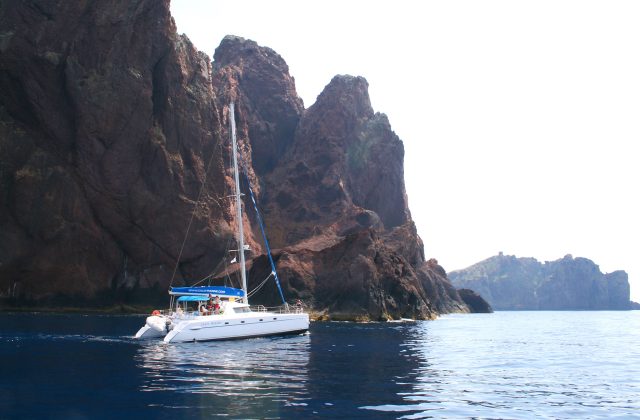
Scandola is the red-rock peninsula on the west coast of Corsica, and the reserve is closed to walkers and to anchoring,…
17 tickets & tours

Photo: Richard Gertis, CC BY-SA 2.5
Port-Cros is one of the three Îles d'Hyères, the Golden Isles, off the coast of the Var between Toulon and Saint-Tropez, and the smallest, wildest and most strictly protected of them: a hilly island without cars, bicycles, roads or, outside its tiny harbour village, inhabitants. It is reached by passenger boat in about an hour from the port of Hyères, year-round, and in summer also from Le Lavandou and from La Londe, Bormes-les-Mimosas, Cavalaire and other harbours along the coast, some of whose boats make a day's cruise of two islands, Port-Cros and Porquerolles, with a stop of a few hours on each, or offer a trip on a quiet hybrid vessel with commentary. There is no entrance fee; the cost is the boat. Once ashore, everything is on foot, on some thirty kilometres of marked paths, from which one may not stray.
The circuits start from the harbour: the Sentier des Plantes, an easy hour and a half to the beach of La Palud past the forts of the Estissac and the Éminence; the Sentier des Crêtes, three hours along the high southern cliffs; and the Sentier de Port-Man, four to five hours to the bay at the island's eastern end. The beach of La Palud is also the start of the underwater trail, a marked snorkelling route of buoys with information panels on the seabed, along which, in summer, park staff sometimes give guidance; bring a mask, snorkel and swimming shoes. The rules are strict and enforced: no smoking outside the village, no fires, no dogs on the beaches, no picking, no camping, no fishing, and in high fire risk the paths are closed altogether and visitors confined to the village and the nearest beaches.
Live dates and prices from GetYourGuide. Free cancellation on most tickets.
The Parc national de Port-Cros was created in December 1963, after the island's last private owners, Marcel and Marceline Henry, left it to the state on condition that it be preserved, and it was the second national park in France and the first marine national park in Europe. The original core was the island of Port-Cros, seven square kilometres, its satellite islets of Bagaud, a strict reserve closed to all, La Gabinière and Le Rascas, and a band of sea six hundred metres wide around them; in 2012 the park was enlarged to include most of Porquerolles, the largest of the islands, as well as the undeveloped parts of the mainland coast facing them, and it now manages also the Pelagos sanctuary for whales and dolphins in French waters. Port-Cros is a fragment of the ancient crystalline Maures massif, a ridge of schist rising to 199 metres, with cliffs on its southern, seaward side and sheltered coves on the north, and it is covered from shore to summit by a Mediterranean forest that has been left to itself for more than a century and has reached a rare maturity: Aleppo pines and holm oaks above a dense understorey of tree heather, strawberry tree, lentisk, myrtle and wild olive.
Some 600 plant species grow here, 144 species of birds have been recorded, among them the peregrine, Eleonora's falcon and the shearwaters, Scopoli's and the Yelkouan, which nest in burrows on the cliffs and islets and whose cries at night account for the island's ghost stories, and the island is one of the last homes of two small reptiles, Tyrrhenian relics: the leaf-toed gecko and the painted frog. Under water, forty years of protection from fishing have produced what Mediterranean divers call the grouper effect: dusky groupers, which had vanished from the French coast, are numerous and fearless, especially at La Gabinière, one of the most famous dive sites in France, with barracuda, dentex, corb and eagle rays, above meadows of posidonia and walls of red gorgonians. Five forts, built from the time of Richelieu to that of Napoleon, guard the harbour and the heights; D.H. Lawrence stayed on the island in 1928.
Boats run all year from Hyères, with a much reduced winter timetable. May, June and September are the best months, warm enough to swim, with the scrub in flower in spring and the water at its warmest in early autumn; July and August are hot and crowded, the number of visitors landed each day is capped, boats should be booked ahead, and on days of high fire risk, declared the evening before, the interior of the island is closed.
There is no fresh water on the paths, little shade on the ridge and only a handful of cafés, in the village, so carry water, a hat and a picnic, and take all rubbish back. Allow a full day. Porquerolles, with its bicycles, vineyards and sandy beaches, is the neighbouring island, Hyères and the Giens peninsula with its salt pans are the mainland base, and Le Lavandou and Bormes lie to the east.
Yes. GetYourGuide lists 3 tickets and tours for Port-Cros National Park, with live dates and prices and free cancellation on most of them.
There is no entrance fee; the cost is the boat.
There is no entrance fee; the cost is the boat.
Port-Cros National Park covers 24.8 km².
Port-Cros National Park was established in 1963.
Port-Cros National Park is in France. The map on this page shows the exact spot.
France
Scandola is the red-rock peninsula on the west coast of Corsica, and the reserve is closed to walkers and to anchoring,…
17 tickets & tours
France
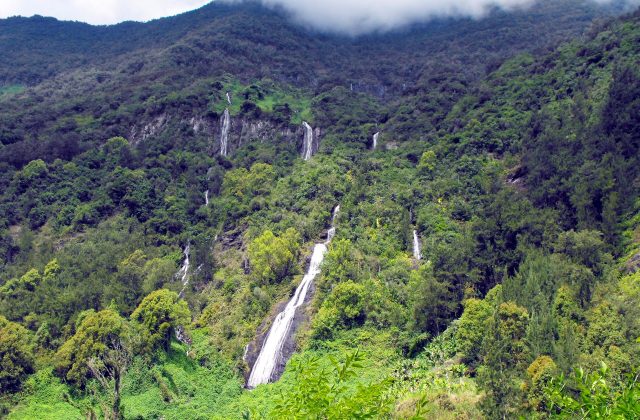
The national park covers the mountainous interior of Réunion, the French island in the Indian Ocean east of Madagascar,…
15 tickets & tours
France
The Camargue is the Rhône delta south of Arles, an hour from Avignon and Montpellier, and its regional park is visited…
14 tickets & tours
France
The Verdon gorge is the deepest and most spectacular river canyon in France, in the hills of Haute-Provence between the…
4 tickets & tours
France
The Alpilles are a small range of jagged white limestone hills in the heart of Provence, rising abruptly from the plain…
2 tickets & tours
France
The nature reserve of the Bouches de Bonifacio covers the waters, islands and coast of the extreme south of Corsica, on…
1 ticket or tour