Safari Park · Gujarat · India
Gir National Park
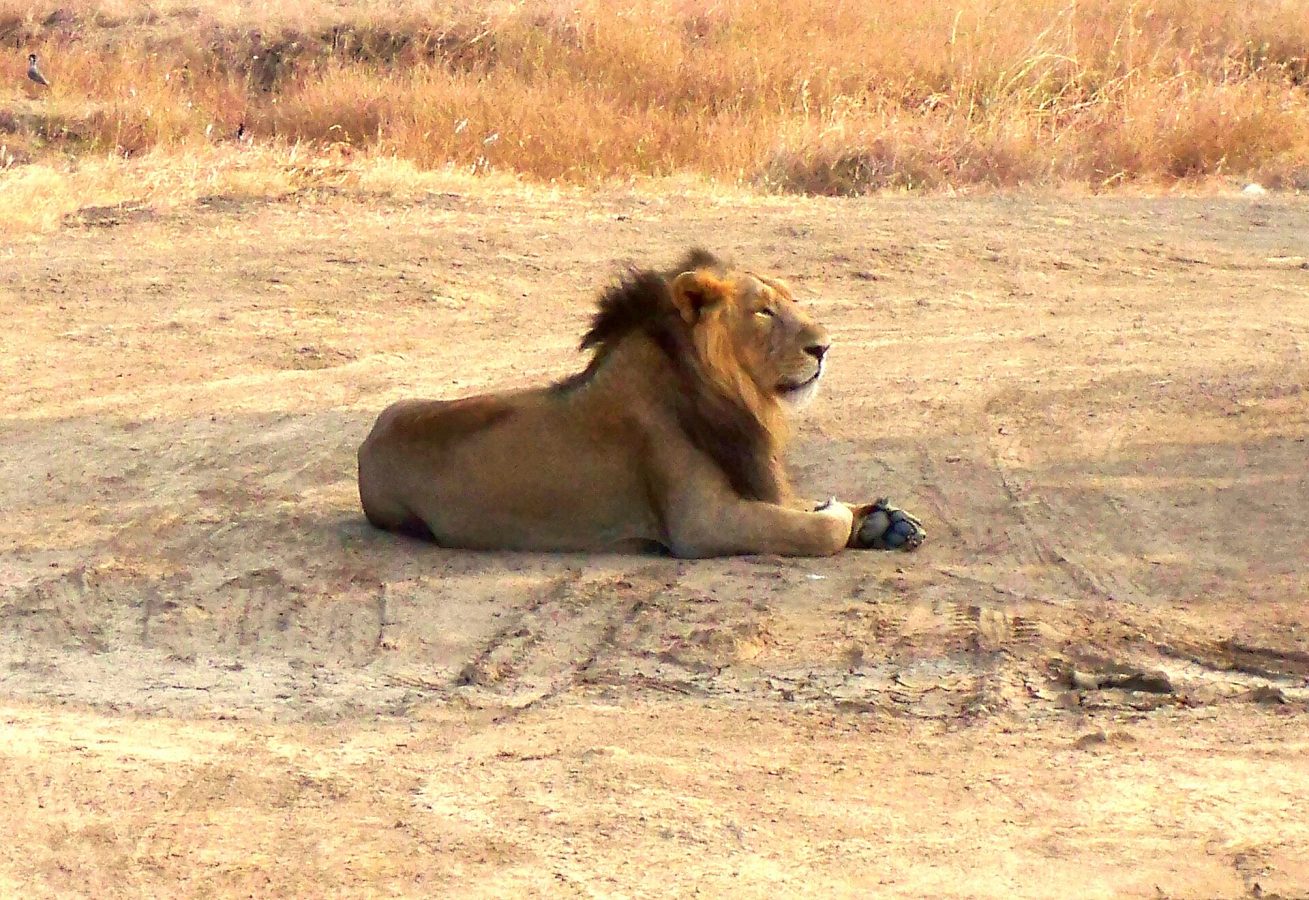
Photo: Shovik 14, CC BY-SA 4.0
- Type
- Safari Park
- Area
- 259 km²
- Founded
- 1965
- Tickets
- 4 tickets and tours
- Website
- girnationalpark.info
Gir National Park tickets and tours: which one to book
Gir, in the Saurashtra peninsula of the Indian state of Gujarat, is the only place on earth where the Asiatic lion survives in the wild, and a safari there offers a very good chance of seeing one. The base is the village of Sasan Gir, at the edge of the forest, which has hotels and lodges of every grade and the forest department's reception centre; it is about 160 kilometres and three to three and a half hours by road from the airport of Rajkot, sixty-five kilometres from the railway junction of Junagadh, a hundred from the former Portuguese island of Diu, and forty-five from the temple town of Somnath, and it fits into a circuit of Gujarat with those places. Entry to the forest is possible only on an official safari, the Gir jungle trail, in an open jeep seating six, with a forest department guide, along one of a number of fixed routes, which are assigned to each vehicle by computer on the day.
There are three departures daily, at about half past six and nine in the morning and three in the afternoon, each lasting about three hours, the number of vehicles is limited, and permits are sold exclusively on the Gujarat forest department's website, opening some months ahead, against the passport details of each visitor; they sell out for weekends, holidays and the whole winter season, and should be booked as early as possible, the jeep and guide being paid for separately on the spot. Those who fail to obtain a permit, or have little time, can visit the Devalia safari park, twelve kilometres from Sasan, a fenced area of about four square kilometres of the same forest, in which lions, leopards and deer are kept in natural conditions and are shown from a minibus or jeep on a tour of half an hour, with sightings all but certain; it is closed on Wednesdays.
4 tickets and tours for Gir National Park
Live dates and prices from GetYourGuide. Free cancellation on most tickets.
Visiting Gir National Park: what you will see
The Gir forest was the private hunting ground of the nawabs of Junagadh, and it is to one of them that the lion owes its survival. The Asiatic lion once ranged from Greece and Palestine across Persia and Mesopotamia to the whole of northern India, and appears on the pillars of Ashoka, which supply the national emblem of the republic; by the end of the nineteenth century, shot out by princes and British officers, it survived only in this patch of dry forest. Around 1900 the nawab, alarmed by reports that perhaps only a dozen or two remained, though the figure was probably put about to discourage requests to shoot, forbade their hunting, and the viceroy, Lord Curzon, invited to a lion shoot, declined on learning how few were left and urged their protection. The sanctuary was created in 1965 and its core made a national park in 1975; the national park covers 259 square kilometres and the whole protected area 1,412. The lions have increased steadily, from 177 at the first proper count in 1968 to 674 in 2020 and 891 in 2025, and more than half of them now live outside the sanctuary, having spread across some thirty thousand square kilometres of farmland, scrub, river valleys and coast, where they are tolerated to a degree unthinkable elsewhere, killing mostly cattle, for which the state pays compensation.
The Asiatic lion is a little smaller than the African, the males with a scantier mane, so that the ears always show, and both sexes have a fold of skin along the belly; the prides are smaller, and the males live apart from the females for much of the year. Inside the forest live the Maldharis, pastoralists who graze buffaloes and cattle from thorn-fenced hamlets called nesses, and who have lived beside lions for generations; many have been resettled outside, a policy still disputed. In the village of Jambur, near Sasan, live the Siddis, descendants of East Africans brought to India centuries ago as slaves, soldiers and sailors, who preserve African drumming and dance. The forest is dry deciduous, dominated by teak, with acacia thorn scrub, grassland and evergreen trees along its seven rivers, leafless and open in the hot season. Besides lions it holds one of the densest populations of leopards in India, several hundred, together with striped hyenas, jackals, jungle cats, rusty-spotted cats, chital in tens of thousands, sambar, nilgai, the four-horned antelope, chinkara, wild boar, langurs, mugger crocodiles in the Kamleshwar reservoir, and some three hundred species of birds. The concentration of the whole species in one place exposes it to a single epidemic or disaster, and an outbreak of canine distemper killed more than twenty lions in 2018; the supreme court ordered in 2013 that some be moved to a second home in Madhya Pradesh, which Gujarat has resisted.
Gir National Park: best time to go, seasons and hours
The national park is closed during the monsoon, from 16 June to 15 October each year, the Devalia park remaining open for most of that time. The winter, from December to February, is the pleasantest season, with sunny days of 25 to 28 degrees, cold early mornings in the open jeep, and green forest, and it is the busiest. From March to May it becomes very hot, up to 42 or 44 degrees, the trees shed their leaves, water is scarce, and the lions lie up near the remaining pools, so that sightings are at their most frequent for those who can bear the heat.
The early morning safari is generally the most productive, and two or three outings greatly improve the odds. The Indian holidays of Diwali, Christmas and New Year are booked out months ahead. Carry the identity document used for the booking, wear dull colours, and bring a jacket in winter and water and a hat in summer. Allow two nights. Somnath temple is an hour away, the hill of Girnar at Junagadh an hour and a half, and Diu two hours.
More tours and activities in Gujarat
Before you go
Can I book a tour or safari in Gir National Park online?
Yes. GetYourGuide lists 4 tickets and tours for Gir National Park, with live dates and prices and free cancellation on most of them.
When is Gir National Park open?
The national park is closed during the monsoon, from 16 June to 15 October each year, the Devalia park remaining open for most of that time.
How big is Gir National Park?
Gir National Park covers 259 km².
When was Gir National Park founded?
Gir National Park was established in 1965.
Where is Gir National Park?
Gir National Park is in Gujarat, India. The map on this page shows the exact spot.