
Tara National Park
Serbia
Tara is the forested mountain in a great bend of the Drina river in western Serbia, on the Bosnian border, three and a…
4 tickets & tours
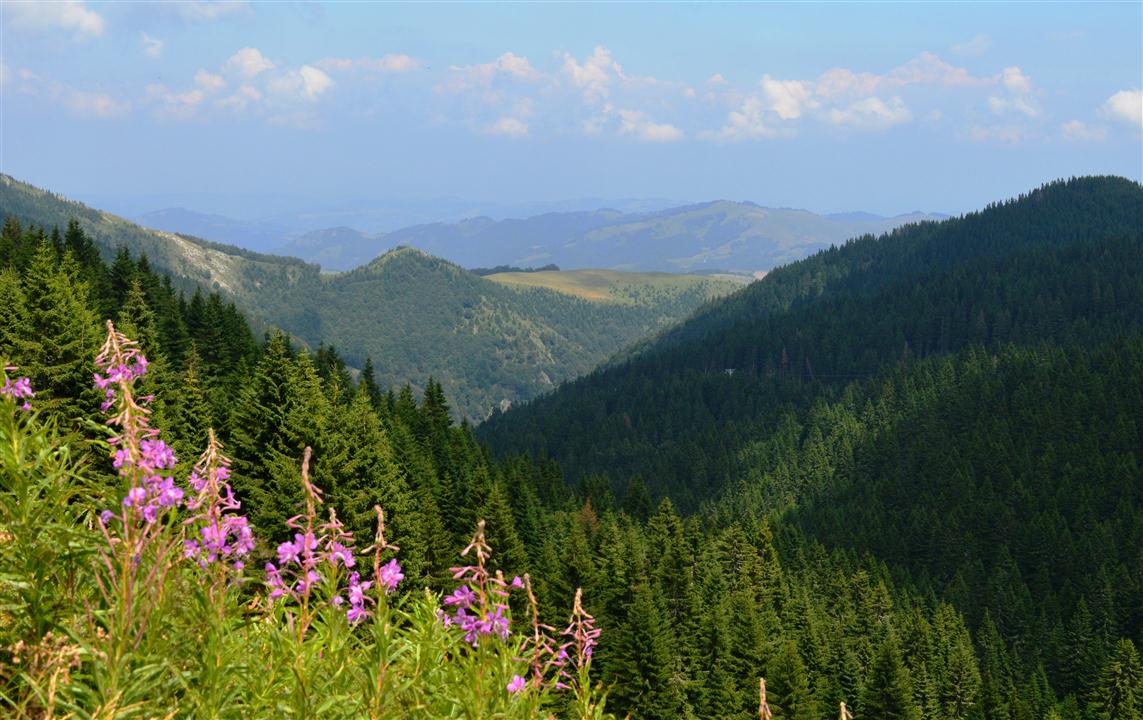
Photo: Olja Simović, CC BY-SA 4.0
Kopaonik is the largest mountain massif of Serbia, a long ridge in the south of the country on the boundary with Kosovo, and the national park covers the high plateau at its centre, which is also occupied by the biggest ski resort in the country; the two coexist, not always comfortably, and what a visitor finds depends entirely on the season. The resort lies about 280 kilometres, four to four and a half hours by road, south of Belgrade, by the motorway to Krusevac and then by Brus or by the Ibar valley and Josanicka Banja, and rather less from Nis; buses run from the capital, more often in winter, and full-day excursions by car from Belgrade are offered, though with nine hours on the road they leave little time, and two or three nights are better. In winter the attraction is the skiing: some sixty kilometres of pistes, mostly of easy and middling difficulty, linked by modern lifts, with snow cannons, night skiing, a snow park, cross-country tracks, and a lively hotel village in a mock-traditional style.
In summer the same village is a quiet hill station, and the park's own activities come to the fore. The park has laid out more than a dozen marked walking trails, most of them easy walks of two to four hours across the rolling plateau, through spruce forest and flowery pastures, to viewpoints and rock formations; the chairlift to Pancic's Peak runs in summer and saves the climb. The favourite longer outings are the descent to the Jelovarnik waterfall, on the eastern side above the village of Brzece, a drop of seventy-one metres in three cascades through beech forest, reached by a path of about three kilometres, and the walk to the Heavenly Chairs. Mountain biking, a bob-on-rails track, zip lines, horse riding and the gathering of wild blueberries fill the summer programme. The park office offers guided walks.
Live dates and prices from GetYourGuide. Free cancellation on most tickets.
The central part of the massif was declared a national park in 1981 and covers about 121 square kilometres, the greater part of it a gently undulating upland at some 1,700 metres, called the Flat Kopaonik, from which rise the rounded summits of Suvo Rudiste, Karaman, Gobelja and the highest, Pancic's Peak, 2,017 metres. The mountain has been known since antiquity for what lies inside it: its name is derived from the Serbian word for digging, the Romans, the medieval Serbian kings and, in their service, Saxon miners, and the Venetians, who called it the silver mountain, extracted silver, lead, iron and zinc here, and the wealth of the Nemanjic dynasty, which built the great monasteries in the valleys round about, rested largely on these mines; old shafts and slag heaps are found all over the range. The summit bears the name of Josif Pancic, the nineteenth-century physician and botanist who founded natural science in Serbia, discovered the Serbian spruce, explored this mountain repeatedly and asked to be buried on it; his remains and those of his wife were brought up in 1951 to a stone mausoleum on the peak.
The mausoleum stands beside a military installation, which was bombed by NATO aircraft in 1999, and although the path to it is open, unexploded cluster munitions were being cleared from the surrounding slopes for many years afterwards, so that warning signs should be respected. The plateau is of granite and metamorphic rock, weathered into isolated tors with names such as Marko's Stone, and has an unusually sunny climate, with about two hundred clear days a year. Dense forests of spruce and fir, with beech lower down, cover the slopes, and the subalpine pastures and peat bogs hold a flora of some 1,600 species, including three found nowhere else on earth, the Kopaonik houseleek, Pancic's bittercress and the Kopaonik violet, with edelweiss, the Balkan maple and relict yew. The fauna includes wild boar, roe deer, wolves, wildcats, the forest dormouse, golden eagles, peregrines, eagle owls, the nutcracker and the three-toed woodpecker. At about 1,800 metres, on a shelf with an immense view to the east, archaeologists excavated the foundations of an early Christian basilica of the fifth or sixth century with a mosaic floor, a site known as the Heavenly Chairs. Below the mountain, on the Kosovo side and in Serbia alike, thermal springs rise, those of Josanicka Banja, at 78 degrees, being among the hottest in the country.
The park is open all year. The ski season runs from about the beginning of December to the middle of April, with the most reliable snow from January to March and the highest prices and the greatest crowds during the New Year and Orthodox Christmas holidays and the school break in February. The summer season lasts from June to September: June and early July are the best time for flowers, July and August are pleasantly cool, 15 to 22 degrees, when the plains of Serbia swelter, with brief thunderstorms in the afternoon, blueberries ripen in August, and September is clear and quiet.
May, October and November are dead months, when most hotels and lifts are closed. The weather on the plateau changes quickly, and fog is common, so carry a windproof and keep to the marked trails, particularly near the summit. Allow two to three days. The monastery of Studenica, a World Heritage Site, is an hour and a half away, Zica and the fortress of Maglic in the Ibar gorge on the way north, and the rock pillars of Djavolja Varos two hours to the south-east.
Yes. GetYourGuide lists one ticket or tour for Kopaonik National Park, with live dates and prices and free cancellation on most of them.
The mausoleum stands beside a military installation, which was bombed by NATO aircraft in 1999, and although the path to it is open, unexploded cluster munitions were being cleared from the surrounding slopes for many years afterwards, so that warning signs should be respected.
Allow two to three days.
The summer season lasts from June to September: June and early July are the best time for flowers, July and August are pleasantly cool, 15 to 22 degrees, when the plains of Serbia swelter, with brief thunderstorms in the afternoon, blueberries ripen in August, and September is clear and quiet.
Kopaonik National Park covers 121 km².
Kopaonik National Park was established in 1981.
Kopaonik National Park is in Serbia. The map on this page shows the exact spot.
Serbia
Tara is the forested mountain in a great bend of the Drina river in western Serbia, on the Bosnian border, three and a…
4 tickets & tours
Serbia
The Uvac is a river in the mountains of south-western Serbia, not far from the borders of Montenegro and Bosnia, which…
1 ticket or tour
Serbia
Djerdap is the Serbian name of the Iron Gates, the great gorge by which the Danube breaks through the Carpathian…
No online ticket

