Yala National Park
Sri Lanka
Yala is Sri Lanka's most visited national park and the place with the best odds of seeing a wild leopard anywhere…
314 tickets & tours

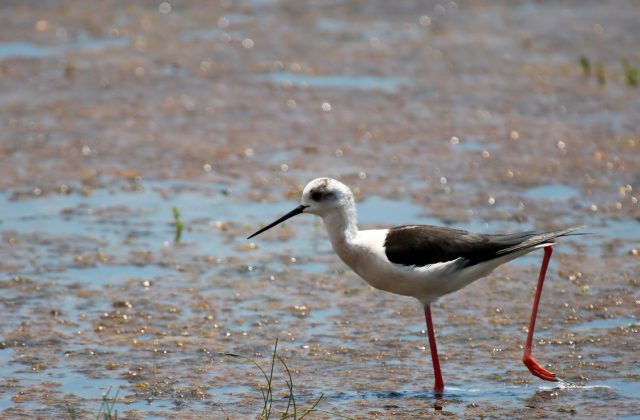
Photo: Knthabrew, CC BY-SA 4.0
Lahugala Kitulana is one of the smallest national parks in Sri Lanka, a patch of forest round three old irrigation reservoirs in the dry lowlands of the east coast, and it lies only sixteen kilometres inland from the town of Pottuvil and about twenty kilometres, half an hour, from the surfing village of Arugam Bay, for whose visitors it is the nearest place to see wild elephants. It is visited quite differently from the island's well-known parks. There is no network of jeep tracks, no queue of vehicles and, for the most part, no formal ticketed circuit: the main road from Pottuvil westwards to Monaragala and the hill country, the A4, passes straight through the park and runs along the top of the embankment of the Lahugala tank, and the classic way to see the elephants is simply to stop there, or at the small wildlife office beside it, in the late afternoon and watch the herds that come out of the forest to feed in the flooded grass, with water birds all round them.
The private safaris sold in Arugam Bay, by jeep or tuk-tuk, of three hours or so, do exactly this, with a driver who knows at which tank and at what hour the animals have been appearing, and usually add a track along the bund, the smaller Kitulana tank and the ruins of the monastery of Magul Maha Viharaya, a few kilometres off the road. Visitors must remain in or beside the vehicle, since the elephants are wild and cross the road freely, and accidents happen with people who approach on foot for a photograph. Those who want a fuller safari generally combine Lahugala, as an evening outing, with a morning in Kumana National Park, an hour to the south. There are no facilities in the park and no accommodation nearer than Pottuvil.
Live dates and prices from GetYourGuide. Free cancellation on most tickets.
The area was declared a wildlife sanctuary in 1966 and raised to a national park on 31 October 1980, and it covers 1,554 hectares. Its three reservoirs, Lahugala, Kitulana and Sengamuwa, are tanks, the artificial lakes that the ancient Sinhalese kingdoms built in thousands across the dry zone to store the monsoon rains for rice, and which, long since abandoned by farmers and silted up, have become shallow marshes whose water drains eventually to the Heda Oya river. They are largely covered with a tall, floating grass, known in Sinhala as beru, which is a favourite food of elephants, and it is this that gives so small a park its importance: it has long been a traditional feeding ground, and lies on a corridor along which elephants move between the large protected areas of the south-east, Kumana and Yala on one side and Gal Oya on the other. In the dry months herds converge on the tanks, and gatherings of a hundred and more, even a hundred and fifty, have been counted standing belly-deep in the grass in the evening, the calves almost hidden, though twenty or thirty is a more usual sight.
Round the water stands dry-zone evergreen forest of weera, palu, the ironwood of Ceylon, satinwood, halmilla and ebony, in which live the Sri Lankan leopard and the sloth bear, both seldom seen here, with toque macaques, grey langurs, sambar, spotted deer, wild boar, the fishing cat and the rusty-spotted cat, the jackal, the pangolin, mugger crocodiles and the star tortoise. The birds are the second attraction: the tanks hold painted storks, openbills, the lesser adjutant, spot-billed pelicans, purple herons, egrets, whistling ducks, pheasant-tailed jacanas, the white-bellied sea eagle and the grey-headed fish eagle, and the forest shelters several species found only in Sri Lanka, among them the red-faced malkoha, the Sri Lanka spurfowl and the junglefowl, the national bird. Magul Maha Viharaya, on the park's northern edge, is one of the most atmospheric ruins of the east: by tradition it marks the place where King Kavantissa of Ruhuna married the princess Viharamahadevi in the second century BC, the parents of the hero king Dutugemunu, and the remains, of a later period, include an image house, a stupa, a chapter house, a supposed wedding dais, and a moonstone unique on the island in that the elephants carved round it carry riders. During the civil war, which ended in 2009, the district was disputed territory, and both the park and the ruins were closed for many years.
The park can be visited all year, but the season for elephants is the dry period of the east coast, from about May or June to October, with the largest herds in July, August and September, when water elsewhere has dried up; this coincides exactly with the surfing season at Arugam Bay, which is when most visitors are in the district. From November to January the north-east monsoon brings heavy rain, the tanks fill, the elephants disperse into the forest, and the migrant birds arrive.
The hours that matter are from about four in the afternoon until dusk, and, less reliably, the first hour after dawn; in the middle of the day there is nothing to see. Stay with the vehicle, keep quiet, never stand between an elephant and the forest, and drive the road slowly after dark. Bring binoculars and repellent. Allow three hours. Pottuvil and its lagoon are twenty minutes away, Arugam Bay half an hour, the Kudumbigala rock hermitage and Kumana National Park an hour south.
Yes. GetYourGuide lists one ticket or tour for Lahugala Kitulana National Park, with live dates and prices and free cancellation on most of them.
Lahugala Kitulana National Park covers 15.5 km².
Lahugala Kitulana National Park was established in 1980.
Lahugala Kitulana National Park is in Sri Lanka. The map on this page shows the exact spot.
Sri Lanka
Yala is Sri Lanka's most visited national park and the place with the best odds of seeing a wild leopard anywhere…
314 tickets & tours
Sri Lanka
Minneriya is the park of the elephant gathering, the largest seasonal concentration of Asian elephants in the world,…
127 tickets & tours
Sri Lanka
Wilpattu is Sri Lanka's largest and oldest national park and the quieter counterpart to Yala, on the north-west…
54 tickets & tours
Sri Lanka
Udawalawe is Sri Lanka's elephant park, four hours from Colombo and two from the south-coast beaches, and it is…
36 tickets & tours
Sri Lanka
Kaudulla is the elephant park in Sri Lanka's cultural triangle, half an hour from Habarana and Sigiriya and an…
33 tickets & tours
Sri Lanka
Bundala is the wetland park on the south coast of Sri Lanka near Hambantota, half an hour from Tissamaharama and the…
23 tickets & tours