Kaziranga National Park
240 km away
Kaziranga lies on the southern bank of the Brahmaputra in the state of Assam, in the north-east of India, and it is the…
1 ticket or tour
Safari Park · Assam · India
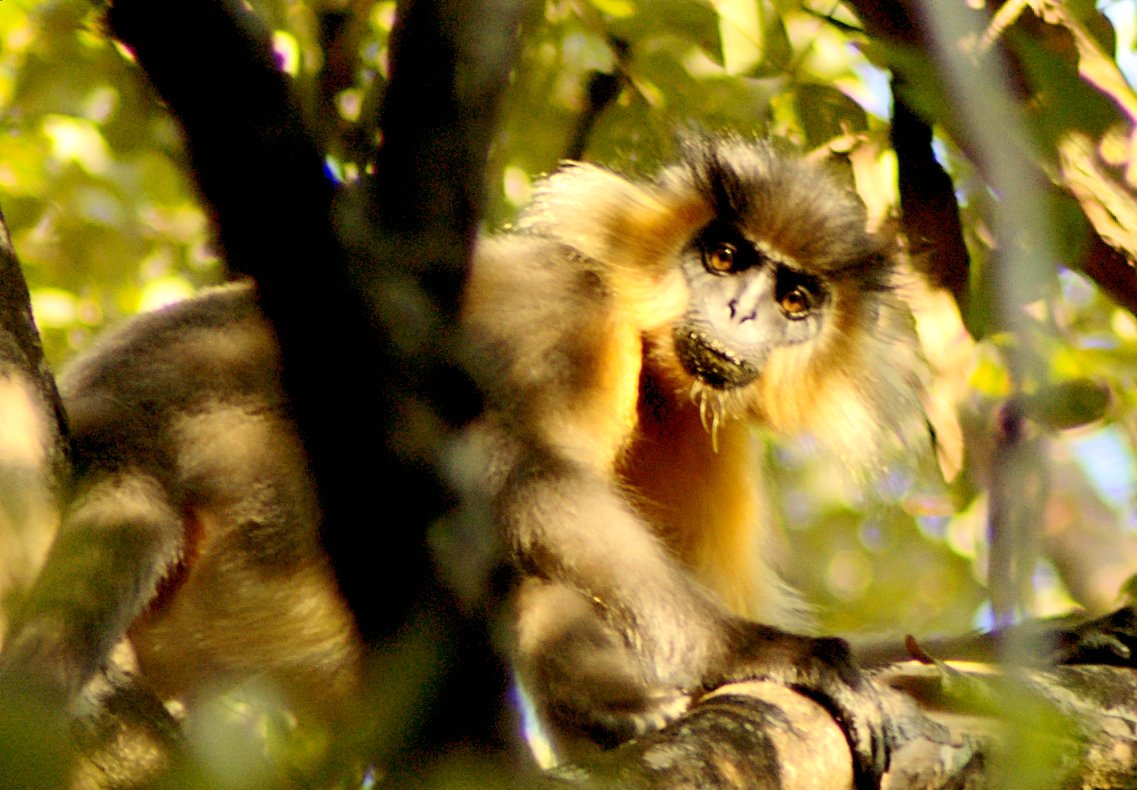
Photo: Pankaj from Bangalore, India, CC BY-SA 2.0
Manas lies at the foot of the Himalaya in the west of the Indian state of Assam, along the border of Bhutan, where the Manas river comes out of the hills and spreads over the plain, and it is one of the most beautiful wildlife reserves in India, a tiger reserve, an elephant reserve, a biosphere reserve and a World Heritage Site at once, which has recovered remarkably from a period of ruin. It is reached from Guwahati, the chief city of Assam, which has the nearest airport, in about three and a half to four hours by road, 140 kilometres, by way of the small town of Barpeta Road, which has a railway station and the park's field office; the main entrance, at the village of Bansbari, is twenty kilometres beyond it.
Lodges, a government tourist bungalow and a growing number of homestays and camps run by local conservation societies stand near the gate, and the forest department has a simple rest house at Mathanguri, deep inside the park on the bank of the river at the Bhutanese border, the most romantic place to stay, which must be booked through the field director's office. There are three ranges, of which the central, Bansbari, is the one used by almost all visitors; Bhuiyapara, to the east, and Panbari, to the west, are little developed. Visits are made by hired open jeep, with a forest guard, on safaris of three to four hours in the early morning and the afternoon, or on a longer drive of a full day the twenty kilometres through grassland and forest to Mathanguri and back, which is much the best, since it crosses every kind of habitat. Elephant rides from Bansbari at dawn, and rafting and boat trips on the Manas river from Mathanguri, drifting down past sandbanks where animals come to drink, are also offered. Entry, vehicle, guard and camera fees are paid at the gate.
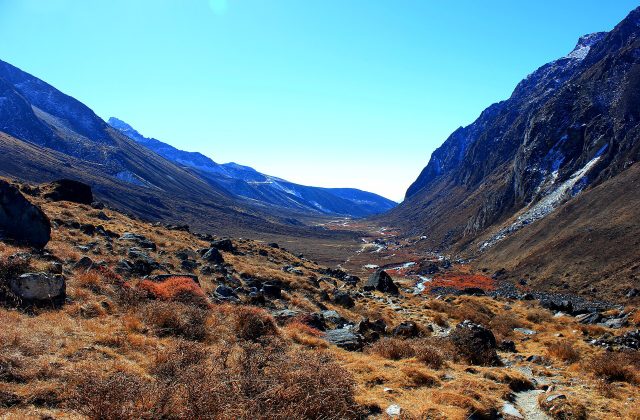
Manas was a reserved forest and the hunting preserve of the royal family of Cooch Behar and the raja of Gauripur, was declared a sanctuary in 1928, one of the first nine tiger reserves of India in 1973, a World Heritage Site in 1985, and a national park in 1990, its core now covering some 500 square kilometres within a tiger reserve of 2,800; it is continuous with the Royal Manas National Park of Bhutan to the north, so that the two protect an unbroken sweep of country from the hot plains up into the Himalayan forests. The Manas, a swift, clear, green river, the largest Himalayan tributary of the Brahmaputra, divides as it enters the plain into several channels which shift their beds from year to year, and the park's landscape is a creation of this restless water: along the foot of the hills a belt of boulders and gravel, the bhabar, covered with tall, dry deciduous and semi-evergreen forest; below it the terai, where the water that sank into the gravel emerges again, a mosaic of alluvial grasslands, in which the grass grows three and four metres high, of swamps, and of riverine woodland. These wet grasslands are the rarest and most threatened habitat of the Indian subcontinent, almost all having been ploughed, and Manas holds the largest area that survives, which is why it shelters more species listed as endangered than any other protected area in India.
It is the principal home in the world of the pygmy hog, the smallest of all pigs, barely twenty-five centimetres high, which was believed extinct until it was rediscovered in 1971, and of the hispid hare; of the golden langur, a monkey with a coat of pale gold, made known to science only in 1953 and confined to a small area on either side of the Bhutanese border; and of the Bengal florican, a rare bustard whose males leap above the grass in display. It also holds tigers, clouded leopards, wild elephants in large herds, the wild water buffalo, regarded as the purest stock remaining, gaur, swamp deer, hog deer, the capped langur, the hoolock gibbon, the Gangetic dolphin, and more than 450 species of birds, including the great hornbill. Its recent history is dramatic. From the late 1980s the agitation of the Bodo people for a state of their own turned into an armed insurgency, which used the park as its base; guard posts were burned, staff killed, the entire population of about a hundred one-horned rhinoceroses was wiped out by poachers, and in 1992 UNESCO put Manas on the list of World Heritage in danger. A political settlement in 2003 created an autonomous Bodo council, which made the park's revival a matter of pride: former poachers and militants were recruited as guards and guides, rhinoceroses were brought from Kaziranga and Pobitora from 2008 and now number about fifty, swamp deer were reintroduced, and in 2011 the park was removed from the danger list.
The park is open from the beginning of October or November to the end of April or mid-May, according to the state of the tracks, and is closed during the monsoon, from June to September, when the rivers flood and much of it is under water. From November to February the weather is cool and sunny, 10 to 25 degrees, with misty mornings that are cold in an open jeep, and the grass is tall, so that the larger animals are seen mainly on the tracks and riverbanks;
in January and February the forest department burns the grasslands in patches, and from late February to April the fresh growth draws rhinoceroses, buffalo, elephants and deer into the open, which makes this the best time for viewing, though it grows hot and thundery in April. The Bengal florican displays from March to May. Bring warm layers for winter mornings, binoculars, and dust protection. The situation in the Bodoland region has been calm for some years, but it is sensible to check locally. Allow two to three nights. Guwahati is four hours away, and Kaziranga a further five to the east.
240 km away
Kaziranga lies on the southern bank of the Brahmaputra in the state of Assam, in the north-east of India, and it is the…
1 ticket or tour
280 km away
Khangchendzonga National Park occupies the whole north-western quarter of the small Indian state of Sikkim, in the…
2 tickets & tours
288 km away
Singalila is a high forested ridge on the frontier between India and Nepal, in the Darjeeling hills of West Bengal, and…
3 tickets & tours
No online tour for Manas National Park is listed on GetYourGuide; entry, where it is charged, is paid at the gate or through the park authority. Nearby parks with bookable tours are listed on this page.
The park is open from the beginning of October or November to the end of April or mid-May, according to the state of the tracks, and is closed during the monsoon, from June to September, when the rivers flood and much of it is under water.
Allow two to three nights.
Manas National Park covers 500 km².
Manas National Park was established in 1990.
Manas National Park is in Assam, India. The map on this page shows the exact spot.
Assam, India
Kaziranga lies on the southern bank of the Brahmaputra in the state of Assam, in the north-east of India, and it is the…
1 ticket or tour