
Andasibe-Mantadia National Park
Madagascar
Andasibe-Mantadia is the most visited rainforest in Madagascar, for a simple reason: it lies on the main road from the…
3 tickets & tours
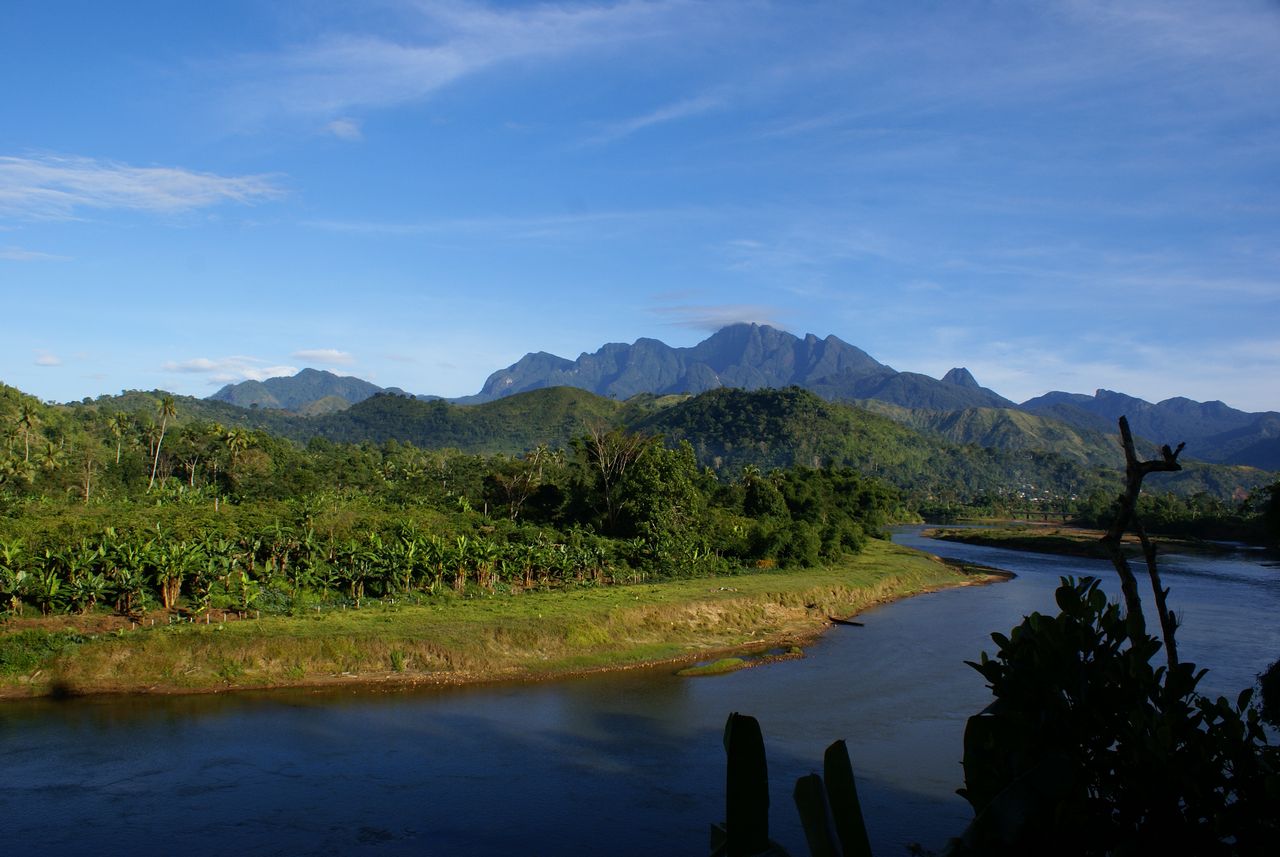
Photo: Eric Mathieu, CC BY-SA 3.0
Marojejy is a steep, wild massif clothed in rainforest in the north-east of Madagascar, in the Sava region, the vanilla capital of the world, and it is one of the most rewarding and least visited parks of the island, a place for fit walkers who do not mind rain, mud and simple huts. Getting there is the first difficulty: the region is virtually cut off by road from the rest of the country, and visitors fly from Antananarivo to Sambava, on a service that is neither frequent nor reliable, and then drive sixty kilometres, an hour and a half, on a good tarred road towards Andapa, to the park office at the village of Manantenina. There the entrance fees are paid and the compulsory guide, a cook and porters are engaged at fixed rates; most visitors arrange all this in advance through one of the operators in Sambava or Andapa, and the long hiking tours of northern Madagascar that start in Antananarivo or Diego Suarez include it.
The park has a single trail, which climbs the mountain from camp to camp, and the usual visit takes three to five days. From the office it is a hot walk of two or three hours through rice fields and vanilla plots to the park boundary, and then on to Camp Mantella, at 450 metres, in lowland rainforest, four to five hours in all; two hours more, steeper, lead to Camp Marojejia, at 775 metres, below a great rock face, where the silky sifaka lives and where most visitors spend two nights; a very steep climb of two hours over roots and rocks reaches Camp Simpona, at 1,250 metres; and from there the summit, 2,132 metres, is a strenuous ascent of four to five hours, attempted in the early morning in fair weather. Each camp has bunk huts with mattresses, a kitchen shelter, and a toilet. Day visits reach only the forest edge; the vanilla tours from Sambava combine a plantation with a short walk.
Live dates and prices from GetYourGuide. Free cancellation on most tickets.
Marojejy was made a strict nature reserve in 1952, closed to all but scientists, on the urging of the French botanist Henri Humbert, who had explored it in 1948 and afterwards published a book calling it a marvel of nature, the most impressive massif in all Madagascar; it was converted to a national park and opened to visitors in 1998, and in 2007 was inscribed as part of the Rainforests of the Atsinanana, a World Heritage Site, which has been on the list of sites in danger since 2010 because of the illegal felling of rosewood that swept through Marojejy and neighbouring Masoala during the political crisis of 2009. It covers about 555 square kilometres of a mountain block of ancient granite and gneiss, which rises from seventy-five metres above sea level to 2,132 in a horizontal distance of a few kilometres, and because the slopes are so steep and the rainfall so heavy, more than three metres a year on the eastern side, the zones of vegetation are compressed and intact as almost nowhere else on the island: dense lowland rainforest with trees of thirty-five metres; mid-altitude forest hung with moss, ferns and orchids;
stunted, gnarled cloud forest dripping with lichens; and, above 1,800 metres, the last untouched mountain heath in Madagascar, a thicket of heathers, bamboos, dwarf palms and ground orchids that has never burned. The inventory is astonishing: more than two thousand flowering plants, some 275 ferns, thirty-five palms, several confined to the massif, 118 birds, including the helmet vanga, with its massive blue bill, which is the park's emblem and nests near Camp Mantella, and nearly 150 reptiles and amphibians, more than in any other protected area of the country, among them leaf-tailed geckos, minute Brookesia chameleons the size of a fingernail, and mantella frogs. There are eleven lemurs, and one of them is the reason many visitors come: the silky sifaka, a large lemur with long, pure white, silken fur and a bare dark face, called the angel of the forest, which is among the twenty-five rarest primates in the world, with perhaps fewer than a thousand animals, none of which has ever survived in captivity. Several groups near Camp Marojejia have been habituated by researchers, and trackers go out early to find them.
The park is open all year, but there is no true dry season on this coast. The least wet and most favourable months are April to May and September to December, with October and November generally thought the best, warm, relatively dry and with birds and reptiles most active; from January to March cyclones strike the north-east, rain is torrential, streams become impassable and flights are disrupted; from June to August it is cooler, with persistent drizzle and cold nights at the upper camp.
Leeches are abundant in wet weather, the trail is slippery with roots and clay at all times, and the summit is often in cloud, so that a clear view is a matter of luck. Bring a good waterproof, a warm layer, a sleeping bag, a head torch, walking poles, leech socks and spare dry clothes in plastic bags. Allow four to five days with travel. Andapa and the Anjanaharibe-Sud reserve are forty minutes beyond the park office, the vanilla plantations and beaches of Sambava an hour and a half back.
Yes. GetYourGuide lists 2 tickets and tours for Marojejy National Park, with live dates and prices and free cancellation on most of them.
The park is open all year, but there is no true dry season on this coast.
Allow four to five days with travel.
Marojejy National Park covers 555 km².
Marojejy National Park was established in 1952.
Marojejy National Park is in Madagascar. The map on this page shows the exact spot.
Madagascar
Andasibe-Mantadia is the most visited rainforest in Madagascar, for a simple reason: it lies on the main road from the…
3 tickets & tours
Madagascar
Isalo is the most visited national park in Madagascar, a massif of eroded sandstone rising out of the grasslands of the…
2 tickets & tours
Madagascar
Ranomafana is a park of steep, misty mountain rainforest in the south-east of Madagascar, on the edge of the central…
No online ticket

