Valley of Flowers National Park
41 km away
The Valley of Flowers is a high hanging valley in the Garhwal Himalaya, in the Chamoli district of the Indian state of…
2 tickets & tours
Mountain Park · Uttarakhand · India
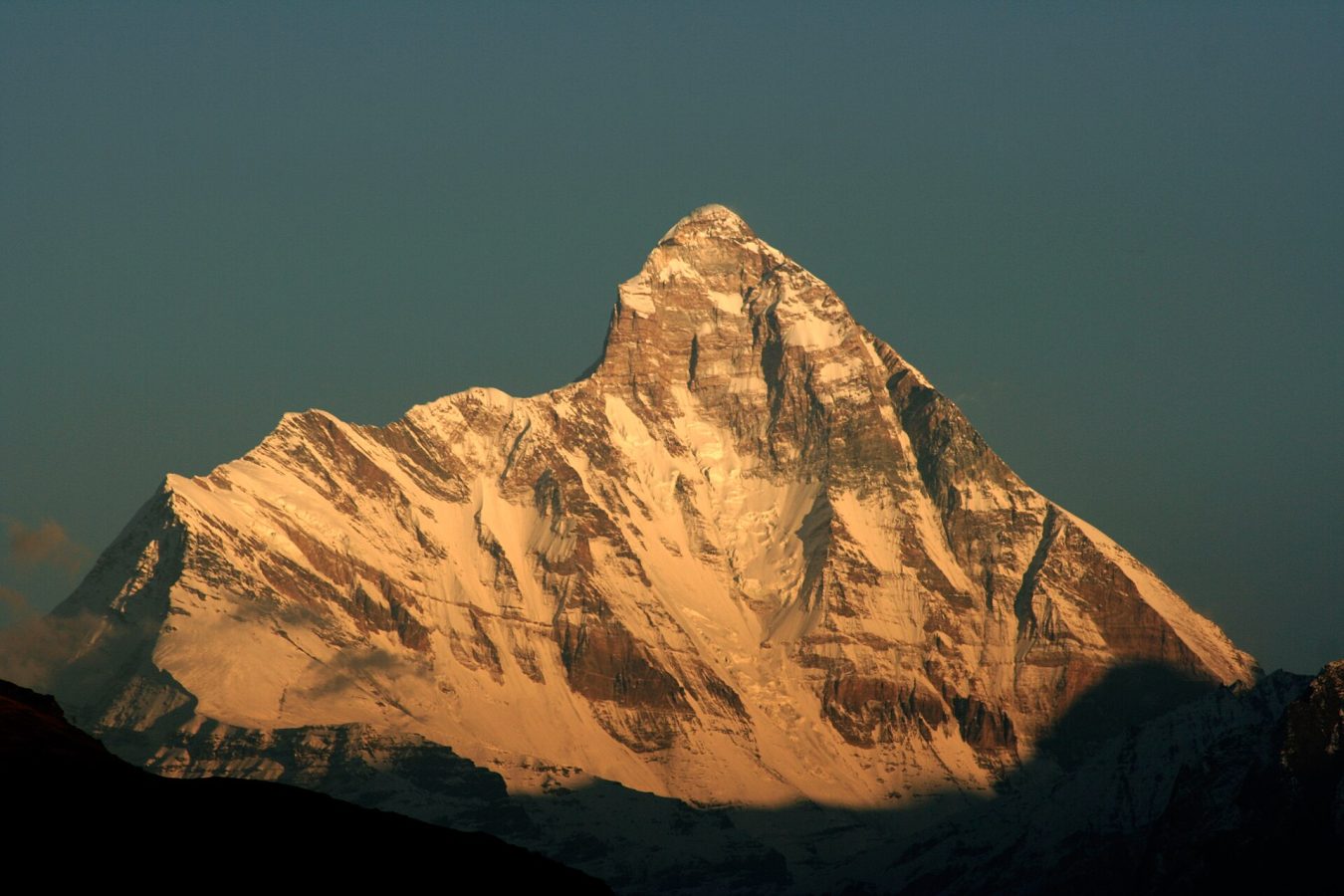
Photo: Michael Scalet from India, CC BY-SA 2.0
Nanda Devi National Park, in the Garhwal Himalaya of the Indian state of Uttarakhand, protects the mountain sanctuary that surrounds Nanda Devi, the highest peak lying wholly within India, and the essential fact about it is that its heart, the inner sanctuary, has been closed to all visitors, trekkers and mountaineers alike, since 1982. What may be visited, under strict regulation, is a limited route on its outer edge. The approach is by the long road up the Alaknanda valley from Rishikesh or Haridwar, which are themselves five to six hours from Delhi, to the pilgrim town of Joshimath, 250 kilometres and nine to ten hours, and then twenty-five kilometres further up the Dhauliganga valley, on the road to the Niti pass, to the villages of Lata and Reni.
From Lata, a trek of about nine days there and back, opened in 2003 and managed with the village community, follows the historic route of the early expeditions up steep forested slopes to the high meadow of Lata Kharak, at 3,700 metres, over the ridge of Dharansi at about 4,250, where the whole northern wall of the sanctuary and the twin summits of the goddess come into view, and as far as the alp of Dibrugheta, beyond which nobody may go. Numbers are limited to a few small groups at a time and a few hundred people a season, a permit must be obtained from the forest department in Joshimath, and local guides and porters from Lata and Tolma, arranged through the village's own tourism cooperative or through trekking agencies in Joshimath and Rishikesh, are compulsory. Those without the time or the fitness can see the mountain from the ski resort of Auli, above Joshimath, reached by road or cable car, from the Kuari pass trek, a classic walk of five days on the opposite side of the valley, and, best of all in the view of many, from the hill stations of Kausani and Binsar far to the south.
The national park was established in 1982, covers about 625 square kilometres, and was inscribed as a World Heritage Site in 1988, the listing being extended in 2005 to include the Valley of Flowers, a day's journey to the north-west; both are the core of a biosphere reserve of more than five thousand square kilometres. Nanda Devi, 7,816 metres, the bliss-giving goddess, is the patron deity of Garhwal and Kumaon, an aspect of Parvati, the consort of Shiva, worshipped in temples throughout the hills and honoured every twelve years by a great pilgrimage on foot, led by a four-horned ram, which lasts three weeks and ends at a glacier lake. The mountain stands in the middle of an extraordinary natural fortress: a ring of peaks, a dozen of them over 6,400 metres, more than a hundred kilometres in circumference, with no pass lower than 5,000 metres, enclosing a basin of glaciers and high pastures, which is breached at one point only, on the west, where the Rishi Ganga, draining the whole sanctuary, escapes through a gorge of frightful depth and steepness. For half a century the finest mountaineers of the day tried to find a way in and failed, until in 1934 Eric Shipton and Bill Tilman, with three Sherpas, travelling light and living on local food, forced a route along the walls of the gorge and became the first human beings known to have entered the inner sanctuary, where they found herds of bharal that had never learned to fear man;
two years later Tilman and Noel Odell climbed the mountain, which remained until 1950 the highest summit ever reached. The story has a strange sequel. In 1965, and in the years following, American and Indian intelligence agencies sent expeditions to place on the mountain a listening device, powered by a plutonium generator, to monitor Chinese missile tests; it was cached during a storm, swept away by an avalanche, and has never been found. In the 1970s the sanctuary was overrun by expeditions and trekkers, whose porters and pack animals stripped the juniper for fuel, polluted the camps and disturbed the wildlife, and in 1982 the government closed it completely, a decision that deprived the Bhotia people of the border villages of their grazing and of their income as porters, without compensation, and provoked a long protest. It was in one of those villages, Reni, in March 1974, that the women, led by Gaura Devi, faced down the contractors' axemen by embracing the trees, the event from which the Chipko movement took its fame. In February 2021 a mass of rock and ice broke from a peak on the sanctuary's rim and sent a flood down the Rishi Ganga and Dhauliganga, destroying two hydroelectric projects and killing more than two hundred people. The park shelters the snow leopard, the Himalayan musk deer, the bharal, the Himalayan tahr, the serow, the brown and black bears and more than a hundred species of birds.
The permitted trek is open from about May to October, with a break during the monsoon. The best periods are from mid-May to the end of June, when the snow has cleared from the ridges, the rhododendrons and alpine flowers are coming out and the weather is fairly settled, and from mid-September to mid-October, after the rains, when the air is at its clearest and the views of the peaks are finest, with hard frosts at night. From July to early September the monsoon brings heavy rain, cloud, leeches in the forest and, above all, landslides on the road from Rishikesh, which is blocked for hours or days several times each season;
the district round Joshimath has also suffered from serious ground subsidence in recent years, and the state of the road and the town should be checked. In winter the high ground is under snow. The route gains height quickly, so allow for acclimatisation, and bring a warm sleeping bag, down jacket and waterproofs. Allow twelve to fourteen days from Delhi. The temple of Badrinath and the Valley of Flowers are reached from the same valley.
41 km away
The Valley of Flowers is a high hanging valley in the Garhwal Himalaya, in the Chamoli district of the Indian state of…
2 tickets & tours
132 km away
Corbett is India's oldest tiger reserve, five to six hours from Delhi in the Himalayan foothills of Uttarakhand,…
16 tickets & tours
178 km away
Rajaji is the tiger reserve that lies on the doorstep of the holy towns of Haridwar and Rishikesh, in the foothills of…
3 tickets & tours
No online tour for Nanda Devi National Park is listed on GetYourGuide; entry, where it is charged, is paid at the gate or through the park authority. Nearby parks with bookable tours are listed on this page.
The permitted trek is open from about May to October, with a break during the monsoon.
Allow twelve to fourteen days from Delhi.
Nanda Devi National Park covers 625 km².
Nanda Devi National Park was established in 1982.
Nanda Devi National Park is in Uttarakhand, India. The map on this page shows the exact spot.
Uttarakhand, India
Corbett is India's oldest tiger reserve, five to six hours from Delhi in the Himalayan foothills of Uttarakhand,…
16 tickets & tours
Uttarakhand, India
Rajaji is the tiger reserve that lies on the doorstep of the holy towns of Haridwar and Rishikesh, in the foothills of…
3 tickets & tours
Uttarakhand, India
The Valley of Flowers is a high hanging valley in the Garhwal Himalaya, in the Chamoli district of the Indian state of…
2 tickets & tours