Nikko National Park
Japan
Nikko is the mountain park two hours north of Tokyo whose shrines are a World Heritage Site and whose lakes and…
24 tickets & tours
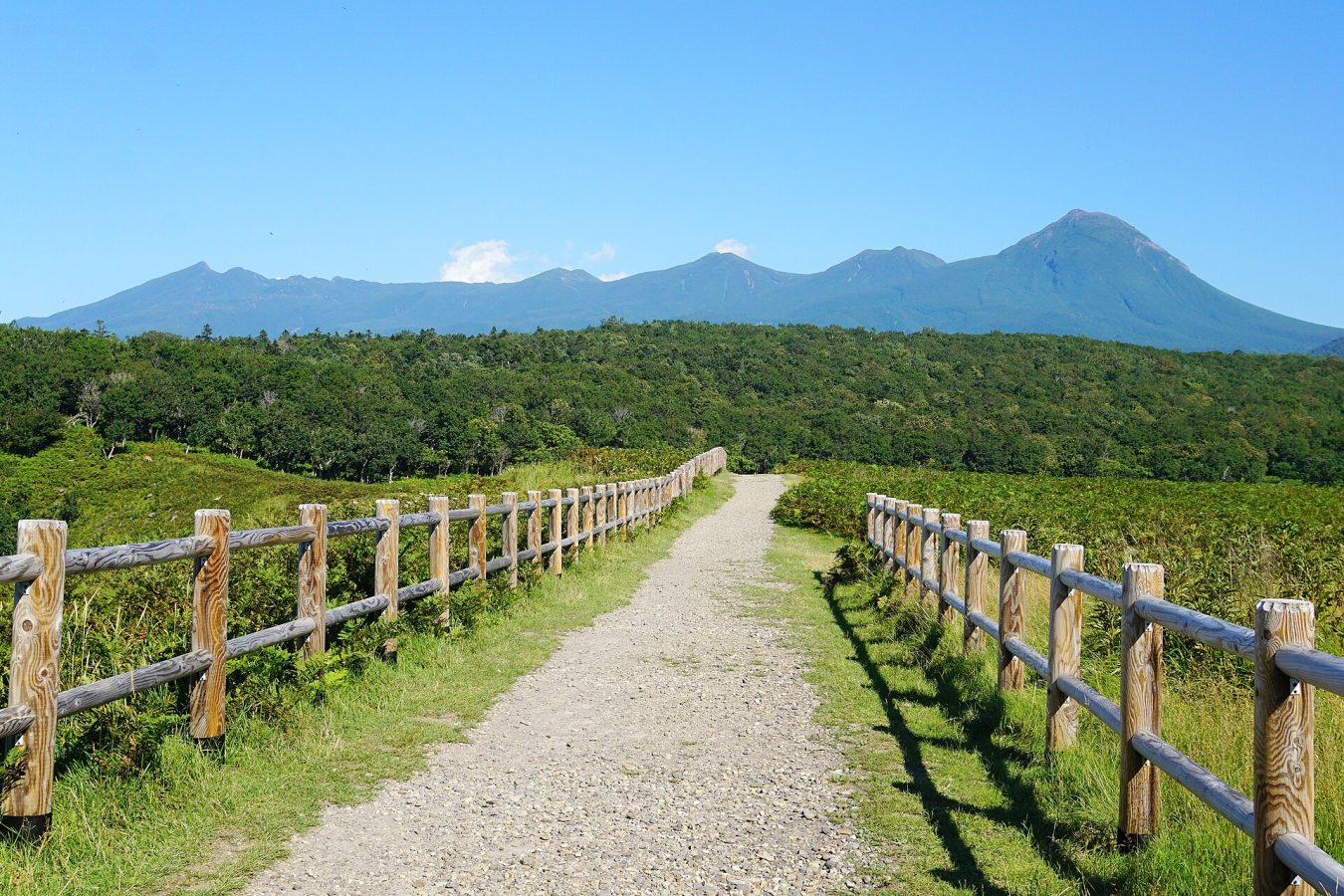
Photo: 663highland, CC BY 2.5
Shiretoko is a narrow, mountainous peninsula, seventy kilometres long, at the north-eastern extremity of Hokkaido and of Japan, thrusting into the Sea of Okhotsk, and it is regarded as the last true wilderness in the country, the outer half of it having no roads at all. It has two gateways, on opposite coasts, joined by a single road over the Shiretoko pass, which is open only from about late April to early November. Utoro, on the western side, is the main base, with hotels and hot springs, about two hours by car from Memanbetsu airport, which has flights from Tokyo and Sapporo, or reached by train to Shiretoko-Shari and a bus of fifty minutes; Rausu, a fishing port on the eastern side, is reached from Nakashibetsu airport or Kushiro. Multi-day wildlife tours, some of them starting far off in central Hokkaido, take in both.
From Utoro a road runs to the Shiretoko nature centre, from which an easy path of twenty minutes leads to the cliff-top view of the Furepe waterfall, and on to the Five Lakes, the principal sight, where an elevated wooden boardwalk of 800 metres, protected by an electric fence against bears, free and open to all, leads to the first lake, while the ground-level trail of three kilometres round all five is controlled: in the season when bears are most active, from about 10 May to the end of July, it may be walked only with a licensed guide, booked in advance, and at other times after a short lecture and payment of a fee. Sightseeing boats from Utoro cruise along the roadless coast towards the cape, past waterfalls dropping into the sea and, often, bears foraging on the shore. From Rausu, boats go out into the Nemuro strait to watch whales and, in winter, eagles. The climb of Mount Rausu, from the hot spring of Iwaobetsu, is a full day.
Live dates and prices from GetYourGuide. Free cancellation on most tickets.
The national park was established in 1964 and covers 386 square kilometres, and in 2005 the peninsula and its surrounding sea were inscribed as a World Heritage Site, for a reason that is unusually clear: it is one of the best examples in the world of the dependence of a land ecosystem on the sea. The name comes from the Ainu words sir etok, the end of the earth, or the place where the land juts out. Shiretoko is the most southerly point in the northern hemisphere at which the sea freezes. The fresh water poured into the Sea of Okhotsk by the Amur river forms a surface layer of low salinity, which freezes in the Siberian winter, and the floes drift south on wind and current to reach this coast in late January, packing the western shore until March. On the underside of the ice grow algae, and when it melts in spring there is an explosion of plankton, which feeds krill and small fish, which feed the salmon, the pollock, the seals, the sea lions and the whales. In autumn the pink and chum salmon swarm up the peninsula's short rivers to spawn and die, and are eaten by brown bears, foxes, eagles and owls, which carry their remains into the forest, so that the trees themselves are nourished by nitrogen from the ocean.
The result, on land, is one of the densest populations of brown bears in the world, several hundred on the peninsula, which are seen from the roads, the boats and the boardwalks with a frequency that has become a problem, since photographers crowd them and some bears have lost their fear of people. Yezo sika deer, extremely numerous, red foxes, sables, and Blakiston's fish owl, the largest owl in the world, of which about half the tiny Japanese population lives here, inhabit the forests of Sakhalin fir, Mongolian oak and Erman's birch. In winter, up to two thousand Steller's sea eagles, enormous, black and white with a massive yellow bill, and white-tailed eagles gather on the drift ice off Rausu, which is the best place in the world to see them. The strait between Rausu and the Russian-held island of Kunashiri, only twenty-five kilometres away, is very deep close to shore, and brings sperm whales, orcas, Baird's beaked whales, minke whales and Dall's porpoises within a short boat ride. The spine of the peninsula is a chain of volcanoes, culminating in Mount Rausu, 1,661 metres, and Mount Io, which erupts molten sulphur, and the Kamuiwakka river, fed by hot springs, runs warm over a series of cascades in which one can bathe. In April 2022 a tour boat from Utoro sank in cold, rough seas with the loss of all twenty-six people aboard, a disaster that led to much stricter safety rules for all the cruises.
The park has two seasons, each superb. The green season runs from late April to October: the pass road opens at the end of April between walls of snow, June and July bring alpine flowers and long days, July to September are the months for sperm whales off Rausu, orcas being commonest from April to June, and from late August to October the salmon run and the bears fish at the river mouths, with autumn colours in early to mid-October. The boats to the cape run from about late April to October, and cancel in rough seas.
The drift-ice season lasts from late January to mid-March, with February the surest month, when visitors walk and float on the ice off Utoro in dry suits with a guide, and take the eagle-watching cruises from Rausu at dawn; the Five Lakes ground trail is closed from November to April except on guided snowshoe tours. Book guides for the Five Lakes ahead in the bear season. Never approach or feed a bear, and carry a bell on the trails. Allow two to three days. Abashiri is two hours from Utoro, Lake Mashu and Akan two.
Yes. GetYourGuide lists one ticket or tour for Shiretoko National Park, with live dates and prices and free cancellation on most of them.
It has two gateways, on opposite coasts, joined by a single road over the Shiretoko pass, which is open only from about late April to early November.
Allow two to three days.
Shiretoko National Park covers 386 km².
Shiretoko National Park was established in 1964.
Shiretoko National Park is in Japan. The map on this page shows the exact spot.
Japan
Nikko is the mountain park two hours north of Tokyo whose shrines are a World Heritage Site and whose lakes and…
24 tickets & tours
Japan
Daisetsuzan is the mountainous heart of Hokkaido, Japan's northern island, a park the size of a small prefecture,…
3 tickets & tours
Japan
Fuji-Hakone-Izu is the most visited national park in Japan, and it is not one place but four, scattered across four…
2 tickets & tours
Japan
Iriomote-Ishigaki National Park covers the Yaeyama islands, the southernmost inhabited islands of Japan, which lie in…
1 ticket or tour
Japan
The Kerama islands are a cluster of some three dozen small, steep, green islands, only four of them inhabited, lying…
1 ticket or tour
Japan
Onuma is a small park of lakes and islets at the foot of a volcano in the south of Hokkaido, the northern island of…
1 ticket or tour