Nikko National Park
Japan
Nikko is the mountain park two hours north of Tokyo whose shrines are a World Heritage Site and whose lakes and…
24 tickets & tours
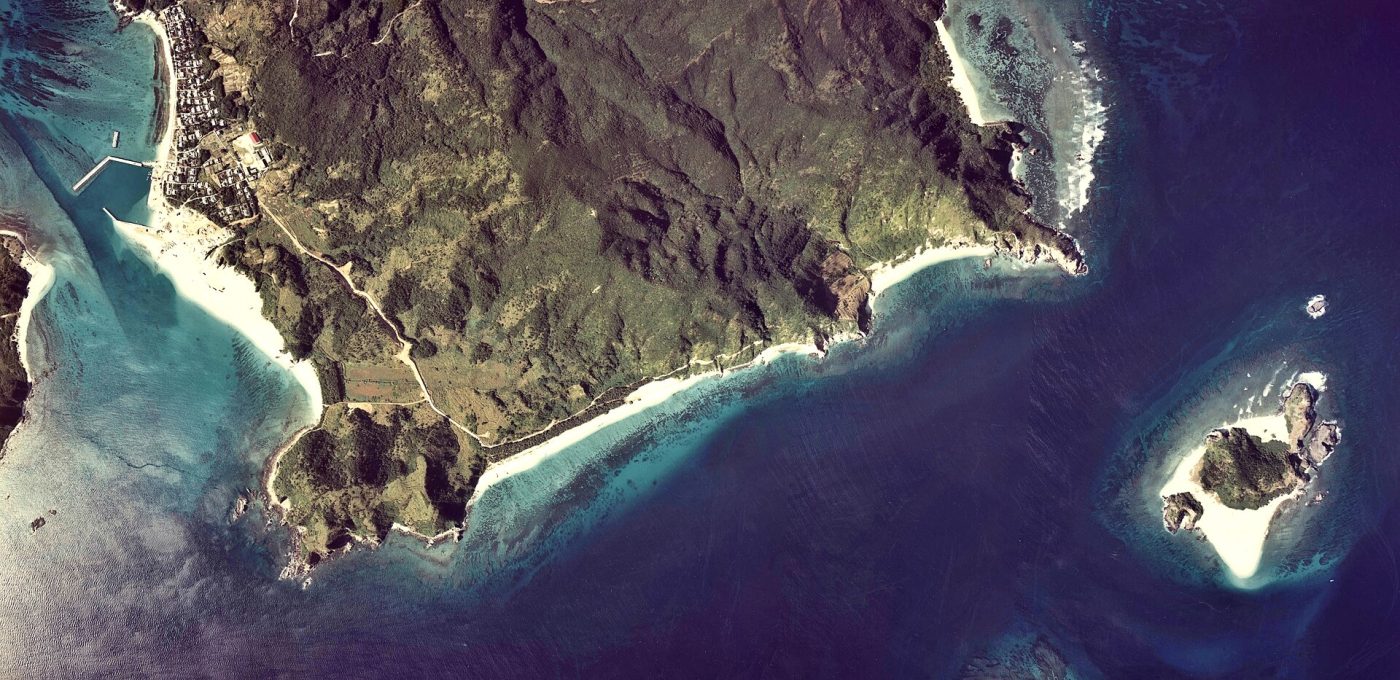
Photo: 国土交通省, Attribution
The Kerama islands are a cluster of some three dozen small, steep, green islands, only four of them inhabited, lying thirty to forty kilometres west of Naha, the capital of Okinawa, in the far south of Japan, and their waters are famous among Japanese divers for a transparency and colour that have a name of their own, Kerama blue. There are two ways to visit. The quickest, and the one chosen by most holidaymakers staying on the main island, is a boat excursion: dive shops and tour operators in Naha and in the resort town of Chatan, further up the coast, run half-day and full-day trips, taking about an hour each way, which anchor at two or three reefs round the uninhabited islets, among them the low sand cays of the Chibishi group, the nearest to Naha, for snorkelling, introductory dives or dives for certified divers, with equipment, wetsuits, guides and lunch supplied; one never sets foot on land.
The alternative is to go to the islands themselves, by the public boats that leave from Tomari port in Naha: a high-speed ferry reaches Tokashiki, the largest island, in thirty-five to forty minutes, and another reaches Zamami and its small neighbour Aka in fifty minutes to an hour and ten, with slower, cheaper car ferries on both routes, and seats on the fast boats should be reserved in summer. On Tokashiki, buses and hotel vans meet the ferry and cross the hills to the beaches of Aharen and Tokashiku; on Zamami, a village bus runs to Furuzamami beach, a crescent of white coral sand with fish a few metres from the shore, and to Ama beach, where green turtles graze the seagrass at high tide. A day trip is feasible, but a night or two in one of the family guesthouses, with kayaking, paddleboarding, hill walks to the observatories and a small boat between Zamami and Aka, is far more rewarding.
Live dates and prices from GetYourGuide. Free cancellation on most tickets.
Kerama Shoto became Japan's thirty-first national park on 5 March 2014, a date chosen because its numbers can be read in Japanese as coral day, the first new national park in the country for twenty-seven years, and it is essentially a park of the sea, covering about thirty-five square kilometres of land and more than nine hundred of water, the boundary being drawn seven kilometres out from the shores in order to include the breeding grounds of whales. The islands are the summits of a drowned range of hills, and their coastline of headlands, cliffs, deep inlets and pocket beaches was formed when the sea rose after the ice age, the channels between them being swept by the warm Kuroshio current, which brings clear oceanic water and the larvae of tropical species. About 250 species of reef-building corals, more than half of all those found in Japan, grow on the fringing reefs, in table, branching and massive forms, with all the fish of the Indo-Pacific reef, clownfish in their anemones, butterflyfish, parrotfish, damselfish in clouds, and manta rays, reef sharks and schools of dogtooth tuna in the channels; green, hawksbill and loggerhead turtles nest on the beaches, and the waters off Zamami and Aka were listed under the Ramsar convention in 2005.
The reefs have twice been badly damaged, by plagues of the crown-of-thorns starfish, which local divers have fought by hand for decades, removing the animals one at a time from chosen reefs, and by bleaching in hot summers, most severely in 1998 and 2016, and they have in large part recovered. Humpback whales, which had been hunted out by the 1960s, began to reappear in the 1980s, and now some hundreds come each winter from the feeding grounds off Russia and Alaska to mate and calve in these sheltered waters; Zamami's whale-watching association posts lookouts on the hilltops to direct the boats, and whales are often seen from the shore. On land, subtropical forest of pines, fan palms and cycads covers the hills, and a small, dark race of sika deer, descended from animals brought from Kyushu in the seventeenth century, lives on Aka, Geruma and neighbouring islets, swimming between them, and is a protected natural monument. The islands were prosperous in the days of the Ryukyu kingdom, whose tribute ships to China were crewed by Kerama sailors. They were also the place where the battle of Okinawa began: American forces landed here on 26 March 1945, to secure an anchorage, six days before the assault on the main island, and on Tokashiki, Zamami and Geruma several hundred civilians, families together, killed themselves and one another with grenades, razors and ropes, having been taught that capture meant something worse, a tragedy commemorated by monuments on each island and still argued over in Japan.
The park can be visited all year. The sea is warm enough for swimming without a wetsuit from about late April to October, reaching 28 or 29 degrees in summer, and falls to about 21 in winter, when diving and snorkelling continue in wetsuits. The rainy season lasts from about mid-May to late June, after which July to September are hot, sunny and the busiest months, above all the Japanese holidays in late July and mid-August; this is also the typhoon season, extending into October, and a typhoon stops all boats for several days, so that flexible plans are wise.
Whale watching runs from late December to early April, best in February and March. The northerly winds of winter often cancel the fast ferries while the larger ones still sail. Jellyfish nets protect the main beaches in summer. Wear a rash guard in place of sunscreen where possible, never stand on coral, and do not chase or touch the turtles. Allow a day, better two or three. Naha and Shuri castle are the starting point.
Yes. GetYourGuide lists one ticket or tour for Kerama Shoto National Park, with live dates and prices and free cancellation on most of them.
Allow a day, better two or three.
Kerama Shoto National Park covers 35 km².
Kerama Shoto National Park was established in 2014.
Kerama Shoto National Park is in Japan. The map on this page shows the exact spot.
Japan
Nikko is the mountain park two hours north of Tokyo whose shrines are a World Heritage Site and whose lakes and…
24 tickets & tours
Japan
Daisetsuzan is the mountainous heart of Hokkaido, Japan's northern island, a park the size of a small prefecture,…
3 tickets & tours
Japan
Fuji-Hakone-Izu is the most visited national park in Japan, and it is not one place but four, scattered across four…
2 tickets & tours
Japan
Iriomote-Ishigaki National Park covers the Yaeyama islands, the southernmost inhabited islands of Japan, which lie in…
1 ticket or tour
Japan
Onuma is a small park of lakes and islets at the foot of a volcano in the south of Hokkaido, the northern island of…
1 ticket or tour
Japan
Shiretoko is a narrow, mountainous peninsula, seventy kilometres long, at the north-eastern extremity of Hokkaido and…
1 ticket or tour