Kluane National Park and Reserve
297 km away
Kluane occupies the south-western corner of the Yukon, against the Alaskan border, and its gateway is the village of…
2 tickets & tours
Glacier Park · Alaska · United States

Wrangell-St Elias, in the south-east of Alaska against the Canadian border, is the largest national park in the United States, six times the size of Yellowstone, larger than Switzerland, a region of immense mountains, volcanoes and glaciers, and although it is one of the very few Alaskan parks that can be entered by road, it receives fewer visitors in a year than Yellowstone does on a summer day. There is no entrance fee. The main visitor centre is at Copper Center, on the Richardson Highway, about two hundred miles, four hours by road, north-east of Anchorage, outside the park's boundary, with an exhibition, a film and a view of the volcanoes of the Wrangell range. Two gravel roads lead into the park itself. The McCarthy Road, sixty miles long, follows the bed of an abandoned railway from the village of Chitina, across the single-lane Kuskulana bridge, seventy metres above a gorge, to the bank of the Kennicott river;
it is rough, slow, taking two to three hours, and hard on tyres, some hire companies forbid it, and the alternatives are a shuttle van from Glennallen or Chitina, or a flight of half an hour by air taxi from Chitina. At its end one leaves the car, crosses a footbridge, and walks or takes a shuttle the last miles to the tiny settlement of McCarthy, with a few lodgings, saloons and guiding companies, and, five miles beyond, to the ghost town of Kennecott, where the National Park Service and a licensed concessioner give tours of the old copper mill, and from which a path of two miles leads to the edge of the Root glacier, on which guided walks with crampons, ice climbing and longer treks are offered daily. The Nabesna Road, in the north, forty-two miles of gravel from Slana, gives access to quieter country, with campsites and trails. Everything else, which is nearly everything, is reached by bush plane, from McCarthy, Chitina, Glennallen or Yakutat, for flightseeing, for backpacking, or for rafting.
A national monument proclaimed in 1978 became, under the Alaska lands act of December 1980, a national park and preserve of about 53,000 square kilometres, thirteen million acres, most of it designated wilderness, and in 1979 it was inscribed, together with Kluane in the Yukon, to which Glacier Bay and the Tatshenshini-Alsek park of British Columbia were later added, as a World Heritage Site, the largest internationally protected area on land anywhere. Four great mountain ranges meet in it, the volcanic Wrangells, the Chugach, the eastern end of the Alaska range, and the St Elias mountains, the highest coastal range in the world, and it contains nine of the sixteen highest peaks in the United States, among them Mount St Elias, 5,489 metres, the second highest in both the United States and Canada, which rises directly from the tidewater of Icy Bay, a greater vertical relief than that of Everest, and which was the first part of Alaska to be seen by Europeans, by Vitus Bering on St Elias's day in 1741. Mount Wrangell, 4,317 metres, a vast shield volcano, is still active and steams from its summit in cold weather, and the other volcanoes of the range, Blackburn, Sanford and Drum, all over 3,600 metres, are clothed in ice. The park holds the greatest concentration of glaciers in North America, covering more than a quarter of its area: the Malaspina, where a number of glaciers spill out of the mountains on to the coastal plain and merge into a single lobe of ice larger than the state of Rhode Island, the largest piedmont glacier in the world, so big that its pattern of folded moraines can be appreciated only from the air or from space;
the Hubbard, the longest tidewater glacier in North America, more than a hundred and twenty kilometres long, which is advancing and has twice in recent decades dammed a fjord; the Nabesna, the longest valley glacier outside the polar regions; and the Bagley icefield. Its wildlife includes the largest population of Dall sheep in North America, mountain goats, caribou, moose, grizzly and black bears, wolves, two herds of introduced bison, and, on the coast, sea lions, harbour seals and sea otters, and the Copper river is famous for its run of red and king salmon, which the Ahtna Athabascans, the people of the region, still catch with fish wheels. In 1900 two prospectors, seeing from a distance what they took for a green meadow high on a mountainside above the Kennicott glacier, found that it was an outcrop of almost pure copper ore, the richest deposit ever discovered. The syndicate formed by the Guggenheim family and J. P. Morgan to exploit it built, between 1907 and 1911, at enormous cost, a railway of 196 miles from the coast at Cordova, across glaciers and canyons, and a company town, Kennecott, whose fourteen-storey mill, painted barn red, climbs the hillside; between 1911 and 1938 the mines yielded ore worth some two hundred million dollars, and when it ran out the last train left and the town was abandoned as it stood. It is now a national historic landmark, slowly being stabilised.
The park is open all year, but the visitor season runs from about late May to mid-September, and the services at McCarthy and Kennecott, the shuttles and the visitor centres operate only within it. June and July have the longest days, with daylight almost round the clock, wild flowers, temperatures of 15 to 25 degrees in the interior valleys, and the most mosquitoes; August is often wetter, with berries ripening; the first half of September brings brilliant autumn colours on the tundra and in the aspens, frosty nights, the first snow on the peaks and the first northern lights, and then the lodges close.
The coast, round Yakutat, is far wetter and cloudier than the interior at any season. Winter is long, dark and extremely cold, to minus forty and below, and the McCarthy Road is not maintained. Carry a full-sized spare tyre, fuel and food, since there are no services on either road, and bear spray on every walk. Backcountry travel requires complete self-sufficiency and experience with river crossings and bears. Allow three to four days for McCarthy and Kennecott. Valdez and Prince William Sound are three hours south of Copper Center.
297 km away
Kluane occupies the south-western corner of the Yukon, against the Alaskan border, and its gateway is the village of…
2 tickets & tours
No online tour for Wrangell-St Elias National Park and Preserve is listed on GetYourGuide; entry, where it is charged, is paid at the gate or through the park authority. Nearby parks with bookable tours are listed on this page.
There is no entrance fee.
There is no entrance fee.
The park is open all year, but the visitor season runs from about late May to mid-September, and the services at McCarthy and Kennecott, the shuttles and the visitor centres operate only within it.
Allow three to four days for McCarthy and Kennecott.
Wrangell-St Elias National Park and Preserve covers 53 320 km².
Wrangell-St Elias National Park and Preserve was established in 1980.
Wrangell-St Elias National Park and Preserve is in Alaska, United States. The map on this page shows the exact spot.
Alaska, United States
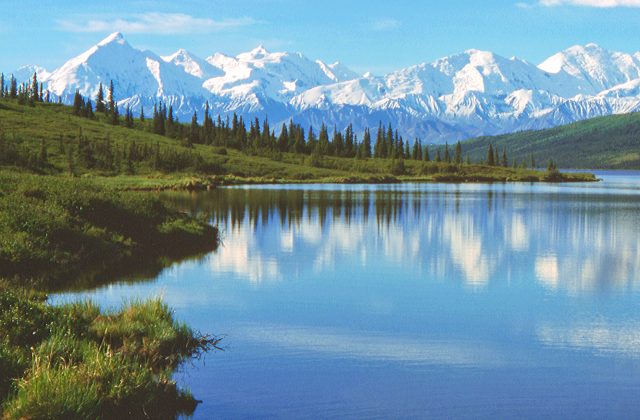
Denali is the subarctic wilderness around the highest mountain in North America, four hours north of Anchorage and two…
10 tickets & tours
Alaska, United States
Kenai Fjords is the ice-and-ocean park at the edge of the small port of Seward, two and a half hours south of Anchorage…
6 tickets & tours
Alaska, United States
Glacier Bay lies in the panhandle of south-eastern Alaska, west of the state capital, Juneau, a fjord more than a…
1 ticket or tour
Alaska, United States
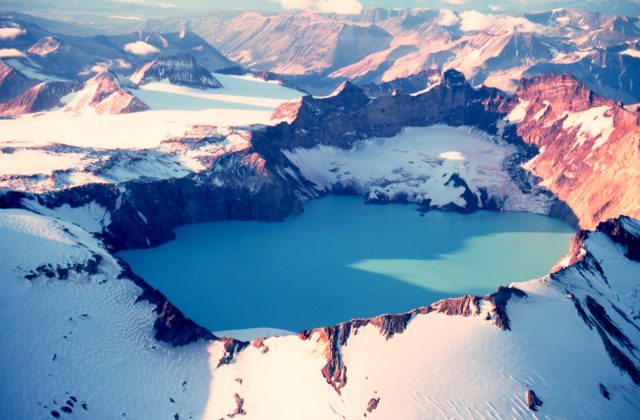
Katmai lies at the base of the Alaska Peninsula, in the south-west of the state, and no road leads to it or into it, so…
1 ticket or tour
Alaska, United States
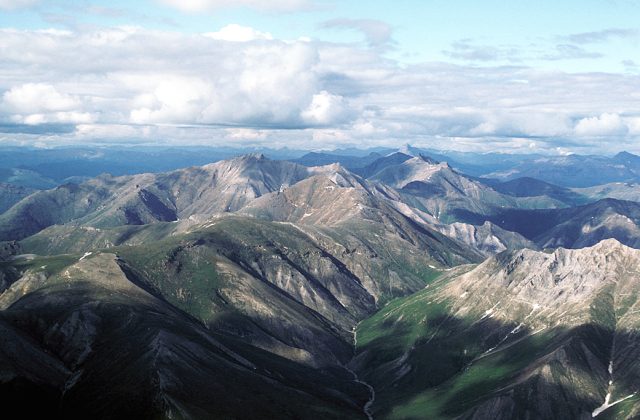
Gates of the Arctic, in the central Brooks Range of northern Alaska, lies wholly north of the Arctic Circle, and it is…
No online ticket
Alaska, United States
Lake Clark lies on the western side of Cook Inlet, in south-western Alaska, only about 160 kilometres from Anchorage,…
No online ticket