Nambung National Park
120 km away
Nambung is a coastal park on the Indian Ocean about two hundred kilometres north of Perth, the capital of Western…
19 tickets & tours
Forest Park · Western Australia · Australia
Yanchep is a small, old-established park on the northern edge of the metropolitan area of Perth, the capital of Western Australia, about forty-five to fifty kilometres, under an hour by road, from the centre of the city, and it has been a favourite weekend outing of Perth families for a century, a place of lawns, a lake, koalas, kangaroos and caves, as much a pleasure ground as a wilderness. It is reached by the Mitchell Freeway and Wanneroo Road, or by the suburban railway, which was extended to the new station of Yanchep in 2024, from which a bus or taxi covers the last few kilometres; day tours from Perth often combine it with the Pinnacles, further up the coast. An entry fee per vehicle is paid at the gate. The developed area is compact and easily walked.
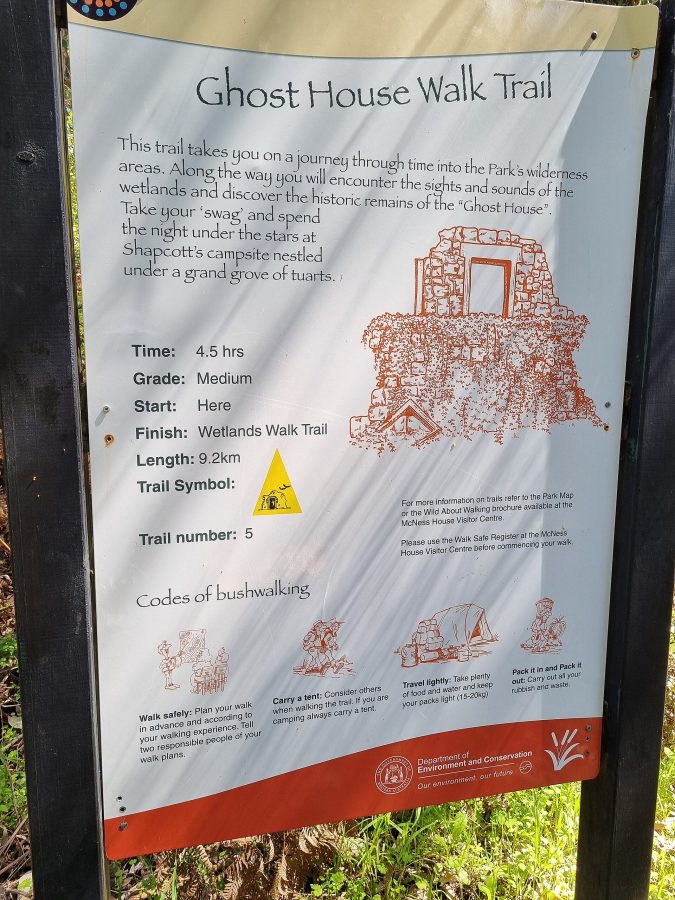
Round a broad expanse of lawn, shaded by tall tuart and peppermint trees and grazed at dawn and dusk by mobs of western grey kangaroos, stand a visitor centre in a historic house, a tea room, the Yanchep Inn, a mock-Tudor hotel of the 1930s, picnic shelters and barbecues, a golf course, and the koala boardwalk, a raised timber walkway of a few hundred metres through a grove of eucalypts in which a colony of about ten koalas lives, where one sees them at close range, generally asleep in a fork, and where keepers give talks. Paths lead along the shore of Loch McNess, the lake in front of the inn, where rowing boats used to be hired. Guided tours of forty-five minutes, several times a day, visit the Crystal cave, a limestone show cave, and must be booked at the visitor centre, and the Aboriginal experience, run at set times by Noongar guides, introduces the culture of the local people, their tools, weapons, dances and the didgeridoo. Nine marked walk trails, from a five-hundred-metre stroll to the fifty-two-kilometre Coastal Plain trail, start from here, and an aerial adventure course of ropes and zip lines occupies the trees.
Live prices from GetYourGuide for tours whose route includes this park. Free cancellation on most of them.
The land was first reserved in 1905, for the protection of its caves, was developed in the 1930s as a resort, and has been managed as a national park since 1957, the date of 2002 occurring in some lists being a later administrative change; it covers about 2,800 hectares of the Swan coastal plain. Its name comes from yandjip or yanget, the Noongar word for the bulrush that grows round its lakes and whose roots were an important food, and the area was a meeting and hunting place of the Whadjuk and Yued Noongar, to whom the lake is associated with the Waugal, the rainbow serpent that created the waterways. The park lies on a belt of limestone, formed from ancient coastal sand dunes whose shell fragments cemented them into rock, and rainwater seeping through it has dissolved more than four hundred and fifty caves, most of them small, of which the Crystal cave, discovered in 1903 by Henry White, the park's first caretaker, and opened to the public soon afterwards, is the largest and the only one regularly shown. The caves tell a cautionary story. They used to contain pools and streams, fed by the great body of groundwater, the Gnangara mound, that lies beneath the northern part of Perth, and in them lived a community of tiny, blind, colourless crustaceans found nowhere else, which fed on the mats of tuart roots that hung into the water.
Since the 1970s the water table has fallen by several metres, as a result of declining rainfall, the pumping of groundwater for the city's supply and for market gardens, and the planting of pine forests over the mound, the cave streams have dried up, their fauna has been declared critically endangered and may already be extinct in most of them, and Loch McNess itself, which was a deep, permanent lake on which launches once carried tourists, has shrunk to a marsh that dries out entirely in summer, in spite of attempts to keep it supplied by pumping. The park's founder as a resort was Louis Shapcott, a senior civil servant and chairman of the state gardens board, who in the depression of the 1930s used relief labour to build the inn, McNess House, the stone walls, the paths and a swimming pool filled from a cave, and brought in the first koalas, in 1938; the koala is not native to Western Australia, having died out there thousands of years ago, and the colony, replenished over the years with animals from the eastern states, is kept in a managed enclosure. The natural vegetation is more significant than the lawns suggest: woodland of tuart, a massive eucalypt that grows only on this coastal limestone and has been largely cleared for Perth's suburbs, with jarrah, marri, banksia and sheoak, and heath on the limestone ridges, which is bright with wild flowers from August to October. It is one of the last refuges near the city of Carnaby's black cockatoo, an endangered, white-tailed cockatoo that arrives in noisy flocks to feed on the banksias, and it shelters the quenda, the brush wallaby, the honey possum, the echidna, the bobtail lizard and the tiger snake, with water birds on the wetlands when they hold water. A bushfire in December 2019 burned a large part of the park, from which it has recovered.
The park is open every day of the year, from early morning until evening, the visitor centre, cave tours and cultural sessions keeping daytime hours. Spring, from late August to October, is the most attractive season, with the wild flowers out, the days mild, 20 to 25 degrees, and kangaroos with joeys on the lawns; autumn is also pleasant. Summer, from December to March, is hot and dry, often above 35 degrees, with a risk of bushfire that may close the walking trails or the whole park, though the cave remains a cool 18 degrees;
winter is mild and showery, with the lake at its fullest. Kangaroos are most numerous on the lawns early in the morning and in the late afternoon, and the koalas are most likely to be awake and feeding at those times too. Weekends and public holidays are busy with picnicking families. Do not feed the kangaroos or the birds. Carry water and a hat on the longer trails, and watch for snakes in warm weather. Allow half a day. The beach at Yanchep lagoon is ten minutes away, and the Pinnacles an hour and a half to the north.
120 km away
Nambung is a coastal park on the Indian Ocean about two hundred kilometres north of Perth, the capital of Western…
19 tickets & tours
Yes. GetYourGuide sells tickets and guided tours whose route includes Yanchep National Park; live prices are shown on this page.
An entry fee per vehicle is paid at the gate.
The park is open every day of the year, from early morning until evening, the visitor centre, cave tours and cultural sessions keeping daytime hours.
Yanchep National Park covers 28.6 km².
Yanchep National Park was established in 1957.
Yanchep National Park is in Western Australia, Australia. The map on this page shows the exact spot.
Western Australia, Australia
Nambung is a coastal park on the Indian Ocean about two hundred kilometres north of Perth, the capital of Western…
19 tickets & tours
Western Australia, Australia
Cape Range is the limestone range and the beaches of the North West Cape at Exmouth in Western Australia, with the…
4 tickets & tours
Western Australia, Australia
Francois Peron National Park occupies the northern end of the Peron peninsula, which juts into the middle of Shark Bay,…
1 ticket or tour
Western Australia, Australia
Cape Le Grand is a park of granite headlands and beaches of blinding whiteness on the remote south coast of Western…
No online ticket
Western Australia, Australia
Purnululu, in the East Kimberley region of the far north of Western Australia, contains the Bungle Bungle range, a maze…
No online ticket
Western Australia, Australia
Shannon National Park lies in the far south-west of Western Australia, in the country of the giant karri trees, about…
No online ticket