Twelve Apostles Marine National Park
Victoria, Australia
The Twelve Apostles are the limestone sea stacks on the south-west coast of Victoria that serve as the climax of the…
5 tickets & tours
Mountain Park · Victoria · Australia

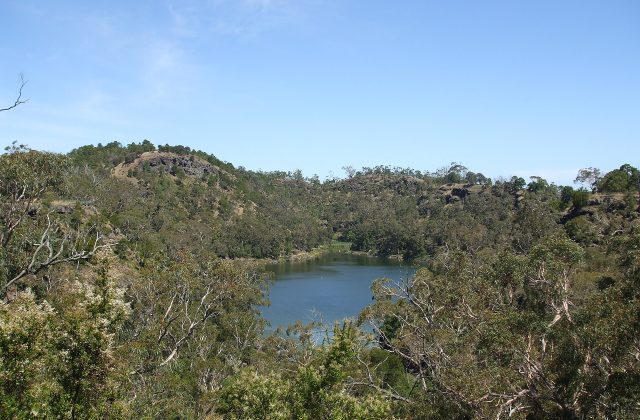
Photo: Alex Cohen, CC BY-SA 3.0
Alpine National Park is the largest park in Victoria, the high country of the Australian Alps between Mount Hotham, Falls Creek and the New South Wales border, four to five hours from Melbourne, and it is a self-drive and walking park with very few organised tours; the horseback rides from Tawonga in the Kiewa valley, run by the mountain cattlemen's families through the snow gums of the Bogong High Plains, are the exception and the most Australian way to see it. Almost everything else sold under the words alpine park refers to other countries. There is no entrance fee; the alpine resorts of Hotham and Falls Creek, which sit inside the park's boundaries, charge resort entry and parking in the ski season, and the Parks Victoria campsites and huts are free or booked online.
The walking is the reason to come: the day walks from Falls Creek across the High Plains to Wallace's hut and Cope hut, the climb of Mount Bogong from Mountain Creek, the Razorback ridge from Hotham to Mount Feathertop, and the multi-day Falls to Hotham Alpine Crossing of three days with a guided and catered version run by the local operators. In winter the cross-country trails at Falls Creek and Dinner Plain and the snowshoe walks from the resorts are the way in, and the four-wheel-drive tracks to the old cattlemen's huts and the Mitta Mitta river are for people with their own vehicles. Independent visitors need a car, and the mountain roads carry chains in winter.
Live dates and prices from GetYourGuide. Free cancellation on most tickets.
The park was created in 1989 from a string of older reserves and covers 6,623 square kilometres of the Great Dividing Range in north-eastern Victoria, joined to the Kosciuszko park across the border, and it holds the highest ground in the state: Mount Bogong at 1,986 metres, Feathertop, Hotham and the Bogong High Plains, a rolling tableland of snow-grass and sphagnum bogs above the tree line with the twisted, silver-barked snow gums at its edges. It is a landscape of long ridges rather than peaks, with the Razorback's knife-edge to Feathertop the most dramatic walk, and the valleys of the Kiewa, Mitta Mitta, Ovens and the upper Murray cutting down through mountain ash forest, the tallest flowering trees in the world, to the farmland below.
The cattlemen's huts scattered across the High Plains, Wallace's from 1889 among them, are the relics of the summer grazing that ended in the park in 2005, and the Bogong moth, which the Aboriginal peoples of the region gathered in the high caves in summer feasts, is still the mountain's emblem. The mountain pygmy possum, Australia's only hibernating marsupial, lives in the boulder fields around Hotham and Falls Creek and nowhere else in Victoria, the corroboree frog in the bogs, wombats and kangaroos on the plains, and the brumbies, the feral horses whose removal from the park is the bitterest local argument. The 2003 and 2020 bushfires burned huge areas, and the regrowth of the snow gums, which sprout again from their bases, is the park's slow recovery. The Alpine Walking Track crosses the park on its 650-kilometre way from Walhalla to Canberra.
The park is open at all times, with the resorts' ski season from June to early October and the alpine roads subject to snow closures in winter. Summer from December to March is the walking season, with warm days, cold nights, wildflowers on the High Plains in January and bushfire danger in the hottest weeks, when the park can be closed;
autumn in April and May is still and clear and the quietest time. Winter brings snow above 1,400 metres and the cross-country skiing. Start the high walks early because of afternoon storms. Allow two days for the High Plains and Bogong, three for the Alpine Crossing. Bright and Mount Beauty are the towns at the foot of the mountains, and Melbourne is four hours away.
Yes. GetYourGuide lists 2 tickets and tours for Alpine National Park, with live dates and prices and free cancellation on most of them.
There is no entrance fee; the alpine resorts of Hotham and Falls Creek, which sit inside the park's boundaries, charge resort entry and parking in the ski season, and the Parks Victoria campsites and huts are free or booked online.
There is no entrance fee; the alpine resorts of Hotham and Falls Creek, which sit inside the park's boundaries, charge resort entry and parking in the ski season, and the Parks Victoria campsites and huts are free or booked online.
The park is open at all times, with the resorts' ski season from June to early October and the alpine roads subject to snow closures in winter.
Allow two days for the High Plains and Bogong, three for the Alpine Crossing.
Summer from December to March is the walking season, with warm days, cold nights, wildflowers on the High Plains in January and bushfire danger in the hottest weeks, when the park can be closed; autumn in April and May is still and clear and the quietest time.
Alpine National Park covers 6 623 km².
Alpine National Park was established in 1989.
Alpine National Park is in Victoria, Australia. The map on this page shows the exact spot.
Victoria, Australia
The Twelve Apostles are the limestone sea stacks on the south-west coast of Victoria that serve as the climax of the…
5 tickets & tours
Victoria, Australia
Budj Bim, known until 2017 as Mount Eccles, is a small park round an extinct volcano in the basalt plains of…
1 ticket or tour
Victoria, Australia
French Island lies in the middle of Western Port, the large, shallow, tidal bay seventy kilometres south-east of…
1 ticket or tour
Victoria, Australia
Port Campbell National Park is a narrow strip of cliff-top heath along the south-west coast of Victoria, Australia, and…
1 ticket or tour
Victoria, Australia
Tower Hill is an extinct volcano on the coast of south-western Victoria, fifteen kilometres west of the city of…
No online ticket