
Naejangsan National Park
South Korea
Naejangsan is a compact mountain park in the south-west of South Korea, on the border of North and South Jeolla…
3 tickets & tours
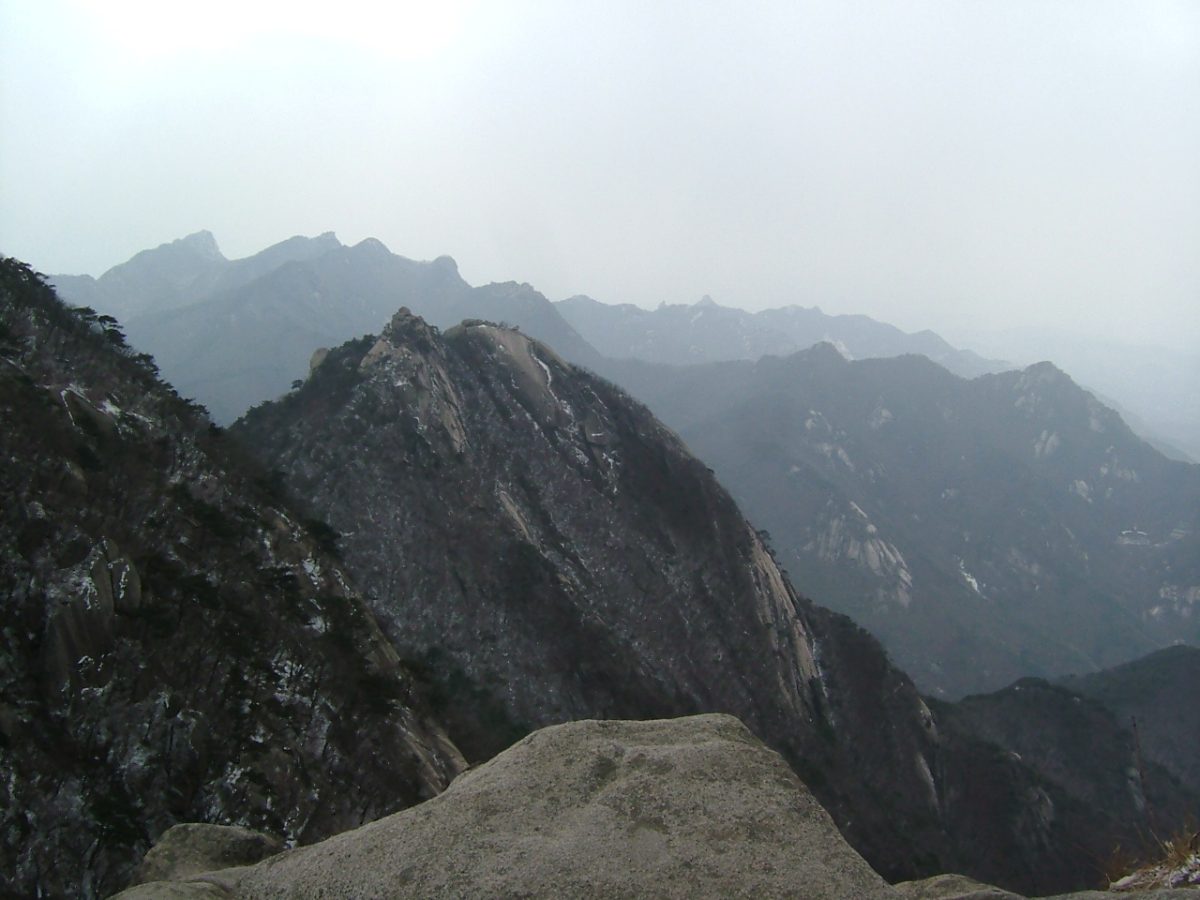
Photo: No machine-readable author provided. Geomr~commonswiki assum, CC BY-SA 3.0
Bukhansan is the granite mountain range inside the northern city limits of Seoul, reached by the underground and a short bus ride, and it is among the most heavily walked national parks on earth, with some five million visits a year to seventy-seven square kilometres; hiking is the national pastime of South Korea, and on any fine weekend the trails are a procession of people in immaculate technical clothing, carrying picnics of kimbap and rice wine for the summit. The park is free, the trails are well made, with stairs, railings and steel cables on the steep rock, and the signs are in Korean and English, so a guide is not strictly needed.
The guided hikes sold in Seoul, in small groups or privately, lasting five to seven hours, are worth considering all the same, for a first-time visitor: the guide meets you at a station or your hotel, chooses a route to suit the legs and the weather from a network that is confusing at its junctions, explains the fortress, the temples and the etiquette, and generally ends the day the Korean way, with pajeon pancakes and makgeolli at the restaurants by the trailhead or a soak in a bathhouse. The standard objective is Baegundae, the highest peak, by the shortest route from Ui-dong at the end of the Ui-Sinseol light-rail line, about four hours up and down, or from the Bukhansanseong entrance on the western side through the fortress, five or six. The Dobongsan section in the north, the easy Dulle-gil circuit round the mountain's foot, and the rock climbs on Insubong with a climbing guide are the alternatives.
Live dates and prices from GetYourGuide. Free cancellation on most tickets.
The park was established in 1983 and covers about 77 square kilometres in two sections, Bukhansan in the south and Dobongsan in the north, divided by the Uiryeong pass, an island of rock and forest entirely surrounded by a metropolitan area of twenty-five million people. Its name means the mountain north of the Han river, and its older name, Samgaksan, the three-horned mountain, describes the three summits that stand close together at its centre: Baegundae, the white-cloud terrace, 836 metres, Insubong, 810, a smooth dome of pale granite that is the most famous climbing rock in Korea, and Mangyeongdae, 799. The last pitch to Baegundae is a scramble up bare, sloping granite, hauling on fixed cables, to a flagpole and a view over the whole of Seoul, the river and, on a clear day, the hills of North Korea.
Bukhansanseong, the mountain fortress, encloses the high valleys west of the peaks with about nine and a half kilometres of stone wall running along the ridges between fourteen gates; a fortress stood here in the Baekje period, and the present wall was built in six months of 1711 under King Sukjong, after the Japanese and Manchu invasions, as a refuge for the court, with a temporary palace, stores and barracks inside, and has been restored. More than a hundred Buddhist temples and hermitages are scattered through the park, among them Doseonsa, founded in 862, with a rock-carved Buddha, Jingwansa on the western side, known for its temple food, and Seunggasa with a great seated Buddha cut in a cliff in the eleventh century. Oak and pine forest, clear streams over granite slabs, and maples that turn scarlet in late October cover the lower slopes. Parts of the trail network are closed in rotation to let the ground recover.
The park is open from before sunrise, about 4 am, with entry to the trails closing in mid-afternoon, around 3 pm in winter and later in summer, and night hiking is prohibited. Spring, from April to early June, with azaleas in late April, and autumn, from mid-September to early November, with the foliage at its peak in the last ten days of October, are the seasons;
the monsoon in July and August brings heavy rain, heat and humidity, and the streams can close trails; winter is cold, dry and clear, with ice on the granite that calls for slip-on crampons, sold at the trailheads. Go on a weekday if you can, and start early. Allow five to six hours. The Gyeongbokgung palace and Bukchon village are forty minutes away by underground, the Dobongsan section is the quieter alternative, and the DMZ tours leave from the city.
Yes. GetYourGuide lists 6 tickets and tours for Bukhansan National Park, with live dates and prices and free cancellation on most of them.
The park is open from before sunrise, about 4 am, with entry to the trails closing in mid-afternoon, around 3 pm in winter and later in summer, and night hiking is prohibited.
Allow five to six hours.
Bukhansan National Park covers 76.9 km².
Bukhansan National Park was established in 1983.
Bukhansan National Park is in South Korea. The map on this page shows the exact spot.
South Korea
Naejangsan is a compact mountain park in the south-west of South Korea, on the border of North and South Jeolla…
3 tickets & tours
South Korea
Seoraksan is the most celebrated mountain park in South Korea, a mass of jagged granite peaks on the north-east coast,…
3 tickets & tours
South Korea
Hallasan is the volcano that forms the island of Jeju, off the southern tip of the Korean peninsula, an hour by air…
2 tickets & tours

