Bukhansan National Park
South Korea
Bukhansan is the granite mountain range inside the northern city limits of Seoul, reached by the underground and a…
6 tickets & tours
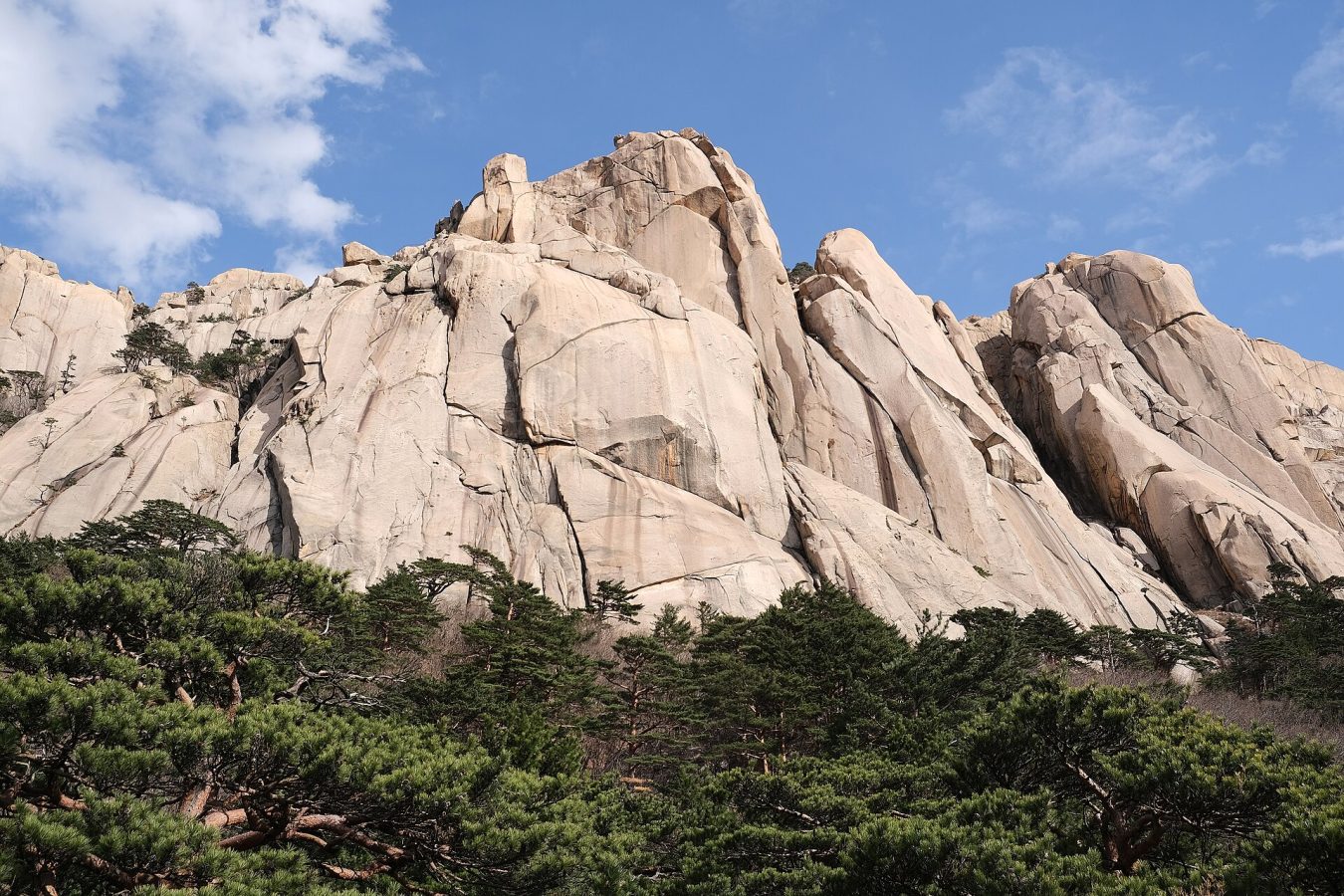
Photo: kallerna, CC BY-SA 4.0
Seoraksan is the most celebrated mountain park in South Korea, a mass of jagged granite peaks on the north-east coast, behind the fishing port and beach resort of Sokcho, and it is now only about two and a half hours from Seoul by express bus from the Express Bus Terminal or Dong Seoul, since the motorway was completed; from Sokcho's bus terminals, city buses 7 and 7-1 run to the main entrance at Seorak-dong in about half an hour. The day tours from Seoul, leaving at six or seven in the morning, generally combine three to four hours in the park with the Naksansa temple on its sea cliff, the beach or fish market at Sokcho, or, on the longer ones, Nami island on the way back, and they spare visitors the crowded buses of the autumn season. The national park no longer charges admission; the temple of Sinheungsa collects a small cultural heritage fee.
The Outer Seorak entrance offers a graded choice of walks. The cable car, a few minutes from the gate, rises in five minutes to a station below the rock fortress of Gwongeumseong, a further fifteen minutes' scramble, for the easiest big view; tickets are sold only on the day, for timed departures, and on peak days the wait is hours. The walk to the Biryong waterfall, and the 900 further steps to the platform facing the Towangseong falls, takes two hours return. The walk to Heundeulbawi, a rocking boulder beside a cave hermitage, takes an hour and a half return, and the ascent beyond it of Ulsanbawi, by more than eight hundred steel steps to the top of a vast granite wall, another two. The ascent of Daecheongbong, the summit, is a very long day or an overnight trip with a night in a mountain shelter, reserved online well ahead.
Live dates and prices from GetYourGuide. Free cancellation on most tickets.
Seoraksan was made a nature reserve in 1965 and a national park in 1970, was designated a UNESCO biosphere reserve in 1982, and covers about 398 square kilometres of the northern Taebaek range, the mountain spine of the Korean peninsula, across the counties of Sokcho, Inje, Yangyang and Goseong, not far south of the demilitarised zone. Its name means the snowy crags mountain, either because snow lies long on its heights or because its pale granite looks snow-covered from a distance. The main ridge divides it into Outer Seorak, the steep, dramatic eastern side facing the sea, where most visitors go; Inner Seorak, to the west, remoter, with long wooded valleys, the temple of Baekdamsa, where the poet-monk Manhae wrote and a former president lived in internal exile, and the Bongjeongam hermitage, one of the highest in Korea; and South Seorak around the hot springs of Osaek. Daecheongbong, 1,708 metres, is the third highest mountain in South Korea.
The granite has been weathered into a fantastic skyline of spires, fins and domes, of which the Dinosaur Ridge, Gongnyong Neungseon, a serrated crest between two passes, is the most admired and most demanding hike in the country, and Ulsanbawi, a single rock wall four kilometres in circumference with six peaks, the most photographed; legend says the rock was on its way from Ulsan, in the south, to take its place among the twelve thousand peaks of the Diamond Mountains in the north, arrived too late, and sat down here. Sinheungsa, near the entrance, claims to be among the oldest Seon, or Zen, temples in the world, founded in the seventh century; a bronze seated Buddha fourteen and a half metres tall, completed in 1997 as a prayer for reunification, sits before it. The valley of Cheonbuldong, the thousand Buddhas, with its pools and waterfalls, and the Biseondae rock, are the classic valley walk. The park holds more than a thousand plant species, including the Korean edelweiss and dwarf stone pine, and is a refuge of the long-tailed goral, a rare goat-antelope, the Siberian musk deer, otters and the Asiatic black bear.
The park is open daily from about two hours before sunrise to sunset, with high trails closed for fire prevention for some weeks in spring, from about March to mid-May, and in late autumn, from mid-November to mid-December. The autumn colours, which begin on the summit in late September and reach the valleys and the entrance area in mid to late October, are the great season and bring enormous crowds, traffic jams from Sokcho and queues for the cable car, so come on a weekday and arrive before eight;
spring brings azaleas, summer deep green valleys and heavy monsoon rain in July, and winter hard frost, snow and brilliant visibility. Allow a full day from Seoul, two days in Sokcho. Sokcho's Abai village and fish market are half an hour away, Naksansa temple twenty minutes south, and the DMZ observatory at Goseong an hour north.
Yes. GetYourGuide lists 3 tickets and tours for Seoraksan National Park, with live dates and prices and free cancellation on most of them.
The park is open daily from about two hours before sunrise to sunset, with high trails closed for fire prevention for some weeks in spring, from about March to mid-May, and in late autumn, from mid-November to mid-December.
Allow a full day from Seoul, two days in Sokcho.
Seoraksan National Park covers 398 km².
Seoraksan National Park was established in 1970.
Seoraksan National Park is in South Korea. The map on this page shows the exact spot.
South Korea
Bukhansan is the granite mountain range inside the northern city limits of Seoul, reached by the underground and a…
6 tickets & tours
South Korea
Naejangsan is a compact mountain park in the south-west of South Korea, on the border of North and South Jeolla…
3 tickets & tours
South Korea
Hallasan is the volcano that forms the island of Jeju, off the southern tip of the Korean peninsula, an hour by air…
2 tickets & tours

