Hemis National Park
218 km away
Hemis is a high-altitude park in Ladakh, in the far north of India, across the Indus from the town of Leh, which is…
1 ticket or tour
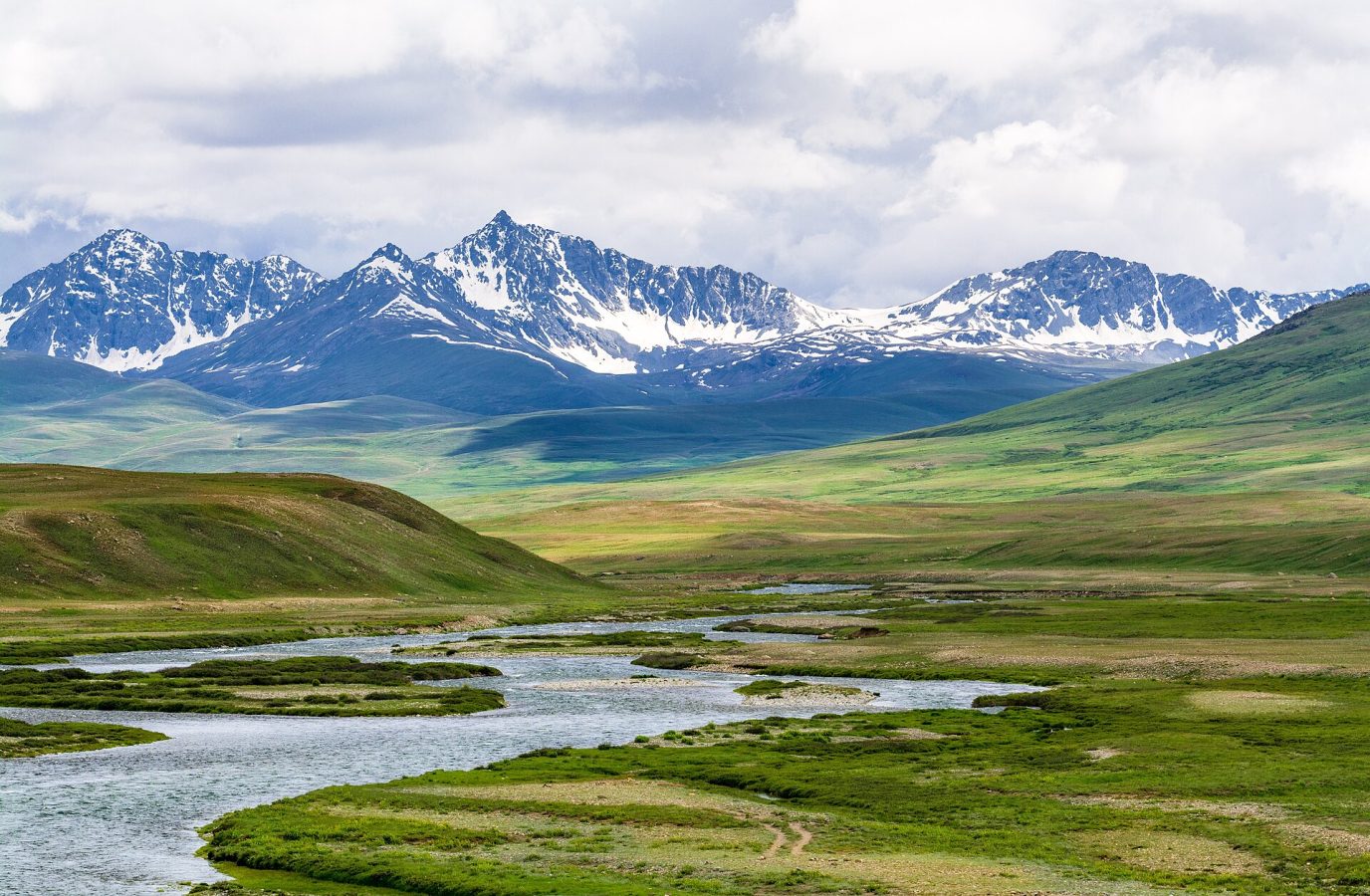
Photo: Qammer Wazir, CC BY-SA 4.0
Deosai is a vast, treeless plateau more than four thousand metres above the sea, in Gilgit-Baltistan, in the far north of Pakistan, between the western end of the Himalaya and the Karakoram, and it is visited for its immense, empty, flower-covered landscape, its lakes, and the chance of seeing a Himalayan brown bear. The gateway is the town of Skardu, the capital of Baltistan, which is reached from Islamabad either by a spectacular flight of an hour, past Nanga Parbat, which operates only in clear weather and is often cancelled, or by road, up the Karakoram Highway and the Indus gorge, in two long days. Travellers should consult the current advice of their own government on travel to northern Pakistan.
From Skardu a jeep track climbs steeply past the Sadpara lake and village to the edge of the plateau, about thirty kilometres and an hour and a half, where the park's entrance fee, considerably higher for foreigners, is collected, and then runs for some eighty kilometres across the plateau, by the river crossings of Bara Pani, the big water, where there is a bridge and a camping place, and Kala Pani, to Sheosar lake near the western edge, and down by the Chilam post into the Astore valley; the full crossing from Skardu to Astore takes five to six hours of rough driving, and four-wheel-drive vehicles with drivers are hired in either town. It can be done as a very long day trip from Skardu to Sheosar and back, but most visitors spend a night or two in one of the seasonal tented camps run by local operators at Bara Pani or near Sheosar, which provide bedding and meals. There are no buildings, shops, fuel or telephone coverage on the plateau. The staff of the park at Bara Pani will, for a fee, take visitors on foot to look for bears with a telescope.
Deosai was declared a national park in 1993 and covers about three thousand square kilometres, at an average altitude of 4,114 metres, which makes it one of the highest plateaus in the world, second in extent at such a height, it is usually said, only to the Changtang of Tibet. Its name is commonly explained as the land of the giants, from a legend that the plateau is haunted, and the Balti people call it the summer place, since it is habitable for only a third of the year, being buried under deep snow from about November to May. It is a rolling upland of grassy hills, broad valleys, bogs and clear, cold, meandering streams, ringed by snow peaks of more than five thousand metres, formed where the collision of the Indian and Asian plates raised a block of ancient ocean floor and later glaciers smoothed it. For a few weeks in July and August it produces one of the great displays of wild flowers in Asia: hundreds of species, among them primulas, asters, gentians, louseworts, geraniums, larkspurs, edelweiss, forget-me-nots and the woolly saussureas, cover the ground in sheets of purple, yellow, pink and white, attended by clouds of butterflies. Sheosar, the blind lake, a sheet of deep blue water more than two kilometres long at 4,142 metres, lies among flowery slopes, and from the rise above it, on a clear day, the gigantic white mass of Nanga Parbat, 8,126 metres, the ninth highest mountain on earth, is seen to the west.
The park was created principally to save the Himalayan brown bear, a pale, sandy-coloured race of the brown bear, which has been exterminated over most of its former range in the western Himalaya and of which, when a survey was made in 1993, only nineteen remained on Deosai, their last stronghold in Pakistan. A local foundation, working with the wildlife department, recruited herders as guards, ended the shooting of bears and the capture of cubs for dancing and baiting, and restricted grazing in a core zone, and the population has since risen to about seventy or eighty animals, a success with few parallels in the country. They spend the short summer grazing, digging for roots and the burrows of marmots, and fishing, and sleep for six months in dens on the snowy slopes. The golden marmot, large, orange and whistling, is seen everywhere, with the Himalayan ibex on the surrounding crags, the Tibetan wolf, the red fox, the snow leopard, very rarely, and among the birds the lammergeier, the Himalayan griffon, the golden eagle, the snowcock and many migratory waders and waterfowl that rest on the lakes. In summer nomadic Gujjar and Bakarwal herders bring their flocks up from the lowlands, and the streams hold the snow trout.
The plateau is accessible only from about the middle of June, when the jeep track is cleared of snow, until late September or early October, when the first heavy falls close it again. The flowers are at their height from about mid-July to mid-August, which is also the warmest period, with days of 10 to 18 degrees and nights at or below freezing even then, and the time of the mosquitoes, which are surprisingly fierce near the water; September is colder, clearer and quieter, with the grass turned gold and the bears feeding hard before hibernation.
The altitude affects most people arriving directly from Skardu, which lies at 2,230 metres, so spend at least two nights there first, move slowly and drink plenty of water. The weather can change within an hour to sleet and wind. Bring a warm sleeping bag, down jacket, waterproofs, sun protection and any medicines. Never keep food in a sleeping tent. Allow two to three days from Skardu. Shigar fort, the Kachura lakes and the cold desert of Katpana are all near Skardu.
218 km away
Hemis is a high-altitude park in Ladakh, in the far north of India, across the Indus from the town of Leh, which is…
1 ticket or tour
No online tour for Deosai National Park is listed on GetYourGuide; entry, where it is charged, is paid at the gate or through the park authority. Nearby parks with bookable tours are listed on this page.
Allow two to three days from Skardu.
Deosai National Park covers 3 464 km².
Deosai National Park was established in 1993.
Deosai National Park is in Pakistan. The map on this page shows the exact spot.