Blue Mountains National Park
New South Wales, Australia
The Blue Mountains begin about sixty kilometres west of the centre of Sydney, and their national park, a vast…
92 tickets & tours
Forest Park · New South Wales · Australia
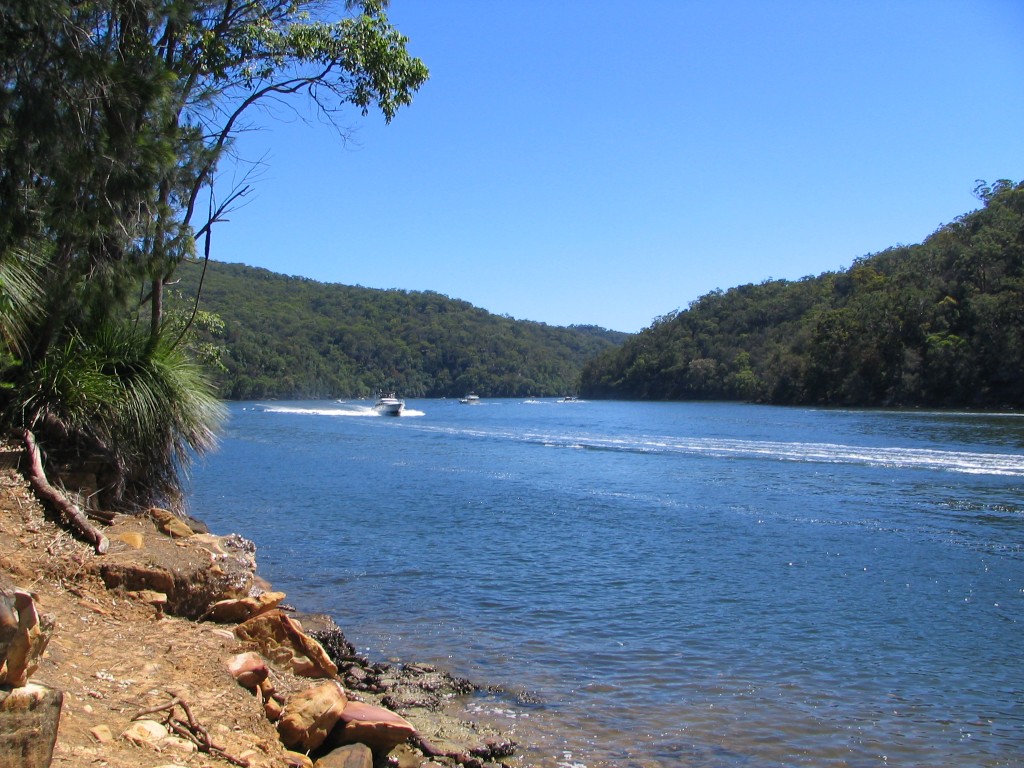
Photo: The original uploader was XLerate at English Wikipedia., CC BY-SA 3.0
Ku-ring-gai Chase is a large park of sandstone bushland and drowned river valleys on the northern edge of Sydney, only twenty-five kilometres, about forty-five minutes by road, from the centre of the city, bounded by the Hawkesbury river, Broken Bay and the long inlet of Pittwater, and it is where Sydneysiders go to walk, picnic and mess about in boats. A daily fee per vehicle is charged at the entry stations and ticket machines; walkers, cyclists and those arriving by train or ferry enter free. The park has three main areas, reached by different roads. Bobbin Head, on Cowan creek, entered from Turramurra or Mount Colah, is the traditional picnic ground, with lawns by the water, a marina hiring boats and kayaks, a cafe in a heritage inn building, a boardwalk through mangroves, and, up the hill, the Kalkari discovery centre, with a short nature trail on which wallabies are often seen;
near the North Turramurra entrance is the Sphinx, a small sandstone replica carved by a returned soldier in the 1920s as a memorial to his dead comrades. The West Head road, entered from Terrey Hills, runs for some twelve kilometres along a high peninsula to the West Head lookout, the finest view in the park, across the mouth of the Hawkesbury to Lion Island, the Barrenjoey headland and its lighthouse, and the Central Coast; from this road start the best short walks, the Aboriginal heritage walk and the Resolute track, to engravings, a cave of hand stencils and a small beach, the Basin track, to a large engraving site and down to the park's only campground, and tracks to America Bay and other secluded coves. The Basin can also be reached by a small ferry from Palm Beach wharf. The third area lies along the railway: from the stations of Mount Kuring-gai, Berowra and Cowan, on the line to Newcastle, tracks descend to Cowan creek and Jerusalem Bay, forming part of the Great North Walk.
Live dates and prices from GetYourGuide. Free cancellation on most tickets.
Ku-ring-gai Chase was dedicated in 1894, which makes it the second oldest national park in Australia, after the Royal National Park on the opposite side of Sydney, and one of the oldest in the world, the date of 2016 shown in some databases being an error; it covers about 150 square kilometres, and was added to Australia's national heritage list in 2006. It owes its creation to Eccleston Du Faur, a public servant and patron of exploration, who lived near by and persuaded the government to reserve the land for the public. The landscape is a plateau of Hawkesbury sandstone, about two hundred metres high, deeply cut by valleys which the sea invaded when it rose at the end of the last ice age, some six thousand years ago, turning them into winding, steep-sided, fjord-like waterways, so that everywhere wooded ridges of golden rock drop to calm green water. The poor, sandy soils support a heath and woodland of astonishing botanical richness, more than a thousand species of plants, with scribbly gums, red bloodwoods and the smooth pink trunks of the Sydney red gum on the ridges, banksias, grevilleas, boronias, wattles, flannel flowers and the crimson waratah, the floral emblem of New South Wales, and pockets of rainforest, with coachwood and cabbage tree palms, in the sheltered gullies. The park's greatest treasure is its Aboriginal heritage.
More than eight hundred sites have been recorded, among them rock shelters with deposits of shells and tools, axe-grinding grooves beside the creeks, stencils of hands in red ochre, and, above all, engravings: on the broad, flat platforms of sandstone along the ridges the people pecked and grooved outlines, often larger than life, of whales, sharks, fish, eels, wallabies, emus, shields, boomerangs, human figures and ancestral beings, several hundred of which survive, one of the greatest concentrations of rock engraving in the world, best seen in the low light of early morning or late afternoon. The name of the park was coined in the 1890s from Guringai, a term then proposed for the people of this coast, whose appropriateness is now disputed; the clans who lived here, among them the Garigal, were almost annihilated within two years of the arrival of the First Fleet, in 1788, by an epidemic, thought to have been smallpox, which swept through the Aboriginal population of the Sydney region in 1789. The fauna includes swamp wallabies, echidnas, brush-tailed and ringtail possums, sugar gliders, bandicoots, the lace monitor, a lizard up to two metres long which patrols the picnic grounds, the diamond python, the superb lyrebird, the glossy black cockatoo, the white-bellied sea eagle and the powerful owl, and little penguins breed on Lion Island at the river's mouth.
The park is open daily from sunrise to sunset, the gates at Bobbin Head and West Head being closed at night, and it may be closed entirely on days of extreme fire danger, which occur mainly between October and March, so the alerts should be checked in summer. The wild flowers are at their best from late July to October, when the heath along the West Head road is a garden, and this, with autumn, from March to May, is the most pleasant time for walking, mild, 17 to 24 degrees, and clear.
Summer is hot and humid, up to 35 degrees, with afternoon storms, and is the season for the water, for kayaks, boats and swimming at the Basin. Winter is cool, sunny and quiet, and humpback whales may be seen from West Head on their northward migration in June and July. Weekends and holidays are busy at the picnic grounds. Carry water, since there is none on the tracks, watch for ticks and leeches after rain, and do not walk on or touch the engravings. Allow a day. Palm Beach and the northern beaches are half an hour from West Head.
Yes. GetYourGuide lists 2 tickets and tours for Ku-ring-gai Chase National Park, with live dates and prices and free cancellation on most of them.
A daily fee per vehicle is charged at the entry stations and ticket machines; walkers, cyclists and those arriving by train or ferry enter free.
The park is open daily from sunrise to sunset, the gates at Bobbin Head and West Head being closed at night, and it may be closed entirely on days of extreme fire danger, which occur mainly between October and March, so the alerts should be checked in summer.
Ku-ring-gai Chase National Park covers 154 km².
Ku-ring-gai Chase National Park was established in 1894.
Ku-ring-gai Chase National Park is in New South Wales, Australia. The map on this page shows the exact spot.
New South Wales, Australia
The Blue Mountains begin about sixty kilometres west of the centre of Sydney, and their national park, a vast…
92 tickets & tours
New South Wales, Australia
Sydney Harbour National Park is not one place but a scatter of headlands, beaches and islands around Port Jackson, and…
19 tickets & tours
New South Wales, Australia
The Royal National Park lies on the southern edge of Sydney, its northern boundary only about thirty kilometres, under…
5 tickets & tours
New South Wales, Australia
Worimi National Park forms part of the Worimi Conservation Lands, which protect the Stockton Bight dunes, an immense…
1 ticket or tour
New South Wales, Australia
Budderoo lies on and beneath the sandstone escarpment of the Illawarra, on the south coast of New South Wales, about…
No online ticket
New South Wales, Australia
Morton is a very large park of sandstone plateaus, deep forested gorges and waterfalls on the escarpment of the…
No online ticket