Northumberland National Park
England, United Kingdom
Northumberland National Park occupies the empty uplands of England's northernmost county, stretching for some…
12 tickets & tours
Mountain Park · England · United Kingdom
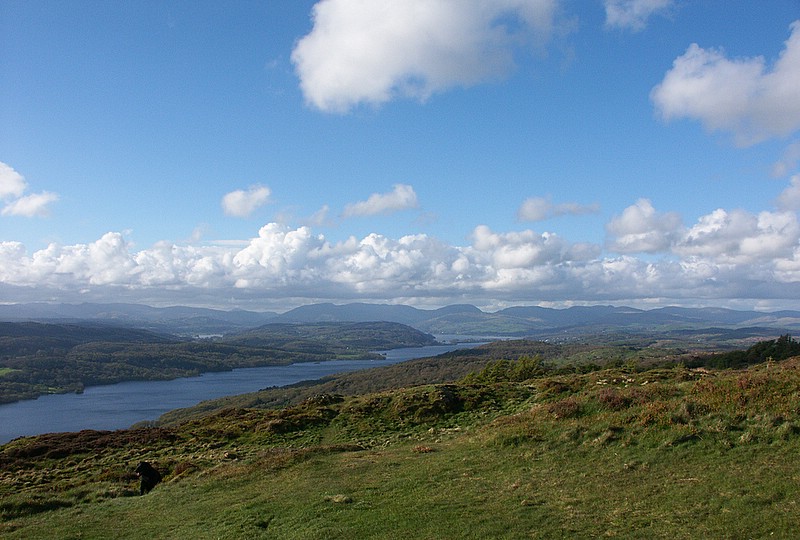
Photo: Dave&Lynne Slater from Cumbria, United kingdom, CC BY 2.0
The Lake District occupies the mountainous heart of the county of Cumbria, in the north-west of England, a compact region, barely fifty kilometres across, of sixteen principal lakes radiating like the spokes of a wheel from a central knot of high fells, and it is the most visited national park in Britain and the country's best loved walking ground. It is reached by the west coast main line from London to Oxenholme, under three hours, with a branch to Windermere, and by the M6 motorway, an hour and a half from Manchester; within the park, buses, some of them open-topped, link the main valleys, and steamers and launches ply Windermere, Ullswater, Derwentwater and Coniston, so that a car, which is a burden on the narrow lanes and in the crowded car parks of summer, is not essential. There are no gates or fees. The visitor chooses a base.
Windermere, Bowness and Ambleside, in the south, are the busiest and the most commercial, with the largest lake, the national park's visitor centre at Brockhole, and easy access to Grasmere and the Langdale valleys. Keswick, in the north, on Derwentwater beneath Skiddaw, is the walkers' town, the gateway to Borrowdale, Buttermere and the stone circle of Castlerigg. Ullswater, in the east, serves Helvellyn and the waterfall of Aira Force; Coniston has the Old Man and the memory of Ruskin and Donald Campbell; and the remote western valleys, Wasdale, Eskdale and Ennerdale, reached by steep passes, are the wildest. For the unambitious there are lakeshore paths, the circuit of Buttermere, of Rydal Water and Grasmere, the climb of Catbells or Loughrigg, and Tarn Hows; for fellwalkers, Scafell Pike, the highest mountain in England, from Wasdale or Borrowdale, Helvellyn by the narrow ridge of Striding Edge, the Langdale Pikes and the Fairfield horseshoe. The houses of Wordsworth and Beatrix Potter draw their own pilgrims.
Live dates and prices from GetYourGuide. Free cancellation on most tickets.
The Lake District was designated a national park in 1951, the second in Britain, was extended in 2016 to 2,362 square kilometres, and was inscribed as a World Heritage Site in 2017, as a cultural landscape. An English national park is not state-owned wilderness but a lived-in, privately owned countryside, in which some forty thousand people reside and farming continues, protected by planning controls; the National Trust, however, owns about a fifth of it, including nearly all the central fells and valley heads. The mountains are small by the world's standards, Scafell Pike reaching only 978 metres, but they rise from near sea level, steep, bare and craggy, and their scale is perfectly adapted to the walker. They are built of three belts of ancient rock, the smooth, slaty Skiddaw group in the north, the hard volcanic rocks of the centre, which form the roughest and highest peaks, and the gentler slates and grits of the south, all sculpted by the glaciers of the ice age, which ground out the long, narrow valleys in which the lakes lie, and left the high corries with their small dark tarns, the hanging valleys and the waterfalls. Windermere, seventeen kilometres long, is the largest natural lake in England, and Wastwater, seventy-nine metres, the deepest.
The bareness of the fells is the work of man and sheep: the forest was cleared from the Neolithic onwards, when the volcanic rock of Langdale was quarried for stone axes that were traded all over Britain, and the pattern of the landscape, of small walled fields in the valley bottom, a belt of rough enclosed pasture above, and open common grazing on the tops, was laid down by Norse settlers of the tenth century, whose language survives in the words fell, beck, tarn, force, gill and thwaite, and by the monks of Furness abbey. It is still farmed in that way, by families who keep the hardy grey Herdwick sheep, each flock attached by instinct to its own stretch of unfenced mountain. Until the late eighteenth century travellers regarded these mountains with horror; the taste for the picturesque made them fashionable, and William Wordsworth, born at Cockermouth in 1770 and resident at Grasmere and Rydal from 1799 until his death, made them the landscape of English Romantic poetry, wrote a guide to them, and called them a sort of national property, a phrase often cited as the germ of the national park idea. The campaign against a railway and a reservoir led directly to the founding of the National Trust in 1895, one of whose creators, Canon Rawnsley, was vicar near Keswick, and Beatrix Potter, who spent the fortune earned by her children's books on buying farms to save them, left four thousand acres to it. Alfred Wainwright's seven hand-drawn guides to the fells, published between 1955 and 1966, remain the walkers' scripture. Red squirrels, red deer, ospreys, which have returned to Bassenthwaite, and peregrines are the notable wildlife.
The park is open all year. May and June are generally the driest and sunniest months, with bluebells in the woods, lambs in the fields and long evenings, and are the best time to come; July and August are the warmest, 16 to 20 degrees, and much the most crowded, the roads round Windermere and Ambleside being congested and the car parks full by mid-morning, and September and October bring quieter paths, the bracken turning russet and fine autumn colour in Borrowdale.
It must be understood that this is the wettest region of England, the hamlet of Seathwaite receiving more than three metres of rain a year, and that rain, low cloud and strong wind are possible on any day, so that waterproofs, warm clothing, boots, and a map and compass on the fells are essential; mountain rescue teams are called out hundreds of times a year. Winter is quiet, with short days and, in cold spells, snow and ice on the tops that demand axe and crampons. Book accommodation well ahead for summer and bank holidays. Allow three days to a week. Hadrian's Wall is an hour north of Keswick, and the Yorkshire Dales an hour to the east.
Yes. GetYourGuide lists 56 tickets and tours for Lake District National Park, with live dates and prices and free cancellation on most of them.
The park is open all year.
Allow three days to a week.
Lake District National Park covers 2 362 km².
Lake District National Park was established in 1951.
Lake District National Park is in England, United Kingdom. The map on this page shows the exact spot.
England, United Kingdom
Northumberland National Park occupies the empty uplands of England's northernmost county, stretching for some…
12 tickets & tours
England, United Kingdom
The Yorkshire Dales are the limestone valleys and moors of the Pennines in northern England, an hour from York, Leeds…
10 tickets & tours
England, United Kingdom
The New Forest lies in the south of England, in the south-west of Hampshire, between Southampton, Bournemouth and…
8 tickets & tours

