Torres del Paine National Park
Chile
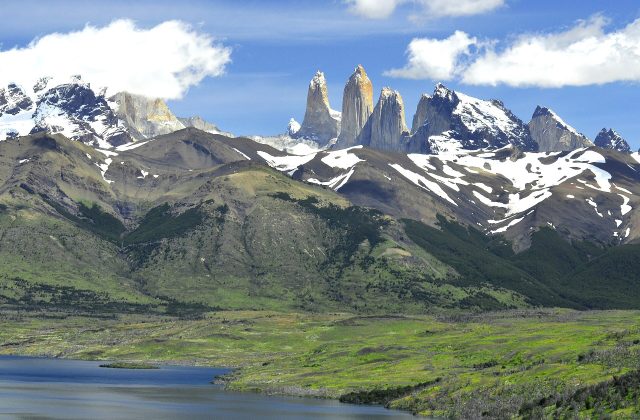
Torres del Paine is the great park of Chilean Patagonia, two hours north of Puerto Natales and five from Punta Arenas,…
59 tickets & tours
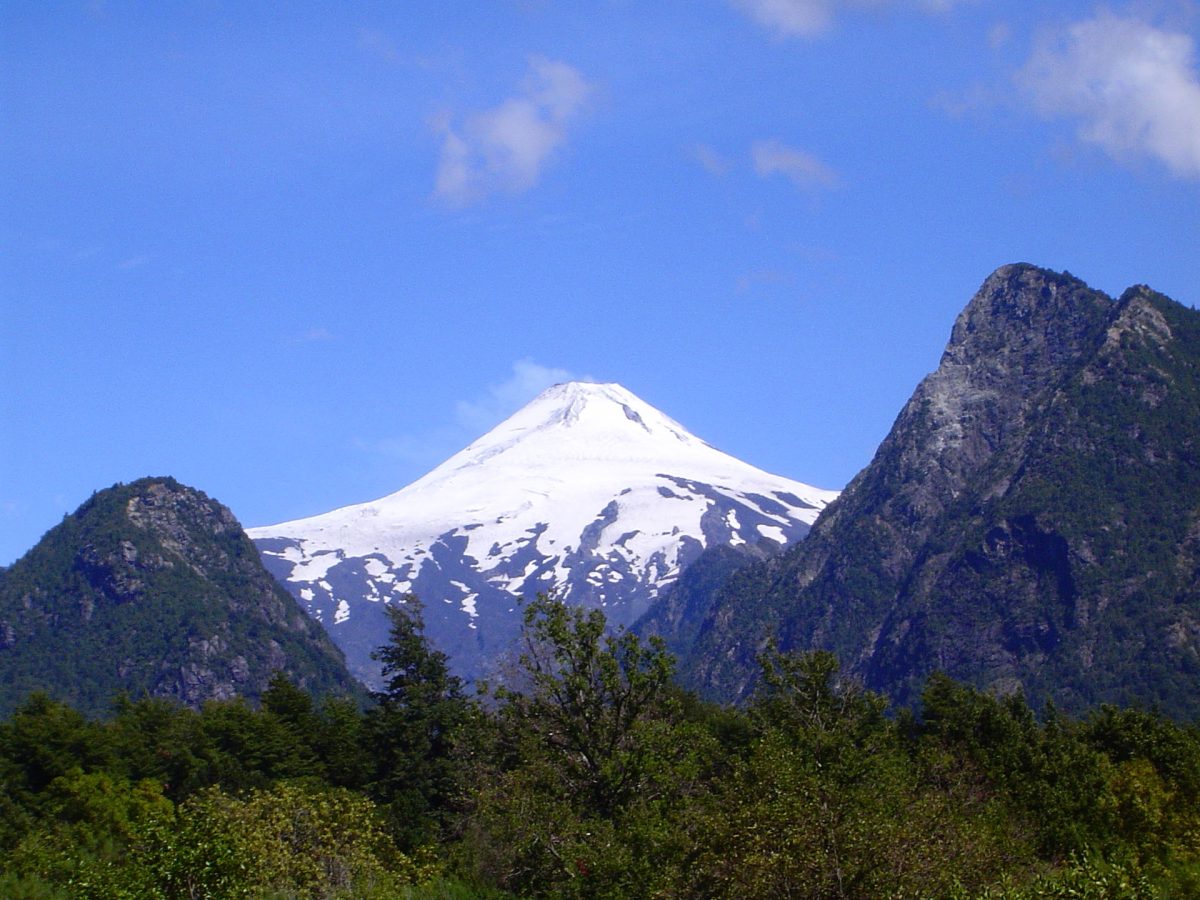
Photo: No machine-readable author provided. Albasmalko assumed (bas, CC BY-SA 2.5
Villarrica National Park rises directly behind Pucón, the adventure capital of Chile's Lake District, about nine hours by road or an hour and a half by air to Temuco and a transfer from Santiago, and the activity for which the town is known all over South America is the ascent of the Villarrica volcano itself: a snow-covered, perfectly conical, continuously active volcano that an ordinarily fit person with no mountaineering experience can climb in a day. It must be done with one of the licensed agencies in Pucón, which provide crampons, ice axe, helmet, gas mask, boots, outer clothing and guides, at a fixed ratio of clients to guides: the group drives at dawn to the ski centre at 1,400 metres, takes the chairlift if it is running, which saves an hour, and climbs about 1,400 metres on snow in four to six hours to the crater rim, where, when conditions allow, there is a view straight down the vent to the lava and a faceful of sulphurous gas, and then slides most of the way down on plastic sledges in snow chutes.
Departures depend on the weather and on the alert level set by the national geology service, which closes the summit whenever activity rises; go with a reputable agency that will turn back when it should and refund when it does not leave. For everyone else, the park's other sectors offer some of the best hiking in the region: the trails round the parasitic craters and to the Pichillancahue glacier in the Rucapillán sector, and the full-day walk among the Andean lakes and monkey-puzzle forests of the Quetrupillán and Puesco sectors. A modest entrance fee is paid to the forestry corporation, by booking online.
Live dates and prices from GetYourGuide. Free cancellation on most tickets.
The park was created in 1940 and covers about 630 square kilometres of the Andes in the Araucanía and Los Ríos regions, along a chain of three volcanoes that runs, unusually, at right angles to the range, from west to east: Villarrica, 2,847 metres, Quetrupillán, 2,360, and Lanín, 3,747, the last shared with Argentina. Villarrica, which the Mapuche call Rucapillán, the house of the spirit, is one of the most active volcanoes in South America and one of a handful in the world with a persistent lake of lava in its crater, whose glow reddens the cloud above the summit on clear nights and can be seen from the streets of Pucón. It has erupted more than sixty times since the Spanish arrived. The danger is less lava than lahars, floods of mud and meltwater from its forty square kilometres of glaciers: eruptions in 1948, 1964, when the village of Coñaripe was destroyed, and 1971 killed dozens of people in this way.
Shortly after three in the morning on 3 March 2015 a lava fountain a kilometre and a half high burst from the crater for half an hour, and several thousand people were evacuated from Pucón and Coñaripe without casualties. The volcano's flanks are wrapped in old lava flows of different ages, caves, among them a lava tube open to guided visits, and parasitic cones. The forests are the park's other glory: southern beeches, coihue, raulí and lenga, and above about 900 metres the araucaria, the monkey-puzzle, a tree that has hardly changed since the Jurassic, lives for a thousand years or more, grows as a perfect umbrella against the snow and the black lava, and whose seeds, the piñones, remain a staple of the Pehuenche people, who take their name from it. Pumas, pudú deer, the little marsupial called the monito del monte, condors, Magellanic woodpeckers and chucao tapaculos inhabit the park. The ski centre on Villarrica's northern slope operates from July to September.
The park is open daily from about 8.30 am to 6 pm in summer. The climbing season for the volcano is at its most reliable from December to March, with stable weather, long days and the most departures, and the ascent is possible on good days throughout the year, more demanding and colder from April to November; the hiking trails in the higher sectors are free of snow from about December to April.
January and February are the Chilean holidays and Pucón is packed. Rain is frequent in this region in every month, and several days' margin should be allowed for the climb. Allow a day for the volcano and a day or two for the other sectors. Pucón's hot springs, the Termas Geométricas above all, are the classic way to recover, Huerquehue National Park is forty-five minutes north, and the road over the Mamuil Malal pass leads to Argentina beneath Lanín.
Yes. GetYourGuide lists 5 tickets and tours for Villarrica National Park, with live dates and prices and free cancellation on most of them.
A modest entrance fee is paid to the forestry corporation, by booking online.
The park is open daily from about 8.30 am to 6 pm in summer.
Allow a day for the volcano and a day or two for the other sectors.
Villarrica National Park covers 630 km².
Villarrica National Park was established in 1940.
Villarrica National Park is in Chile. The map on this page shows the exact spot.
Chile
Torres del Paine is the great park of Chilean Patagonia, two hours north of Puerto Natales and five from Punta Arenas,…
59 tickets & tours
Chile
Rapa Nui National Park is most of Easter Island, and the park ticket, bought online before travel or on arrival at the…
33 tickets & tours
Chile
Bernardo O'Higgins is the largest national park in Chile and one of the largest in the world, an almost…
7 tickets & tours
Chile
Conguillío is the park of monkey-puzzle forests, lakes and fresh lava around the Llaima volcano, in the Andes of the…
3 tickets & tours
Chile
Huerquehue is a small park of ancient forest and mountain lakes thirty-five kilometres, about forty-five minutes,…
3 tickets & tours
Chile
La Campana is a park of the coastal range of central Chile, midway between the capital, Santiago, and the port of…
1 ticket or tour