Nikko National Park
Japan
Nikko is the mountain park two hours north of Tokyo whose shrines are a World Heritage Site and whose lakes and…
24 tickets & tours
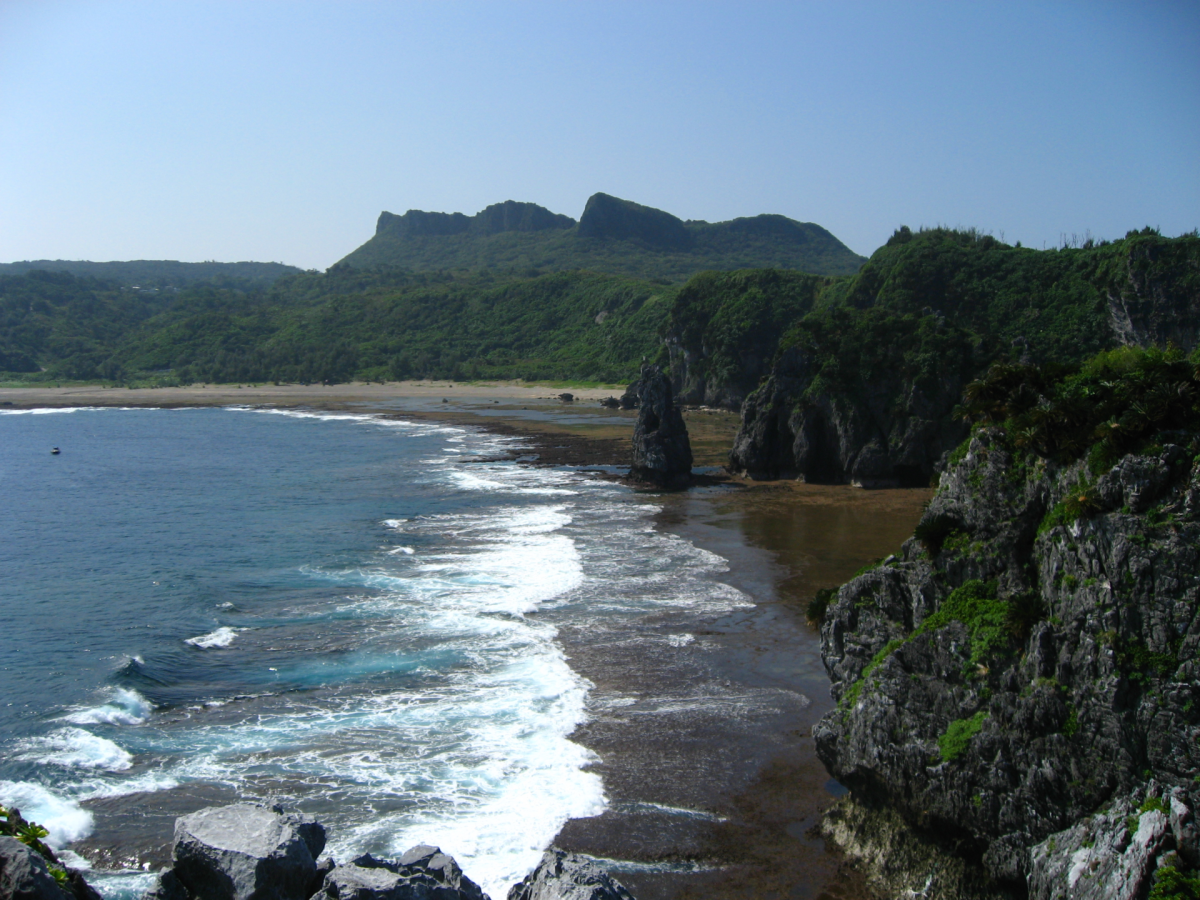
Photo: Ryan McBride, CC BY 2.0
Yanbaru, a word meaning the mountains and forests, is the name that Okinawans give to the hilly, thinly peopled northern third of their island, and the national park that covers it is a world away from the crowded, built-up south and the beach resorts of the west coast. It is two to two and a half hours by road from the capital, Naha, by the expressway to its end near Nago and then along the coast, and since public buses are few and slow, visitors come by hired car or on a bus tour from Naha, which usually combines a taste of the park with the bridge and beaches of Kouri island and other sights of the north. There are no gates or general fees, and the places of interest are scattered over three villages, Kunigami, Ogimi and Higashi, with a visitor centre at the roadside station in Kunigami.
The most popular walk is to the Hiji waterfall, for which a small fee is charged: a well-made path of a kilometre and a half, with many steps and a suspension bridge high over the gorge, follows a stream through the forest to a fall of twenty-six metres, the highest on the island, in about forty minutes each way. At the northern tip of the island, Cape Hedo is a windswept headland of cliffs, and near it the private park of Daisekirinzan has four easy trails among pinnacles of ancient limestone and huge banyan trees, on a mountain that is sacred in the Okinawan religion. In Higashi, guided kayak trips paddle up the Gesashi river through the largest mangrove forest on the main island, which also has a boardwalk. The Okinawa rail is best looked for with a local guide on an early morning or night tour; a learning centre at Ada keeps one in an enclosure where it can be seen at close range. Swimming beaches and small inns are found along both coasts.
Live dates and prices from GetYourGuide. Free cancellation on most tickets.
Yanbaru was designated on 15 September 2016 as Japan's thirty-third national park, covering then about 136 square kilometres of land, since extended to more than 170, together with a strip of sea, and in July 2021 it was inscribed, with the islands of Amami-Oshima, Tokunoshima and Iriomote, as a World Heritage Site, for the extraordinary number of animals and plants that exist nowhere else. The Ryukyu chain was part of the Asian mainland until some millions of years ago, and its creatures, isolated as the land bridges sank, either died out elsewhere or evolved in their own direction. The hills, rising to 503 metres at Mount Yonaha, receive more than two and a half metres of rain a year and are clothed in a subtropical evergreen forest dominated by the itajii, a chinquapin whose rounded crowns, seen from above, give the forest the look of an endless field of broccoli, with tree ferns in the valleys and orchids, mosses and filmy ferns in the mist. In this forest, in 1981, ornithologists announced the discovery of a bird new to science, which the villagers had always known: the Okinawa rail, the Yanbaru kuina, a plump, almost flightless bird with a red bill and legs, a barred black and white breast and a loud, whooping call, which runs about the forest floor by day and climbs sloping trunks to roost in the trees at night, out of reach of snakes. It is found nowhere else in the world, numbers about fifteen hundred, and has become the mascot of the north.
Here too live the Okinawa woodpecker, a dark, reddish-brown bird of the old forest, one of the rarest woodpeckers on earth; the Yanbaru long-armed scarab, the largest beetle in Japan, discovered in 1983, which breeds only in the hollows of very old trees; Ishikawa's frog, patterned in green and gold; the Ryukyu long-haired rat; the Okinawa spiny rat; and a robin, a newt, a gecko and many insects of their own. Their chief enemy was introduced by man. In 1910 a biologist released seventeen small Indian mongooses in the south of the island in the hope that they would destroy the venomous habu snake; the mongooses, active by day while the snake is active by night, ignored it, multiplied, spread north and ate the rails, frogs and lizards instead, and since 2000 the government has fought them with fences across the island's waist, tens of thousands of traps and trained sniffer dogs, with such success that they are now close to being eliminated from the park, and the rail has recovered ground. Cars remain a serious danger to it, and the roads are lined with warning signs. For half a century most of this forest was a jungle warfare training area of the United States Marine Corps, which incidentally kept out loggers and developers; about four thousand hectares were returned to Japan at the end of 2016 and added to the park, though a smaller training area remains, and the construction of helicopter pads in it was bitterly opposed by the residents of Takae. The village of Ogimi is known for the number of its inhabitants who live past a hundred.
The park can be visited all year, the climate being subtropical, with winter days of 15 to 20 degrees and summer days of 30 or more with high humidity. The most pleasant periods for walking are from March to early May and from October to December. The rainy season lasts from about early May to late June, when the forest and the waterfall are at their most luxuriant and the frogs are calling; from July to October typhoons may close roads and trails for days.
The rails breed from about April to July, and are most often seen at dawn and dusk along quiet forest roads, which should then be driven very slowly. Winter brings rough seas at Cape Hedo and the cherry blossom, the earliest in Japan, in late January. The habu is active from spring to autumn, especially on warm nights, so keep to the paths, carry a torch after dark and do not reach into undergrowth. Bring a waterproof and insect repellent. Allow a full day from Naha, or stay a night. Nago and the great aquarium at Motobu are an hour to the south.
Yes. GetYourGuide lists one ticket or tour for Yanbaru National Park, with live dates and prices and free cancellation on most of them.
Allow a full day from Naha, or stay a night.
Yanbaru National Park covers 173 km².
Yanbaru National Park was established in 2016.
Yanbaru National Park is in Japan. The map on this page shows the exact spot.
Japan
Nikko is the mountain park two hours north of Tokyo whose shrines are a World Heritage Site and whose lakes and…
24 tickets & tours
Japan
Daisetsuzan is the mountainous heart of Hokkaido, Japan's northern island, a park the size of a small prefecture,…
3 tickets & tours
Japan
Fuji-Hakone-Izu is the most visited national park in Japan, and it is not one place but four, scattered across four…
2 tickets & tours
Japan
Iriomote-Ishigaki National Park covers the Yaeyama islands, the southernmost inhabited islands of Japan, which lie in…
1 ticket or tour
Japan
The Kerama islands are a cluster of some three dozen small, steep, green islands, only four of them inhabited, lying…
1 ticket or tour
Japan
Onuma is a small park of lakes and islets at the foot of a volcano in the south of Hokkaido, the northern island of…
1 ticket or tour