Witzands Aquifer Nature Reserve
Western Cape, South Africa
Witzands is a municipal nature reserve on the Atlantic coast about forty-five kilometres north of the centre of Cape…
32 tickets & tours
Marine Park · Western Cape · South Africa

Photo: Rehman Abubakr, CC BY-SA 4.0
Cape Point and the Cape of Good Hope form the southern tip of the Cape Peninsula, the mountainous finger of land that runs south from Cape Town, and the reserve that covers it, now the Cape of Good Hope section of Table Mountain National Park, is the goal of the most popular day excursion in South Africa. It is sixty to seventy kilometres, an hour to an hour and a half by road, from the centre of the city, and it is reached either along the Atlantic side, by the spectacular cliff road of Chapman's Peak, or along the False Bay side, by the old naval port of Simon's Town and the penguin colony at Boulders; most people, and all the coach and minibus tours, go out by one and back by the other. There is no public transport to the gate. The entrance fee, payable by card at the gate, is several times higher for foreign visitors than for South Africans.
From the gate the main road runs twelve kilometres through the heath to a large car park beneath Cape Point, where there are a restaurant with a terrace over False Bay, shops and the lower station of a funicular, which climbs in three minutes to just below the old lighthouse; the alternative is a steep paved path of fifteen to twenty minutes. From the top, steps lead to the lighthouse and its platforms, and a further path, along the knife-edged ridge, to a viewpoint over the new lighthouse far below. A side road leads to the Cape of Good Hope itself, a low, rocky promontory with the famous signboard, and a boardwalk and path of about forty-five minutes each way joins the two capes along the cliff top, above the lovely, inaccessible-looking Dias beach, to which a long staircase descends. Other roads lead to quiet beaches, tidal pools for bathing at Buffels Bay and Bordjiesrif, the two navigators' crosses, and the Olifantsbos shore, with a shipwreck trail. A two-day hiking trail with an overnight hut makes a circuit of the reserve.
Live dates and prices from GetYourGuide. Free cancellation on most tickets.
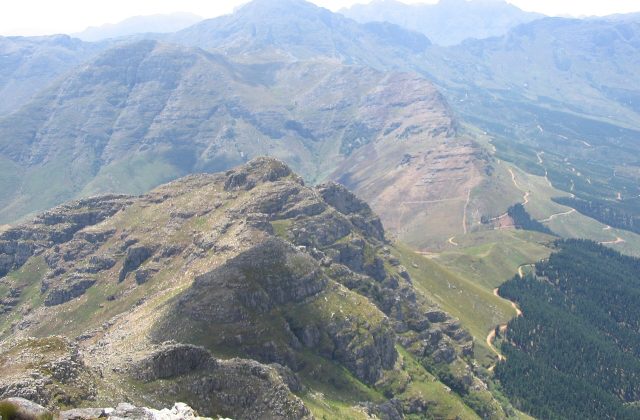
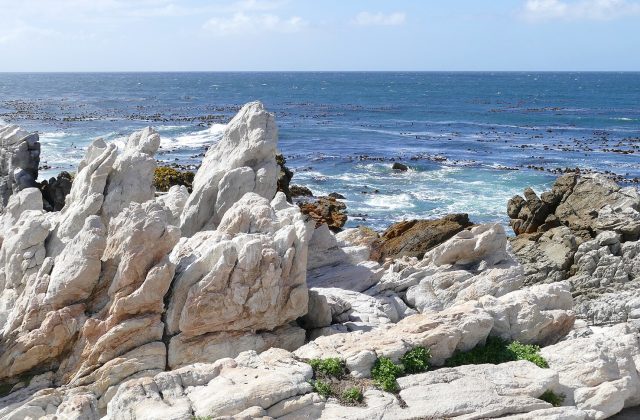
The Cape of Good Hope nature reserve was established in 1938, when local citizens and the council bought up farms at the tip of the peninsula to forestall their development as a seaside township; it covers about 7,750 hectares, with forty kilometres of coastline, became part of the new Cape Peninsula National Park in 1998, since renamed after Table Mountain, and in 2004 was inscribed, with the rest of the park, in the World Heritage Site of the Cape floral region. Two misconceptions need correcting. The cape is not the southernmost point of Africa, which is Cape Agulhas, a hundred and fifty kilometres to the south-east, but the most south-westerly, as its signboard carefully states; and it is not, officially, the meeting place of the Atlantic and Indian oceans, which is also at Agulhas, though in a real sense the waters do meet here, since the cold Benguela current flows up the western side of the peninsula and tongues of the warm Agulhas current enter False Bay on the eastern, so that the sea on one side may be six degrees warmer than on the other. Its true significance is that of a turning point. In 1488 the Portuguese navigator Bartolomeu Dias, having been blown round it unseeing in a storm, sighted it on his return voyage and is said to have named it the Cape of Storms, a name that his king, John II, altered to Good Hope, because it promised a sea route to India; Vasco da Gama rounded it in 1497 and fulfilled the promise, and two stone crosses in the reserve, replicas of those the navigators raised, serve as beacons that, when lined up, point to a dangerous submerged rock in the bay.
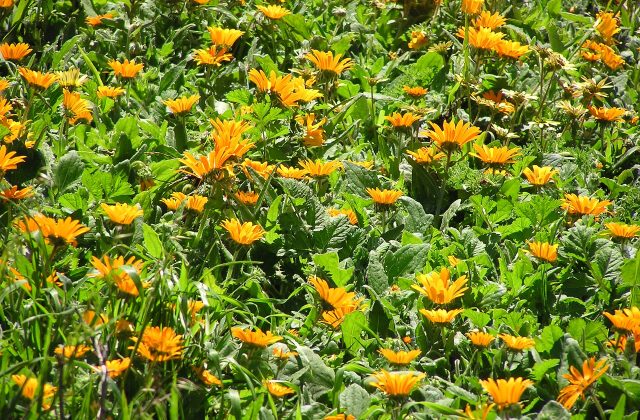
It is off this cape that the phantom ship of the Flying Dutchman, whose captain swore to round it if it took until doomsday, is condemned to beat against the wind for ever. At Cape Point the cliffs fall more than two hundred metres to the sea, among the highest sea cliffs in the country. The first lighthouse, of 1859, was built on the summit at 249 metres, where it proved to be hidden in cloud much of the time, and after the Portuguese liner Lusitania struck a reef beneath it in 1911, a new light was built only 87 metres above the water, which is the most powerful on the South African coast. The vegetation is fynbos, the fine-leaved heathland of the Cape, the smallest and, for its size, the richest of the world's floral kingdoms: more than eleven hundred species of plants grow in the reserve, more than in the whole of the British Isles, among them proteas, ericas, restios and countless bulbs, many found nowhere else. The poor soils support few large animals, but bontebok, eland, Cape mountain zebra, red hartebeest and grey rhebok are seen, ostriches walk on the beaches, tortoises cross the roads, and some 250 species of birds include African penguins offshore, cormorants, the black oystercatcher and sunbirds. The chacma baboons of the peninsula are unique among monkeys in gathering mussels, limpets and shark eggs on the shore at low tide; they are also skilled at opening car doors and snatching food, can be dangerous, and must never be fed.
The reserve is open daily, from 6 am to 6 pm from October to March and from 7 am to 5 pm from April to September, and the funicular from about nine. The Cape has a Mediterranean climate: summer, from November to March, is dry, warm and sunny, 24 to 28 degrees, but it is the season of the south-easter, a gale that can blow for days and makes the point almost untenable; autumn, in April and May, is the calmest and perhaps the most pleasant time; winter, from June to August, brings rain, north-westerly storms and also many still, brilliantly clear days;
spring, from August to October, is the season of the wild flowers and of the southern right whales, which are seen in False Bay from about August to November. Tour buses crowd the point between about ten and two, so arrive at opening time or after three. Hold on to hats, keep food out of sight, and lock the car doors and windows against the baboons. Allow half a day. Boulders beach and its penguins are twenty-five minutes from the gate, Simon's Town thirty, and Cape Town an hour and a quarter.
Yes. GetYourGuide lists 154 tickets and tours for Cape Point Nature Reserve, with live dates and prices and free cancellation on most of them.
The entrance fee, payable by card at the gate, is several times higher for foreign visitors than for South Africans.
The reserve is open daily, from 6 am to 6 pm from October to March and from 7 am to 5 pm from April to September, and the funicular from about nine.
Cape Point Nature Reserve covers 77.5 km².
Cape Point Nature Reserve was established in 1938.
Cape Point Nature Reserve is in Western Cape, South Africa. The map on this page shows the exact spot.
Western Cape, South Africa
Witzands is a municipal nature reserve on the Atlantic coast about forty-five kilometres north of the centre of Cape…
32 tickets & tours
Western Cape, South Africa
Aquila is the Big Five game reserve two hours from Cape Town in the Karoo hills above Worcester, and it exists for one…
16 tickets & tours
Western Cape, South Africa
Jonkershoek is a mountain valley that begins ten kilometres, fifteen minutes'
4 tickets & tours
Western Cape, South Africa
The West Coast National Park lies on the Atlantic coast of South Africa about a hundred and twenty kilometres north of…
3 tickets & tours
Western Cape, South Africa
Helderberg is a small municipal nature reserve on the mountain slope directly above the town of Somerset West, at the…
2 tickets & tours
Western Cape, South Africa
Stony Point is a small rocky headland in the seaside village of Betty's Bay, on the coast of the Overberg, east of…
2 tickets & tours