Cape Point Nature Reserve
Western Cape, South Africa
Cape Point and the Cape of Good Hope form the southern tip of the Cape Peninsula, the mountainous finger of land that…
154 tickets & tours
Wetland Park · Western Cape · South Africa
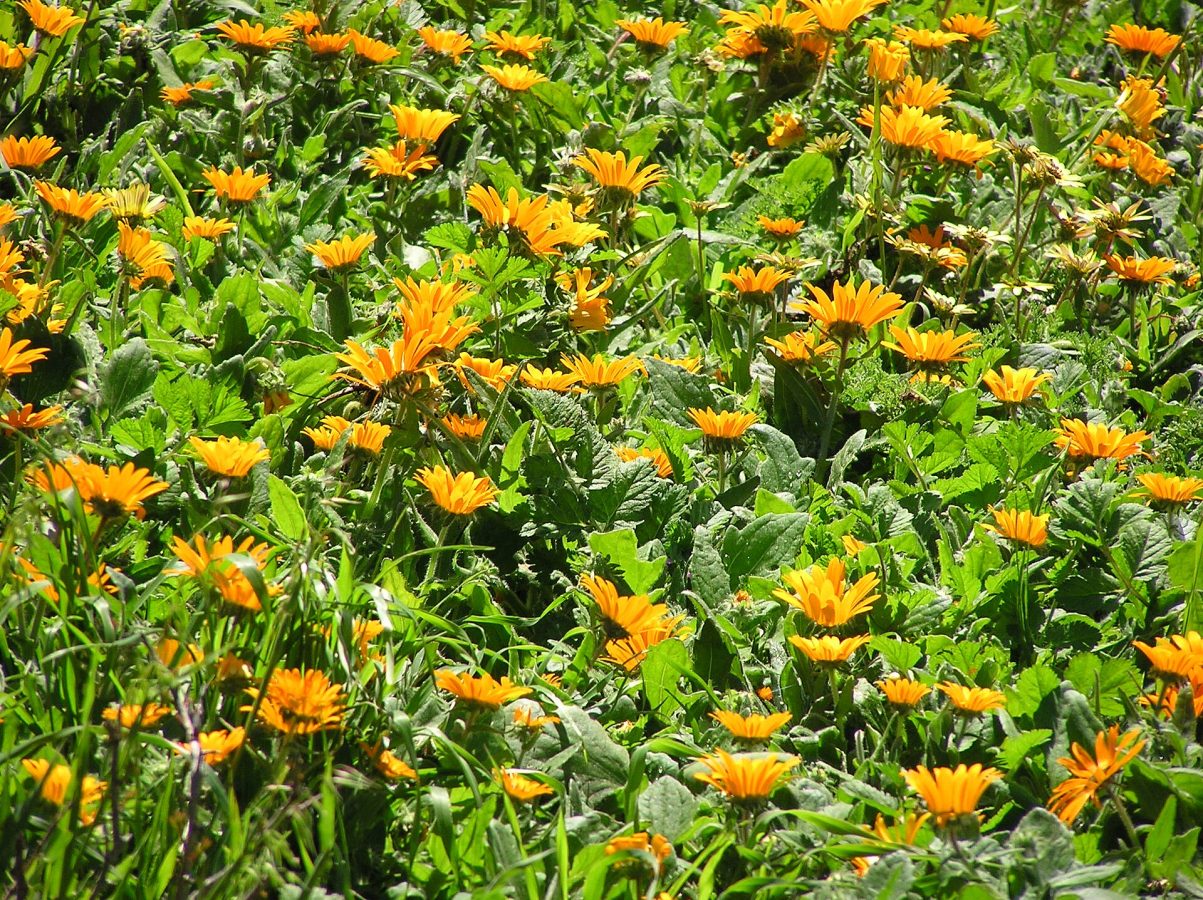
Photo: Winfried Bruenken (Amrum), CC BY-SA 2.5
The West Coast National Park lies on the Atlantic coast of South Africa about a hundred and twenty kilometres north of Cape Town, an hour and a quarter by the coast road, the R27, and it surrounds the Langebaan lagoon, a long arm of clear, sheltered, turquoise sea water, between a strip of white dunes on the ocean side and a low granite and limestone plain on the other. It is visited for three things, the lagoon and its beaches, the birds, and, for a few weeks each year, one of the great wild flower displays of the world, and it makes an easy day trip from the city, by hire car or on a tour, there being no public transport. There are two gates, one on the R27 and one at the holiday town of Langebaan, at the northern end of the lagoon, where the entrance fee is paid, the charge being considerably higher during the flower season. A tarred road runs round the lagoon, with a speed limit that the many tortoises crossing it justify.
On the western shore, Kraalbaai and the adjoining Preekstoel are the favourite stopping places, with picnic sites, a jetty, moored houseboats that can be hired for the night, and shallow, calm, relatively warm water, of a colour that looks Caribbean, in which families swim and paddle; Tsaarsbank, on the open ocean side, has picnic places among the rocks with the Atlantic surf breaking beside them. At the southern end of the lagoon, the old farmstead of Geelbek, a Cape Dutch homestead of 1744, houses a restaurant and an information centre, and paths lead from it to bird hides overlooking the salt marsh and the mudflats; the viewpoint of Seeberg, on the eastern side, is a granite knoll with a view over the whole lagoon. The Postberg section, at the tip of the western peninsula, is opened to the public only in August and September, for the flowers. Several trails of one and two days, and mountain-bike routes, can be booked, and kite surfing and kayaking are practised at Langebaan.
Live dates and prices from GetYourGuide. Free cancellation on most tickets.
The national park was proclaimed in 1985, to protect the lagoon, and has since been enlarged to some 400 square kilometres, which include four small offshore islands at the mouth of Saldanha Bay; the lagoon was listed under the Ramsar convention in 1988, and the park lies within a UNESCO biosphere reserve. The Langebaan lagoon is unlike most lagoons in that no river flows into it: it is a tongue of the sea, seventeen kilometres long and up to four wide, open to Saldanha Bay at its northern end, filled and emptied twice a day by the tide, and warmed by the sun in its shallows, so that, while the open Atlantic on this coast, chilled by the Benguela current, seldom rises above fifteen degrees, the water at Kraalbaai can be several degrees warmer. At its southern end, where the tidal flow slackens, lie extensive salt marshes, about a third of all the salt marsh in South Africa, and mudflats rich in worms, snails and crustaceans. These make the lagoon the most important wetland for wading birds in the country. Each southern summer, from about September to March, it is visited by tens of thousands of migrant waders that breed in the Arctic tundra of Siberia and northern Europe and fly some fifteen thousand kilometres to winter here, the curlew sandpiper, which is the most numerous, the grey plover, the sanderling, the knot, the turnstone, the bar-tailed godwit and the whimbrel among them, together with resident flamingos, both greater and lesser, white pelicans, the African black oystercatcher and the Cape shoveler, more than 250 species having been recorded.
The islands, which cannot be visited, hold great colonies of Cape gannets, Cape cormorants, kelp gulls and African penguins, and were scraped bare of their guano in a hectic rush in the 1840s, when hundreds of ships lay in the bay. The land round the lagoon is covered with strandveld, a low, dense, succulent-rich coastal scrub, and with fynbos on the sandier ground, which for most of the year is a subdued grey-green, and which, after good winter rains, erupts in late winter into sheets of daisies and other annuals, white, orange, yellow and purple, carpeting the ground as far as the eye can see, most spectacularly in the Postberg reserve, a block of private farmland managed with the park, where eland, bontebok, red hartebeest, gemsbok, Cape mountain zebra and wildebeest graze among the flowers. The park also has ostriches, caracals, bat-eared foxes, and great numbers of angulate tortoises. In 1995, in a slab of fossil dune rock on the shore of the lagoon at Kraalbaai, a geologist found a set of human footprints, made by a small person, probably a woman, walking down a wet dune about 117,000 years ago, among the oldest known footprints of anatomically modern humans; they are popularly called Eve's footprints, and the original slab is now in a museum in Cape Town, a replica being shown at Geelbek.
The park is open daily throughout the year, from seven in the morning to the early evening in summer and to six in winter. The flower season is short and depends entirely on the winter rains: it runs from about the beginning of August to the middle or end of September, the last two weeks of August and the first of September being usually the best, and the Postberg section is open only during these two months. The flowers open only in sunshine and face the sun, so that one should go on a bright day, between about eleven and four, and drive with the sun behind one;
at weekends in the season the queues at the gates can last an hour or more, and a weekday is much to be preferred. Summer, from November to March, is dry, warm, 25 to 30 degrees, and windy, the season for the beaches of Kraalbaai and for the migrant waders, which are best watched from the Geelbek hides on a rising tide, two to three hours before high water. Winter is cool and showery, green and quiet. Southern right whales are seen from Tsaarsbank from August to November. Allow a day. Langebaan is at the gate, the fishing village of Paternoster forty-five minutes north, and the West Coast fossil park half an hour.
Yes. GetYourGuide lists 3 tickets and tours for West Coast National Park, with live dates and prices and free cancellation on most of them.
There are two gates, one on the R27 and one at the holiday town of Langebaan, at the northern end of the lagoon, where the entrance fee is paid, the charge being considerably higher during the flower season.
The park is open daily throughout the year, from seven in the morning to the early evening in summer and to six in winter.
West Coast National Park covers 363 km².
West Coast National Park was established in 1985.
West Coast National Park is in Western Cape, South Africa. The map on this page shows the exact spot.
Western Cape, South Africa
Cape Point and the Cape of Good Hope form the southern tip of the Cape Peninsula, the mountainous finger of land that…
154 tickets & tours
Western Cape, South Africa
Witzands is a municipal nature reserve on the Atlantic coast about forty-five kilometres north of the centre of Cape…
32 tickets & tours
Western Cape, South Africa
Aquila is the Big Five game reserve two hours from Cape Town in the Karoo hills above Worcester, and it exists for one…
16 tickets & tours
Western Cape, South Africa
Jonkershoek is a mountain valley that begins ten kilometres, fifteen minutes'
4 tickets & tours
Western Cape, South Africa
Helderberg is a small municipal nature reserve on the mountain slope directly above the town of Somerset West, at the…
2 tickets & tours
Western Cape, South Africa
Stony Point is a small rocky headland in the seaside village of Betty's Bay, on the coast of the Overberg, east of…
2 tickets & tours