Los Haitises National Park
Dominican Republic
Los Haitises is the mangrove and karst park on the southern shore of Samaná Bay in the north-east of the Dominican…
107 tickets & tours
Island Park · Dominican Republic

Photo: Melodygar, CC BY-SA 4.0
Cotubanama, which until 2014 was called the National Park of the East, occupies the blunt peninsula at the south-eastern corner of the Dominican Republic, together with Saona island off its tip, and it is the most visited protected area in the country, for the simple reason that the day trip to Saona is the most popular excursion sold in the vast hotel zone of Punta Cana and Bavaro, an hour to an hour and a half away by road, and in La Romana, half an hour away. Nearly all trips start from the fishing village of Bayahibe, on the park's western edge, and follow one formula: a fast speedboat in one direction and a sailing catamaran, with music, rum and dancing, in the other, a stop at the Piscina Natural, a vast sandbar far from shore where the turquoise water is waist-deep and large orange starfish lie on the bottom, a few hours on one of Saona's palm-lined beaches, with a buffet lunch under a thatched shelter, and the return at sunset.
The park fee is included. These beaches receive thousands of people a day and are beautiful but not peaceful. Those who want something better should choose a small-group or private boat that leaves early, goes first to the far side of the island, to the village of Mano Juan and its turtle project, or to Canto de la Playa, the finest beach, snorkels on the reefs of Catalinita, and reaches the sandbar before or after the crowds; private yacht charters from the marinas do the same in more comfort. The mainland part of the park is a different world, visited by very few: from Bayahibe, the Padre Nuestro trail, a loop of about two kilometres with a guide from the village, passes freshwater springs in caves, and near the village of Boca de Yuma, on the eastern side, a ranger post gives access to the Cueva de Berna and a coastal path.
Live dates and prices from GetYourGuide. Free cancellation on most tickets.
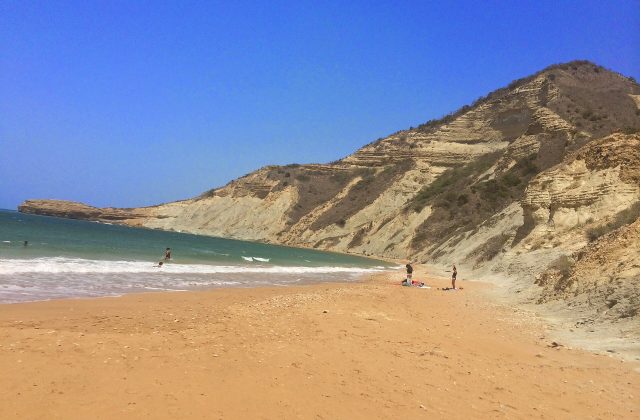
The park was created in 1975 and covers about 790 square kilometres, of which 110 are Saona and the rest the mainland peninsula and the sea. Its present name honours Cotubanama, the cacique of Higuey, the Taino chiefdom of this corner of the island, a man described by the chronicler Las Casas as the tallest and finest he had seen, who led the resistance to the Spaniards in two wars, in 1502 and 1504, took refuge on Saona when his people were defeated, was captured there and hanged in Santo Domingo. Saona was named by Columbus on his second voyage, in 1494, in honour of his friend Michele da Cuneo of Savona, who first sighted it and to whom he gave it. The peninsula is a platform of coral limestone, raised from the sea in terraces, flat, dry and waterless on the surface, since rain drains straight through it, and riddled with some hundreds of caves, several of which hold the most important rock art in the Caribbean. The Cueva de Jose Maria alone contains some twelve hundred Taino pictographs, in black and red, among them what is interpreted as a record of the tribute of cassava bread agreed with the Spaniards, and the caves of El Puente, Ramoncito and Berna have others, together with carvings of faces at their entrances; access to the most fragile is restricted.
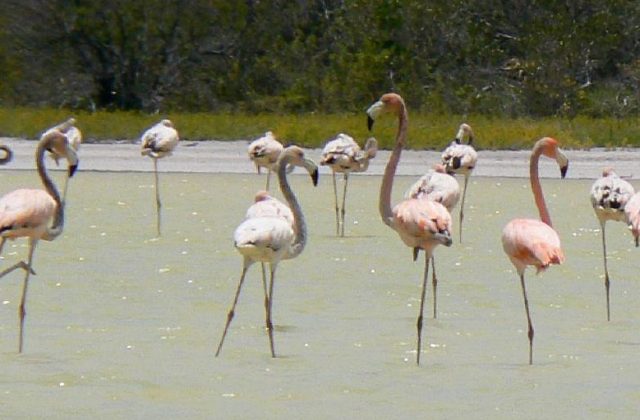
The vegetation is a dense, low, subtropical forest, humid in parts and dry in others, of gumbo-limbo, mahogany, guaiacum, copey, sea grape and cacti, in which grows the Bayahibe rose, a leafy cactus with pink flowers found only in this district and declared the national flower, and along the sheltered northern shore of Saona and the channel of Catuano are mangroves and lagoons with flamingos. There are 112 species of birds, including the Hispaniolan parrot, the white-crowned pigeon, which nests here in large colonies, the red-footed booby, the magnificent frigatebird, and the ashy-faced owl, with the rhinoceros iguana and the two strange relict mammals of the island, the solenodon, a venomous, long-snouted insectivore, and the hutia, a tree-dwelling rodent, both nocturnal and rarely seen. In the sea are manatees, bottlenose dolphins, which often accompany the boats, and four species of turtle, of which hawksbills, greens and leatherbacks nest on Saona, where a villager, known as Negro, has for years run a hatchery that has released tens of thousands of young. The cushion starfish of the sandbar die quickly if lifted from the water for photographs, a practice now forbidden but not always prevented. About five hundred people live in Mano Juan, in brightly painted wooden houses, by fishing and tourism, with solar power.
The park is open all year, and boats run daily. The dry season, from December to April, has the most reliable sunshine, the calmest seas and the greatest crowds, with Christmas, February and Easter week the peaks; May, June and November are good compromises, hot but quieter. The hurricane season runs from June to November, with the main risk from August to October, when trips may be cancelled for days and sargassum weed sometimes fouls the beaches, though Saona's leeward side is less affected than Punta Cana.
Turtles nest from March to November. Leave as early as possible, and prefer a weekday. Bring reef-safe sunscreen, a hat, a towel, water shoes, insect repellent for the late afternoon, and cash for tips and crafts. Allow a full day. Bayahibe, with its own beach and diving on nearby wrecks, is the base, Catalina island is reached from La Romana, Altos de Chavon twenty minutes away, and the basilica of Higuey forty.
Yes. GetYourGuide lists one ticket or tour for Cotubanama National Park, with live dates and prices and free cancellation on most of them.
The park fee is included.
The park is open all year, and boats run daily.
Cotubanama National Park covers 796 km².
Cotubanama National Park was established in 1975.
Cotubanama National Park is in Dominican Republic. The map on this page shows the exact spot.
Dominican Republic
Los Haitises is the mangrove and karst park on the southern shore of Samaná Bay in the north-east of the Dominican…
107 tickets & tours
Dominican Republic
Pico Isabel de Torres is the flat-topped green mountain that rises directly behind the city of Puerto Plata, on the…
3 tickets & tours
Dominican Republic
Monte Cristi lies in the far north-west of the Dominican Republic, close to the Haitian border, a dry, sun-struck…
3 tickets & tours
Dominican Republic
Jaragua is in the deep south-west of the Dominican Republic, the driest, emptiest and least touristy corner of the…
2 tickets & tours
Dominican Republic
Los Tres Ojos, the three eyes, is a group of underground lakes in a collapsed limestone cavern in the eastern suburbs…
2 tickets & tours