
Metropolitan Natural Park
260 km away
The Parque Natural Metropolitano is a tract of tropical forest inside the limits of Panama City, ten to fifteen minutes…
2 tickets & tours
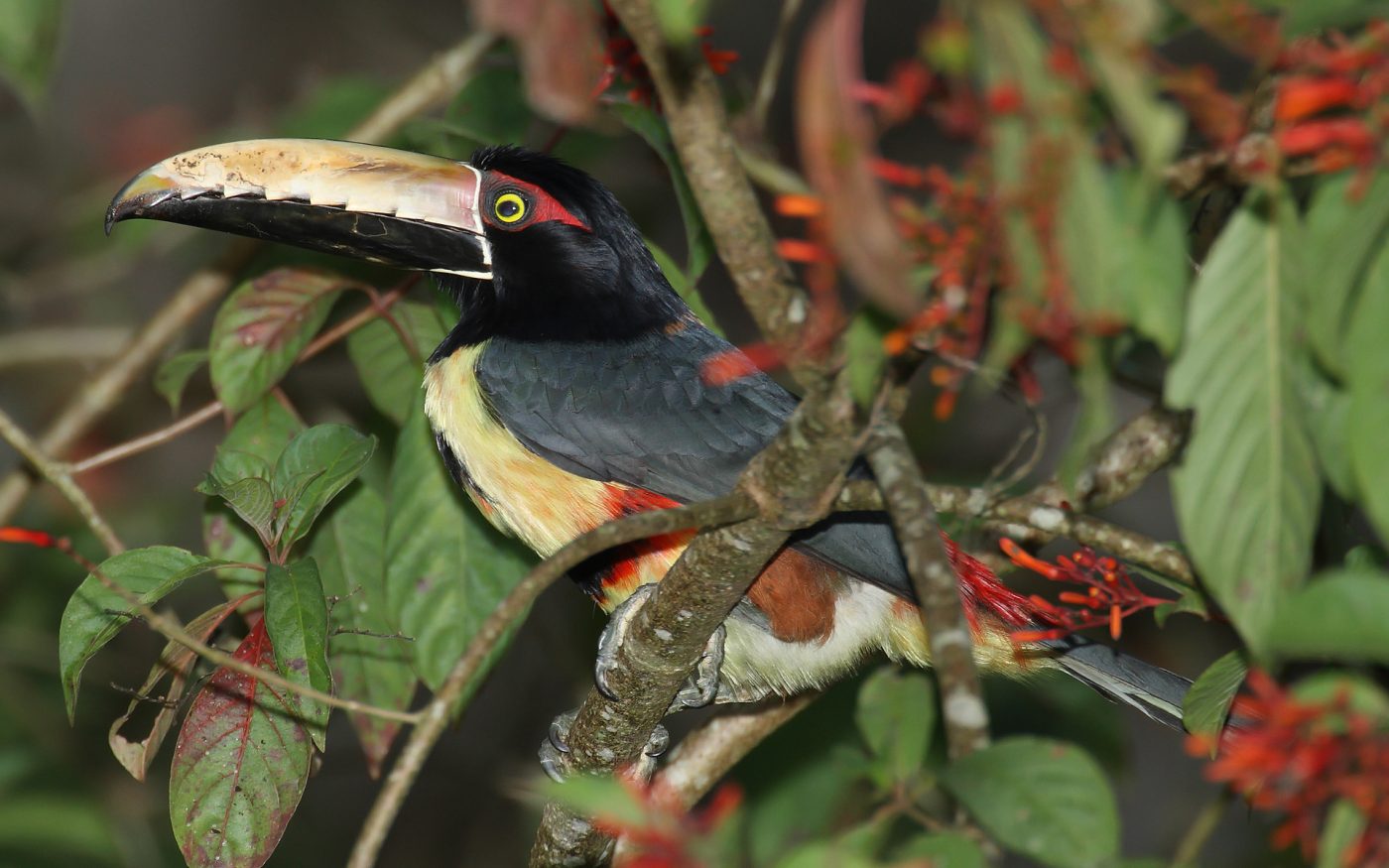
Photo: Mdf, CC BY-SA 3.0
Darien is the great wilderness at the eastern end of Panama, against the Colombian border, the largest national park in Central America and one of the wildest places in the hemisphere, the forest that has defeated every attempt to complete the Pan-American Highway, which stops at the town of Yaviza and resumes a hundred kilometres away in Colombia. It must be said at once that this is not a destination for casual or independent travel. The border zone has for decades been used by armed groups and drug traffickers, and in recent years by hundreds of thousands of migrants making the dangerous crossing on foot, and most governments advise against travel to parts of the province; the Panamanian border police maintain checkpoints along the highway and on the rivers, at which passports are recorded and travellers may be turned back, and entry to the park requires a permit from the environment ministry and an authorised guide.
Those who go, mainly birdwatchers and naturalists, do so with one of a very few specialised operators in Panama City, who arrange permits, transport, guides, food and porters. The usual route is by road to Yaviza, 280 kilometres and five to six hours from the capital, then an hour by motorised dugout down the Chucunaque and up the Tuira river to the old town of El Real, then by pickup and on foot, two to three hours, to the ranger station of Rancho Frio, at the foot of the Pirre range, where there are bunks, a kitchen and trails, one of which climbs steeply to a camp in the cloud forest on the ridge. Visits to Embera villages on the Sambu, Mogue and other rivers, reached by boat from the Pacific port of La Palma, and to a private reserve at Punta Patino, on the coast outside the park, are easier and safer alternatives that give a real sense of the region.
The national park was created in 1980 and covers about 5,790 square kilometres, extending along almost the whole length of the frontier; it was inscribed as a World Heritage Site in 1981 and declared a biosphere reserve in 1983, and it adjoins the Los Katios park on the Colombian side. It forms the land bridge between the two American continents, which joined here some three million years ago, allowing the animals of north and south to mingle, and it contains an unbroken sequence of habitats from the Pacific shore, with sandy beaches, rocky coasts and mangroves, through freshwater swamps and some of the tallest lowland rainforest in Central America, with emergent trees of fifty metres, the cuipo, with its swollen grey trunk, among them, up to cloud forest and elfin woodland on the isolated ranges of Pirre, Sapo, Jungurudo and Darien, the last of which rises to 1,875 metres at Cerro Tacarcuna, the highest point in eastern Panama. These mountain tops, cut off like islands, have evolved species of their own, the Pirre warbler, the Pirre bush-tanager, the Pirre hummingbird and the Tacarcuna wood-quail, among more than 450 species of birds recorded, which also include four macaws, the great curassow, and the harpy eagle, the most powerful bird of prey in the world and Panama's national bird, which preys on sloths and monkeys and nests here at a greater density than anywhere else known.
The mammals include all five Central American cats, the jaguar among them, Baird's tapir, the giant anteater, the bush dog, the white-lipped peccary in large herds, the capybara, and spider, howler, capuchin and night monkeys. Some eight thousand people of three indigenous nations live in and round the park: the Embera and the Wounaan, river peoples who moved up from the Colombian Choco in the last two centuries, living in open-sided thatched houses raised on posts, painting their bodies with the black juice of the jagua fruit, and known for their fine baskets and carvings in cocobolo wood and tagua nut; and the Guna, in a few villages in the hills. Darien has a long and mostly unhappy history of European ambition. It was through these forests, in September 1513, that Vasco Nunez de Balboa, guided by the local people, marched from the Caribbean and, from a peak in Darien, became the first European to see the Pacific; the gold mines of Cana, deep in the present park, worked by slaves, were among the richest in the Spanish empire in the seventeenth century and were several times sacked by pirates; and in 1698 the kingdom of Scotland staked a quarter of its national capital on a colony on the Caribbean coast of Darien, which collapsed within two years through fever, hunger and Spanish hostility, a catastrophe that led directly to the union with England. The road has never been built, partly on account of the cost and the terrain, partly to keep cattle diseases out of North America, and partly to protect the forest and its peoples.
The park can in principle be visited all year, but the practical season is the dry season, from about January to April, when the tracks to the ranger stations are passable, the rivers, though low, are navigable with some pushing, the trails are less muddy and the biting insects fewer; this is also the nesting season of the harpy eagle and the best time for birds.
The rains, from May to December, are heavy, 2,500 to more than 4,000 millimetres a year, turning trails to deep mud and making the streams dangerous, and few operators go. It is hot and humid at all times, 28 to 33 degrees in the lowlands, cooler on the ridges. Precautions against malaria, a yellow fever vaccination, rubber boots, a hammock or tent with a net, water purification, and respect for the instructions of the guides and the border police are all necessary. Allow five days to a week from Panama City.
260 km away
The Parque Natural Metropolitano is a tract of tropical forest inside the limits of Panama City, ten to fifteen minutes…
2 tickets & tours
276 km away
Soberania is a tract of lowland rainforest along the eastern bank of the Panama Canal, beginning only twenty-five…
2 tickets & tours
283 km away
Chagres is a very large rainforest park that begins only about forty kilometres north-east of Panama City, an hour or…
2 tickets & tours
No online tour for Darien National Park is listed on GetYourGuide; entry, where it is charged, is paid at the gate or through the park authority. Nearby parks with bookable tours are listed on this page.
Allow five days to a week from Panama City.
Darien National Park covers 5 970 km².
Darien National Park was established in 1980.
Darien National Park is in Panama. The map on this page shows the exact spot.
Panama
Chagres is a very large rainforest park that begins only about forty kilometres north-east of Panama City, an hour or…
2 tickets & tours
Panama
The Parque Natural Metropolitano is a tract of tropical forest inside the limits of Panama City, ten to fifteen minutes…
2 tickets & tours
Panama
Soberania is a tract of lowland rainforest along the eastern bank of the Panama Canal, beginning only twenty-five…
2 tickets & tours
Panama
Coiba is a remote archipelago in the Pacific, off the coast of the Panamanian province of Veraguas, and it is one of…
1 ticket or tour


