Nyungwe Forest National Park
62 km away
Nyungwe is the mountain rainforest of south-western Rwanda, five to six hours from Kigali, and it is visited on two-…
23 tickets & tours
Rainforest Park · Democratic Republic of the Congo
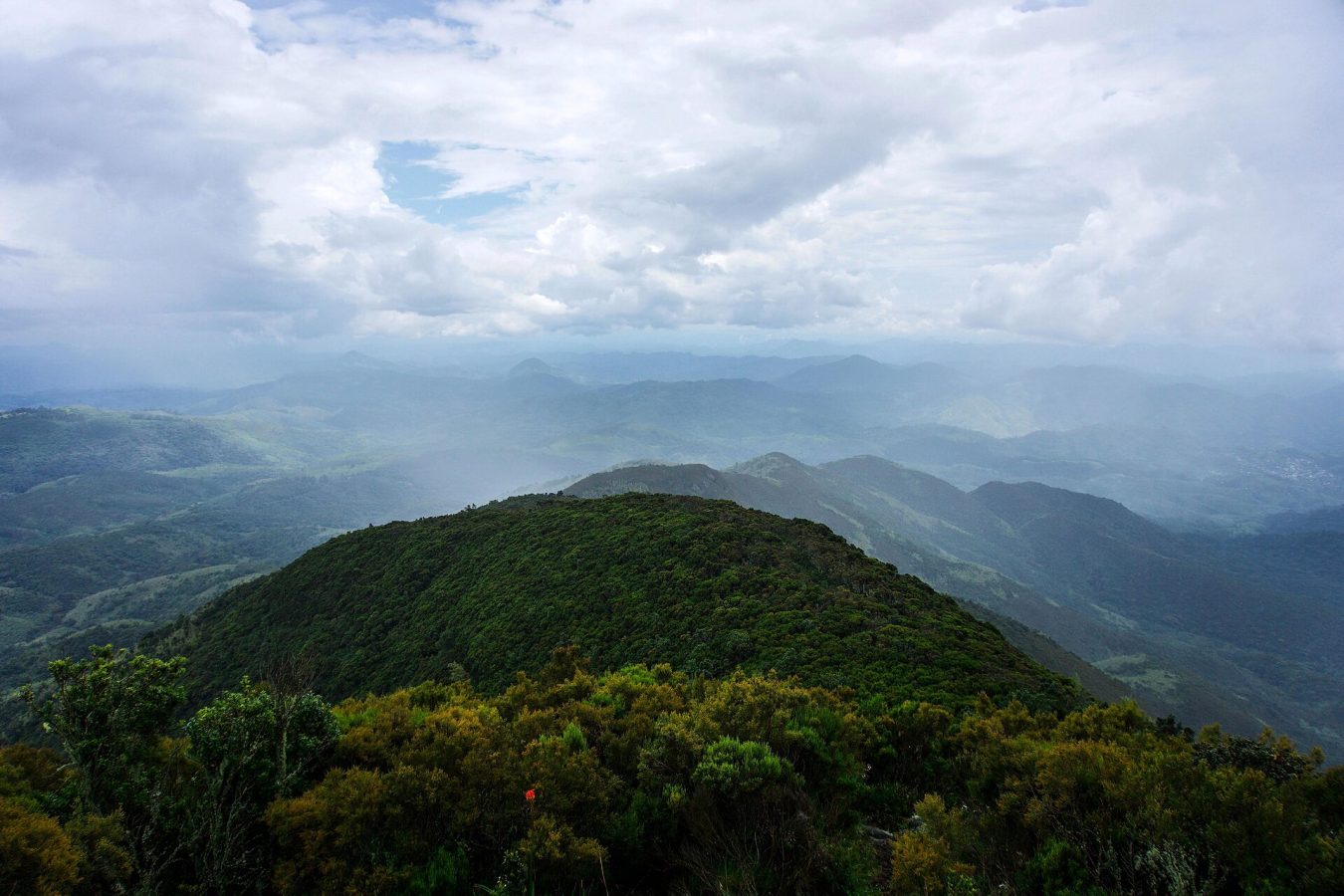
Kahuzi-Biega lies in the east of the Democratic Republic of the Congo, in the province of South Kivu, in the mountains west of Lake Kivu, and it is the one place in the world where visitors have been able to track the eastern lowland gorilla, the largest of all the apes. It must be said immediately that the region has been afflicted by armed conflict for three decades, that in early 2025 the nearby city of Bukavu was taken by a rebel army, and that virtually every foreign government advises against all travel to this part of the Congo; what follows describes how the park has been visited in calmer periods and is no encouragement to go without the most careful enquiry. In those periods the usual approach was not through the Congo at all but from Rwanda: a drive of five to six hours, or a short flight, from Kigali to the border town of Rusizi, on the southern shore of Lake Kivu, a crossing on foot over the bridge to Bukavu, for which a Congolese visa obtained in advance through the park was needed, and then a drive of about thirty kilometres, an hour, to the park headquarters at Tshivanga, at 2,100 metres.
Only the small highland sector of the park has ever been open. There, gorilla tracking is conducted on the pattern familiar from Rwanda and Uganda, at about a quarter of the price: permits are bought ahead from the Congolese wildlife authority, visitors are briefed in the morning, set off in a group of no more than eight with guides, trackers and armed rangers, walk for between half an hour and three or four hours through bamboo and forest until the trackers have found the family, and then spend exactly one hour with the animals, wearing surgical masks, at a distance of some metres. Walks to the summits of the two volcanoes, a marsh trail and a visit to a chimpanzee sanctuary at the research station of Lwiro were also offered.
Live prices from GetYourGuide for tours whose route includes this park. Free cancellation on most of them.
The park was created in 1970, on the initiative of a Belgian photographer and conservationist, Adrien Deschryver, from a forest reserve of 1937, and was enlarged in 1975 to about 6,000 square kilometres, a small mountainous eastern sector of some six hundred, dominated by two extinct volcanoes, Mount Kahuzi, 3,308 metres, and Mount Biega, 2,790, and a vast western sector of lowland rainforest in the Congo basin, joined by a narrow corridor; it was inscribed as a World Heritage Site in 1980 and has been on the list of sites in danger since 1997. It spans one of the most important altitudinal gradients in Africa, from six hundred metres to over three thousand, with lowland forest, transitional forest, mountain forest, bamboo, swamps and peat bogs, and subalpine heath on the summits, and belongs to the Albertine rift, the richest region of the continent for species found nowhere else. Its reason for being is Grauer's gorilla, the eastern lowland gorilla, a subspecies confined to the east of the Congo, the males of which may exceed two hundred kilograms. In the early 1970s Deschryver, by years of patient daily approaches, accustomed two families to his presence, and began to take visitors to see them, so that gorilla tourism was invented here, several years before it began among the mountain gorillas of Rwanda; the great silverbacks Casimir and Maheshe became celebrated, and Maheshe appeared on a Zairean banknote before being killed by poachers in 1993.
The catastrophe came from outside. In 1994 hundreds of thousands of Rwandan refugees settled in camps on the park's edge; the two Congo wars followed; armed groups occupied the forest, and a boom in the price of coltan, an ore used in mobile telephones, drew more than ten thousand miners into the lowland sector, where they and the militias lived on bushmeat. It is estimated that the total population of Grauer's gorilla fell from about 17,000 in the mid-1990s to fewer than 4,000 twenty years later, a loss of nearly four fifths, and the elephants of the highland sector were wiped out. Through all this, the park's rangers, many of whom were killed, continued to follow the habituated families, the best known of which is led by Chimanuka, a silverback born in 1986 who lost his own family in the war and built another of more than thirty; recent surveys suggest that the species has fared somewhat better in remote areas than was feared. The park also has a painful human history: the Batwa, the forest people, were expelled from it without compensation when it was created, have lived since in destitution on its margins, and since 2018 some have returned to settle and cut wood inside it, leading to violent clashes and to grave allegations against park guards. Chimpanzees, a dozen other primates, forest elephants, bongo, the giant forest hog, the Congo peafowl and more than 340 species of birds are recorded.
In years when the park has been accessible, gorilla tracking has been possible throughout the year. The region has two drier seasons, from June to September and from mid-December to February, when the trails are less muddy and the walking easier, and two rainy seasons, from March to May and from October to early December, when heavy downpours occur most afternoons. At an altitude of more than two thousand metres the climate is cool, 12 to 22 degrees, and mornings are often misty.
Visitors with colds or other infections are not admitted to the gorillas, children under fifteen are not allowed, and a certificate of vaccination against yellow fever is required for the country. Wear long trousers, long sleeves, gloves against nettles, strong boots and a waterproof. Before any plan is made, the current security situation must be verified with the park's management and with official travel advice, since it changes from month to month. Allow two days from Bukavu.
62 km away
Nyungwe is the mountain rainforest of south-western Rwanda, five to six hours from Kigali, and it is visited on two-…
23 tickets & tours
125 km away
Volcanoes National Park is the Rwandan side of the Virunga mountains, two and a half hours from Kigali to the town of…
12 tickets & tours
143 km away
Mgahinga is Uganda's smallest national park, in the extreme south-western corner of the country above the town of…
5 tickets & tours
Yes. GetYourGuide sells tickets and guided tours whose route includes Kahuzi-Biega National Park; live prices are shown on this page.
Allow two days from Bukavu.
Kahuzi-Biega National Park covers 6 000 km².
Kahuzi-Biega National Park was established in 1970.
Kahuzi-Biega National Park is in Democratic Republic of the Congo. The map on this page shows the exact spot.
Democratic Republic of the Congo
Virunga lies in the east of the Democratic Republic of the Congo, along the borders of Uganda and Rwanda, and it is the…
1 ticket or tour
Democratic Republic of the Congo
Garamba lies in the far north-eastern corner of the Democratic Republic of the Congo, against the border of South…
No online ticket
Democratic Republic of the Congo
Salonga lies in the very centre of the Congo basin, in the Democratic Republic of the Congo, and it is the largest…
No online ticket