Teide National Park
Canary Islands, Spain
Teide is the volcano at the centre of Tenerife and the most visited national park in Spain, and it is reached from…
48 tickets & tours
Volcano Park · Canary Islands · Spain
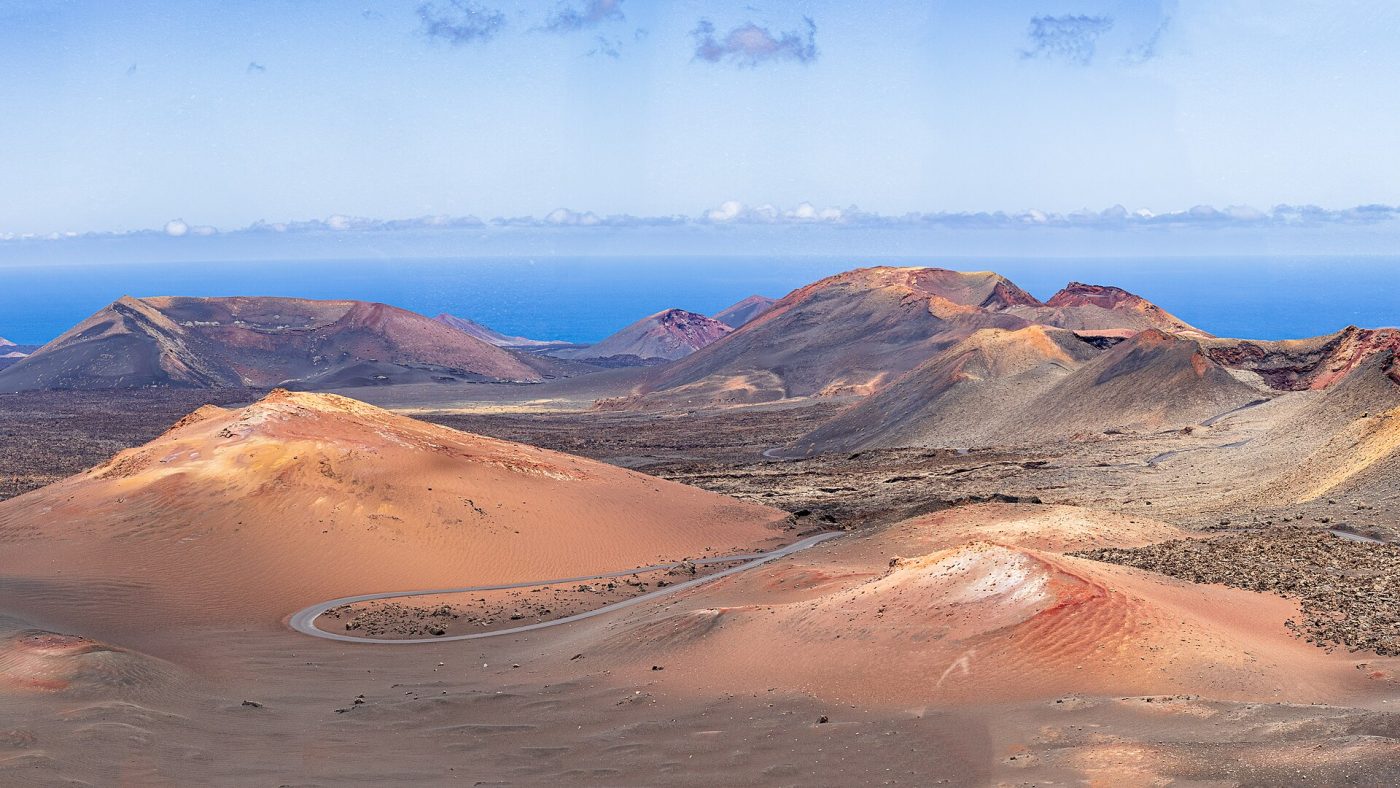
Photo: MiljenkoSuljic, CC BY-SA 4.0
Timanfaya is the lava field of south-western Lanzarote, half an hour from the island's resorts, and it is a park that cannot be walked or driven freely: the entrance ticket, bought at the barrier on the road, takes cars up to the Islote de Hilario, where the geothermal demonstrations are held and from where the park's own coaches make the fourteen-kilometre Route of the Volcanoes, thirty-five minutes on a road closed to every other vehicle, with a recorded commentary and no getting out. The island tours sold from Puerto del Carmen, Costa Teguise and Playa Blanca are therefore transport plus combinations: the south tours add the wine valley of La Geria with a tasting, the green lagoon of El Golfo, the Los Hervideros sea cliffs and the Janubio salt pans in a day;
the express tours do the park and La Geria in a morning and skip the entrance queue, which in summer runs to an hour by eleven; the evening tours with a volcano-grilled dinner at the El Diablo restaurant see the park at sunset. The camel rides at the Echadero de Camellos, twenty minutes on the slope of a cone, are paid on the spot. The only walking inside the park is the free guided Tremesana route and the coastal route, led by the park's own guides in small groups and booked online weeks ahead; the hiking tours sold commercially walk the volcanoes of the surrounding natural park, Caldera Blanca and the Cuervo crater, which are just as fine and unrestricted. Independent visitors drive to the barrier before ten or after three.
Live dates and prices from GetYourGuide. Free cancellation on most tickets.
The park was declared in 1974 and covers 51 square kilometres of the municipalities of Yaiza and Tinajo, the only national park in Spain that is entirely geological, a core of the biosphere reserve that has covered all of Lanzarote since 1993. It is the product of one of the longest eruptions in recorded history: from 1 September 1730 to April 1736 more than a hundred vents opened along a fissure and buried a quarter of the island, its best farmland and eleven villages, under lava and ash, as the parish priest of Yaiza recorded day by day, and a last eruption in 1824 added three cones. Almost three centuries later the Montañas del Fuego, the fire mountains, stand as they cooled, in red, ochre, black and orange, with lava tubes, collapsed channels, seas of clinker and fields of lapilli, barely touched by plants beyond the lichens, since it rains here a few days a year.
The heat is still below: at the Islote de Hilario the ground reaches 100 to 600 degrees a few metres down, and the rangers throw brushwood into a pit where it bursts into flame and pour water down a pipe that returns it as a geyser of steam, while the restaurant designed by César Manrique grills chicken over a well of volcanic heat; Manrique's devil with a pitchfork is the park's emblem. The coach route winds through the craters and the Valley of Tranquillity past the Montaña Rajada viewpoint over the lava sea to the coast. The Mancha Blanca visitor centre on the northern edge explains the eruptions with a simulation. La Geria, outside the boundary, where each vine grows in a pit dug in the ash behind a crescent wall of lava stones, is what the islanders made of the disaster.
The park is open daily from 9.30 am to about 4 pm for the last coach route, with longer hours in summer, and the visitor centre at Mancha Blanca from 9 am to 4 pm. Lanzarote's climate is mild all year, with the winter from November to March the high season of northern Europeans and the summer hot and windy; the park looks the same in every month, and the only variable is the queue at the barrier, which is worst between 11 and 2.
The low sun of early morning and late afternoon colours the craters best. Allow two hours for the park, a full day with La Geria, El Golfo and the salt pans. The Cueva de los Verdes and the Jameos del Agua in the north are the island's other volcanic sights, and Fuerteventura is a half-hour ferry from Playa Blanca.
Yes. GetYourGuide lists 13 tickets and tours for Timanfaya National Park, with live dates and prices and free cancellation on most of them.
The park is open daily from 9.30 am to about 4 pm for the last coach route, with longer hours in summer, and the visitor centre at Mancha Blanca from 9 am to 4 pm.
Allow two hours for the park, a full day with La Geria, El Golfo and the salt pans.
Timanfaya National Park covers 51.8 km².
Timanfaya National Park was established in 1974.
Timanfaya National Park receives about 1.7 million a year (2023).
Timanfaya National Park is in Canary Islands, Spain. The map on this page shows the exact spot.
Canary Islands, Spain
Teide is the volcano at the centre of Tenerife and the most visited national park in Spain, and it is reached from…
48 tickets & tours
Canary Islands, Spain
The Corralejo dunes lie immediately south of the resort town of Corralejo at the northern tip of Fuerteventura in the…
7 tickets & tours
Canary Islands, Spain
Jandía is the mountainous peninsula that forms the south-western tail of Fuerteventura in the Canary Islands, joined to…
4 tickets & tours
Canary Islands, Spain
The Caldera de Taburiente is an enormous, pine-clad crater-like depression that occupies the centre of the northern…
1 ticket or tour
Canary Islands, Spain
Garajonay occupies the summit plateau of La Gomera, the small, round, deeply ravined island that lies within sight of…
1 ticket or tour
Canary Islands, Spain
The Corona Forestal, the forest crown, is the great ring of pine woods that encircles the high central part of…
No online ticket