Gran Paradiso National Park
42 km away
Gran Paradiso is the oldest national park in Italy and the best place in the Alps to see ibex at close quarters, a high…
1 ticket or tour
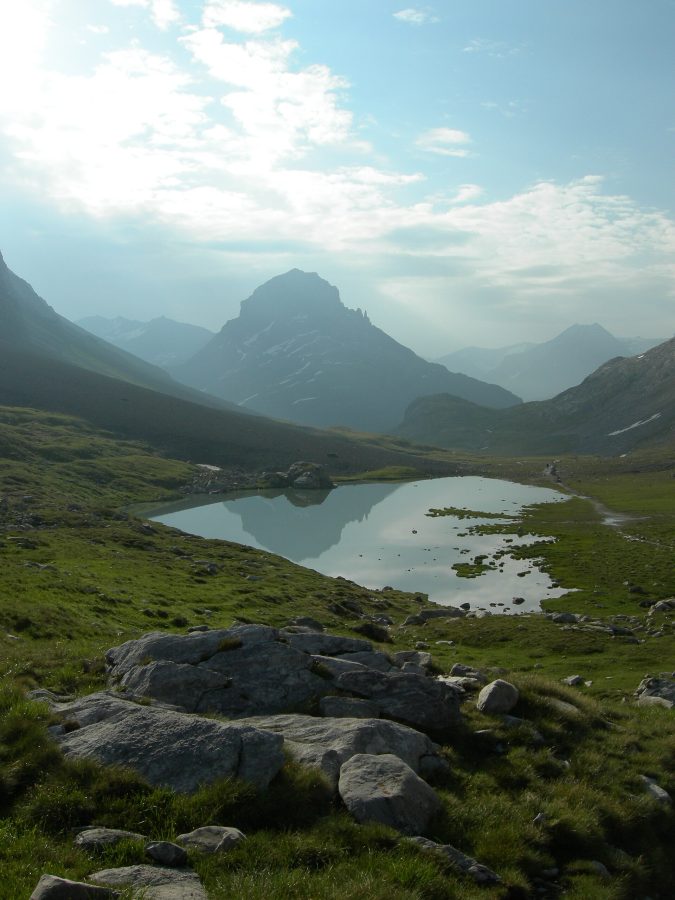
The Vanoise is a high massif in Savoy, in the French Alps, lying between the two great valleys of the Tarentaise, to the north, and the Maurienne, to the south, against the Italian frontier, and its national park was the first to be created in France. It is surrounded, and on the Tarentaise side almost hemmed in, by some of the largest ski resorts in the world, Val d'Isere, Tignes, Les Arcs, La Plagne, Courchevel, Meribel and Val Thorens, whose lifts stop at its boundary, but within it there are no roads, no lifts and no buildings other than mountain refuges, and it is seen only on foot. It is reached from Chambery, Lyon or Geneva in two to three hours by road, and by train to Bourg-Saint-Maurice or Moutiers in the Tarentaise and to Modane in the Maurienne, with buses up the valleys in summer. Entry is free.
The principal gateway is Pralognan-la-Vanoise, a traditional mountaineering village at the end of a road, in the heart of the massif, from which the classic walk climbs in about three hours, by the Lac des Vaches, which is crossed on a line of stepping stones, to the refuge and pass of the Col de la Vanoise, at 2,517 metres, beneath the ice-hung wall of the Grande Casse. On the Maurienne side, the villages of Termignon, Aussois and Bonneval-sur-Arc, one of the most beautiful in France, give access to the sunny southern slopes, the high plateau round the refuges of Plan du Lac and Entre-Deux-Eaux, and the Evettes cirque. From Val d'Isere, Tignes, Champagny and Peisey-Nancroix, marked paths lead into the park from the north, to the lakes of the Plan de la Plagne and the gorge of Malpasset. More than forty refuges, staffed in summer, allow hut-to-hut tours, the finest being the circuit of the Vanoise glaciers, of four to six days. Dogs, even on a lead, are forbidden in the core.
The national park was created on 6 July 1963, the first in France, under the law of 1960 that introduced the idea to the country, and its core covers about 535 square kilometres, between 1,280 metres and the 3,855 of the Grande Casse, the highest summit of Savoy outside the Mont Blanc massif, surrounded by a partnership zone of 1,465 square kilometres containing twenty-nine communes. For fourteen kilometres it shares a boundary with the Gran Paradiso National Park in Italy, with which it has been twinned since 1972, the two forming the largest protected area in the western Alps. Its origin lay with the ibex. The animal had been exterminated throughout the Alps except in the royal hunting reserve of the Gran Paradiso, from which a few wandered over the passes into the Vanoise, where they were regularly shot; it was to give them sanctuary that hunters, mountaineers and naturalists of Savoy pressed from the 1940s for a reserve. About forty survived at the park's creation, and there are now more than two thousand, the largest population in France, together with some six thousand chamois, marmots in great numbers, mountain hares, stoats, and, among the birds, the golden eagle, in some twenty pairs, the bearded vulture, which has returned to breed after its reintroduction in the Alps, the ptarmigan, the black grouse, the rock partridge, the wallcreeper, the snow finch and the alpine chough; wolves arrived from Italy in the late 1990s.
The massif is geologically complex, a meeting of crystalline rocks, schists, limestones and gypsum, which gives a great variety of soils and therefore one of the richest floras in the Alps, some twelve hundred species, including many arctic-alpine rarities left over from the ice age. It contains 107 summits over three thousand metres and a domed ice cap, the glaciers of the Vanoise, which a century ago covered more than a tenth of the park and have lost nearly half their area since, the lakes that now lie at their feet being the evidence. The park's early years included the most celebrated environmental battle in French history: between 1969 and 1971 the developers of Val Thorens, supported by the government, sought to have the glacier of Chaviere removed from the park for summer skiing, and a national campaign, the affair of the Vanoise, which brought half a million signatures, forced the president, Georges Pompidou, to refuse, establishing the principle that a national park's boundaries were inviolable. The valleys have been inhabited and grazed for thousands of years: rock engravings of deer and warriors are found high above Aussois and Lanslevillard, the salt route to Piedmont crossed the Col de la Vanoise, and the alpages, the high pastures, still carry in summer the herds of Tarine and Abondance cows whose milk goes into Beaufort cheese, made in the chalets and cooperatives of the valleys. Along the Maurienne stand the baroque churches and chapels of Savoy and the massive forts of the Esseillon, built by the kings of Sardinia against France.
The park is open all year. The walking season runs from about mid-June to the end of September, the refuges being staffed from mid-June to mid-September, and snow lingers on the high passes until July. Late June and July are the best time for flowers, which are at their height in the first half of July, and for seeing ibex and chamois with their young; August is the busiest month, with settled mornings and frequent afternoon thunderstorms;
September is clear, cool and quiet, with the rut of the chamois and ibex later in the autumn and the larches turning gold in October. From December to April the park is used by ski tourers and snowshoers, at the mercy of avalanches, while the surrounding resorts are in full swing. Book refuges ahead in July and August, start early, and carry warm and waterproof clothing, sun protection and water. Allow three days to a week. Annecy, Chambery and the wine villages of Savoy lie on the way, and the Mont Cenis pass leads into Italy.
42 km away
Gran Paradiso is the oldest national park in Italy and the best place in the Alps to see ibex at close quarters, a high…
1 ticket or tour
174 km away
The Verdon gorge is the deepest and most spectacular river canyon in France, in the hills of Haute-Provence between the…
4 tickets & tours
198 km away
The Luberon is a range of wooded limestone hills in the heart of Provence, in the south of France, running east and…
1 ticket or tour
No online tour for Vanoise National Park is listed on GetYourGuide; entry, where it is charged, is paid at the gate or through the park authority. Nearby parks with bookable tours are listed on this page.
The park is open all year.
Allow three days to a week.
Vanoise National Park covers 535 km².
Vanoise National Park was established in 1963.
Vanoise National Park is in France. The map on this page shows the exact spot.
France
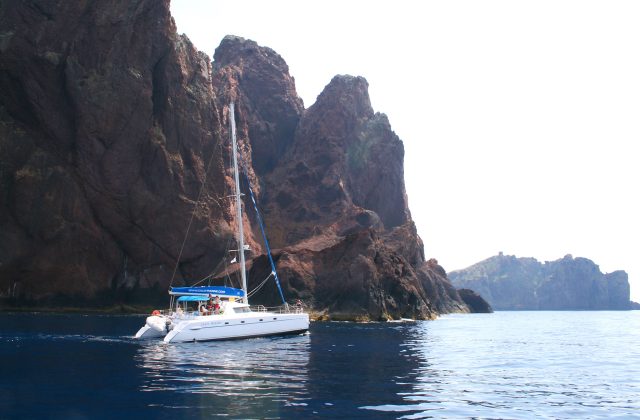
Scandola is the red-rock peninsula on the west coast of Corsica, and the reserve is closed to walkers and to anchoring,…
17 tickets & tours
France
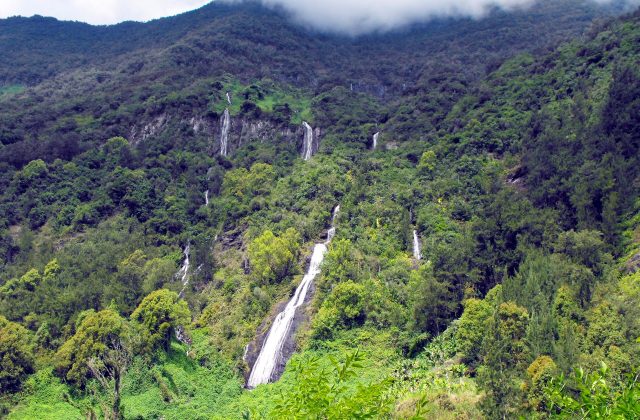
The national park covers the mountainous interior of Réunion, the French island in the Indian Ocean east of Madagascar,…
15 tickets & tours
France
The Camargue is the Rhône delta south of Arles, an hour from Avignon and Montpellier, and its regional park is visited…
14 tickets & tours
France
The Verdon gorge is the deepest and most spectacular river canyon in France, in the hills of Haute-Provence between the…
4 tickets & tours
France
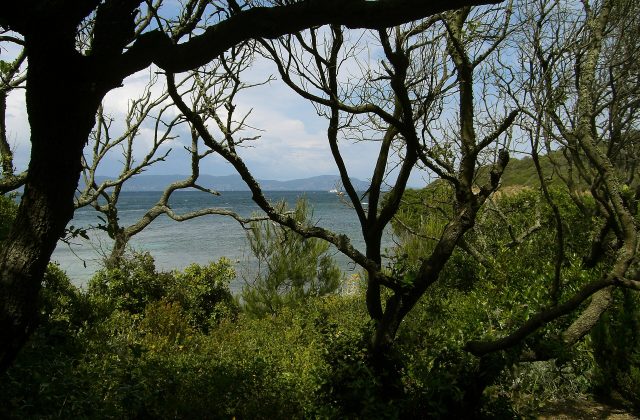
Port-Cros is one of the three Îles d'Hyères, the Golden Isles, off the coast of the Var between Toulon and…
3 tickets & tours
France
The Alpilles are a small range of jagged white limestone hills in the heart of Provence, rising abruptly from the plain…
2 tickets & tours