Dovrefjell-Sunndalsfjella National Park
Norway
Dovrefjell is the high mountain plateau that separates southern Norway from the Trondheim region, and it is unusually…
1 ticket or tour
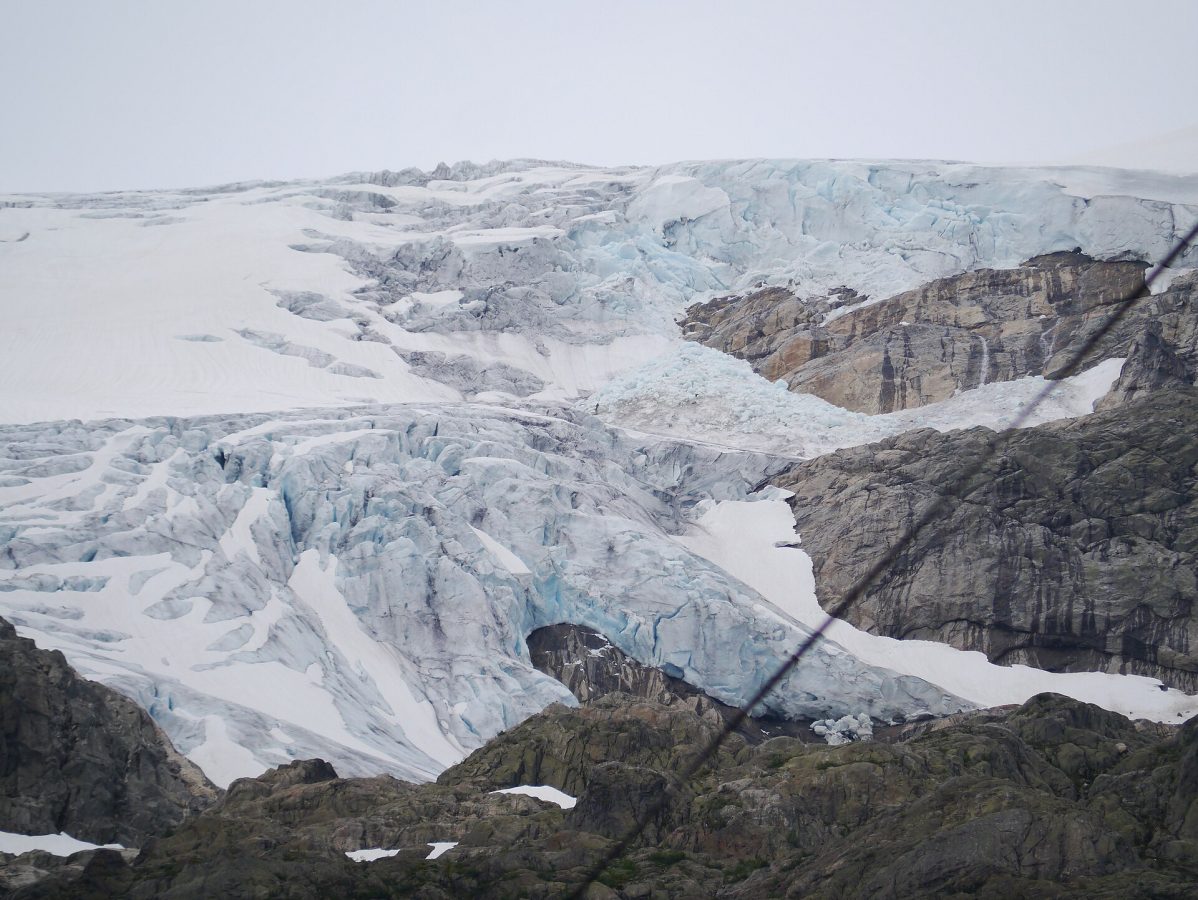
Photo: Zairon, CC BY-SA 3.0
Folgefonna is the ice cap on the peninsula between the Hardangerfjord and its branch the Sørfjord, in western Norway, about two and a half to three hours from Bergen by road and ferry or tunnel, and the glacier, visible from the fjord villages as a white line on the skyline, can be approached from several sides, each giving a different experience. From the west, the village of Sundal in Kvinnherad is the start of the most popular walk: a broad gravel track, built in 1863 to carry blocks of glacier ice down to the fjord for export, leads in about forty-five minutes of easy walking to the Bondhusvatnet, a still, green lake in a steep-walled valley with the Bondhus glacier hanging above its far end, the view that appears on the brochures;
the day tours from Bergen go here, with the Hardangerfjord's waterfalls and orchards on the way. From Jondal, on the north-west, a toll road climbs nineteen kilometres to the Fonna Glacier Ski Resort at 1,200 metres, a summer ski centre on the ice, where guided glacier walks on the blue ice with rope, crampons and axe are run daily in season, and where anyone can simply step onto the snow. From Odda and the Buer valley in the east, a steep, rough trail with fixed ropes climbs in an hour and a half to the snout of the Buarbreen, and guides take roped parties onto the ice itself, including an overnight crossing. Kayaking on Bondhus lake and guided ski touring in spring are also offered. The park is free. No one should go onto the glacier without a guide: crevasses lie under the snow bridges.
Live dates and prices from GetYourGuide. Free cancellation on most tickets.
The national park was opened by Queen Sonja in May 2005 and covers about 545 square kilometres in the municipalities of Kvinnherad, Etne and Ullensvang, protecting the glacier and the wild mountain country around it, from the fjord shore to 1,662 metres on the ice. Folgefonna is the collective name for three connected plateau glaciers, the northern, middle and southern, which together make up the third largest ice cap on the Norwegian mainland, about 200 square kilometres, with ice up to nearly 400 metres thick in the southern part. It is not a remnant of the great ice age but a young glacier, which melted away completely some eight or nine thousand years ago and re-formed about five thousand years ago, reaching its greatest extent in the cold spells of the eighteenth and late nineteenth centuries. It lies only a few kilometres from the sea, in the path of the Atlantic westerlies, and receives enormous snowfall, in places the equivalent of five metres of water a year, which is why it survives at so modest an altitude, and why it responds so quickly to the climate: its outlet glaciers, Bondhusbreen, Buarbreen, Blomsterskardbreen and others, advanced in the snowy 1990s and have retreated fast since 2000.
Some of the meltwater is captured beneath the ice, in tunnels bored under the Bondhus glacier, for hydroelectric power. From the 1820s the Bondhus valley was one of the first tourist sights of Norway, visited by English travellers and the German Kaiser, and in the same decades the glacier was mined: ice cut from its snout was dragged by horse to Sundal and shipped to fish merchants and hotels as far as Britain. An old track, the Keiser's path, crosses the ice cap from Sunndal to Odda, a classic guided summer traverse. Around the ice the landscape runs from sheltered fjord-side woods of oak, lime and elm, remarkably lush, through birch and pine to bare, glacier-polished rock, with red deer, golden eagles, ptarmigan and white-backed woodpeckers. Below the park, on the Sørfjord, Hardanger's fruit farms grow half of Norway's apples and cherries.
The park is open at all times. The season for walkers is from about June to September, with the Bondhus lake walk possible from May to October; the fruit trees of Hardanger blossom in the second half of May, a celebrated sight with the snow still on the mountains above. The summer ski centre at Jondal usually opens in May and closes in late August or September, depending on the snow, and guided blue-ice walks run from June to September.
It rains heavily and often on this coast, and weather on the ice changes in minutes, so carry waterproofs and warm layers even on a fine morning. Allow a full day from Bergen, two to combine sides. Rosendal and its barony are half an hour from Sundal, Odda and the Trolltunga trailhead are on the eastern side, and the Vøringsfossen waterfall and the Hardangervidda plateau an hour and a half north.
Yes. GetYourGuide lists 3 tickets and tours for Folgefonna National Park, with live dates and prices and free cancellation on most of them.
The park is open at all times.
Allow a full day from Bergen, two to combine sides.
No one should go onto the glacier without a guide: crevasses lie under the snow bridges.
Folgefonna National Park covers 545 km².
Folgefonna National Park was established in 2005.
Folgefonna National Park is in Norway. The map on this page shows the exact spot.
Norway
Dovrefjell is the high mountain plateau that separates southern Norway from the Trondheim region, and it is unusually…
1 ticket or tour
Norway
Jotunheimen, the home of the giants, is the highest mountain region of northern Europe, in the centre of southern…
1 ticket or tour
Norway
The Hardangervidda is the largest mountain plateau in northern Europe, a vast, treeless upland of rock, heather, lakes…
No online ticket
Norway
Jostedalsbreen is the largest glacier on the mainland of Europe, an ice cap more than sixty kilometres long lying on…
No online ticket
Norway
Rondane is a compact massif of high, rounded, stony mountains in the interior of southern Norway, between the long…
No online ticket