Tijuca National Park
Brazil
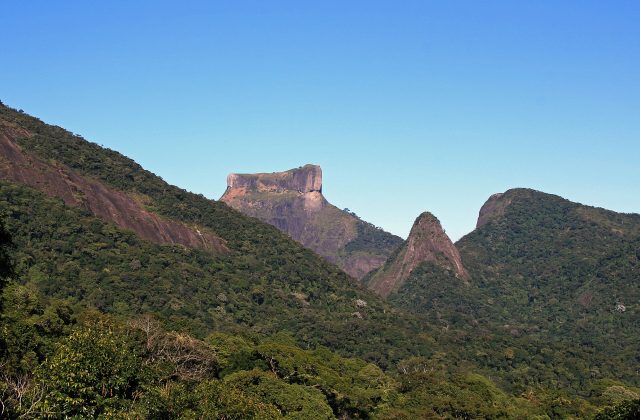
Tijuca is the rainforest inside the city of Rio de Janeiro, and it is visited on half-day and full-day tours from the…
30 tickets & tours

Photo: Ab5602, CC BY-SA 3.0
Itatiaia is the oldest national park in Brazil, in the Mantiqueira mountains on the border of the states of Rio de Janeiro and Minas Gerais, conveniently close to the Via Dutra, the main highway between Rio de Janeiro, about 170 kilometres and two and a half to three hours away, and São Paulo, about 250 kilometres, and it consists of two parts that are entered separately and do not connect by road inside the park. The Lower Part, the Parte Baixa, is reached from the town of Itatiaia on the highway: a paved road climbs through dense Atlantic rainforest to a visitor centre and museum, and to short, easy trails leading to waterfalls and natural pools, the Véu de Noiva, Itaporani, Maromba and the Lago Azul, with a handful of old-fashioned hotels inside the park, famous among birdwatchers for the feeders on their verandas.
The Upper Part, the Planalto, is quite different: it is reached by a separate route, by way of the Garganta do Registro pass on the road to Itamonte and then fourteen kilometres of rough, unsurfaced road, the highest road in Brazil, to the Posto Marcão gate at about 2,400 metres, beyond which lie the high rocky plateau and the peaks. The entrance fee, higher for foreigners, is paid online or at the gates; the number of visitors to the Upper Part is limited, so tickets should be booked ahead at weekends and in the dry season, and gates open early and close to entry by early afternoon. Guides are not obligatory but are strongly advisable for the peaks, which involve scrambling and route-finding, and are sold with transport from Itamonte, Itatiaia, Penedo and Visconde de Mauá, along with three-day packages from Rio and São Paulo.
Live dates and prices from GetYourGuide. Free cancellation on most tickets.
The park was created on 14 June 1937 by President Getúlio Vargas, on the lands of a failed government farming colony and a biological station of Rio's botanical garden, and was enlarged in 1982 to about 280 square kilometres. Its name is Tupi for the rock full of points, which describes its summit region exactly. It spans an extraordinary range of altitude, from about 540 metres to 2,791 at the Pico das Agulhas Negras, the black needles, the highest point of Rio de Janeiro state and among the highest in Brazil, and correspondingly two worlds. The lower slopes are montane Atlantic rainforest, tall, wet and tangled with bamboo, bromeliads, orchids, tree ferns and palms, with waterfalls on the Campo Belo river, and the richest birdlife in the region, some 350 to 400 species, among them saffron toucanets, red-breasted toucans, guans, dozens of tanagers and hummingbirds, and the rare black-and-gold cotinga higher up;
howler and capuchin monkeys, sloths, coatis and pacas are common, and the muriqui, the woolly spider monkey, the largest primate of the Americas, survives here. Above about 2,000 metres the forest gives way to the campos de altitude, an open, cold, windswept plateau of grasses, bogs and bare rock, where frost is frequent in winter, ice forms on the pools, temperatures of minus ten have been recorded and snow has occasionally fallen, a wholly un-Brazilian landscape with a flora full of endemics, including a tiny toad, the Itatiaia highland frog, red-bellied and found nowhere else. The rock is a rare alkaline intrusive, nepheline syenite, which weathers into deep vertical grooves, so that the Agulhas Negras look like a bundle of dark organ pipes; the ascent takes three to four hours with some scrambling and the use of a rope in places. The Prateleiras, the shelves, a pile of gigantic rounded boulders at 2,548 metres, the Pedra do Altar, the Pedra Furada and the Cinco Lagos circuit are the other classic walks of the plateau, from the old Rebouças mountain hut.
The Lower Part is open daily from about 8 am to 5 pm, and the Upper Part from 7 am, with entry closing in the early afternoon. The dry season, from May to September, is the time for the Upper Part, with clear skies, magnificent visibility and very cold nights, the frosts of June and July being an attraction for Brazilians; it is also the season of grass fires.
From October to March it rains heavily, thunderstorms make the exposed plateau dangerous, and the peaks are often closed or invisible, while the waterfalls and the forest of the Lower Part are at their best, and the birds most active from September to November. Allow a day for each part. Penedo, a village founded by Finnish immigrants, and Visconde de Mauá are the nearby resorts, and the old coffee towns of the Paraíba valley lie along the highway.
Yes. GetYourGuide lists 3 tickets and tours for Itatiaia National Park, with live dates and prices and free cancellation on most of them.
The entrance fee, higher for foreigners, is paid online or at the gates; the number of visitors to the Upper Part is limited, so tickets should be booked ahead at weekends and in the dry season, and gates open early and close to entry by early afternoon.
The Lower Part is open daily from about 8 am to 5 pm, and the Upper Part from 7 am, with entry closing in the early afternoon.
Allow a day for each part.
Itatiaia National Park covers 281 km².
Itatiaia National Park was established in 1937.
Itatiaia National Park is in Brazil. The map on this page shows the exact spot.
Brazil
Tijuca is the rainforest inside the city of Rio de Janeiro, and it is visited on half-day and full-day tours from the…
30 tickets & tours
Brazil
Lençóis Maranhenses is the field of white dunes and rainwater lagoons on the coast of Maranhão in north-eastern Brazil,…
12 tickets & tours
Brazil
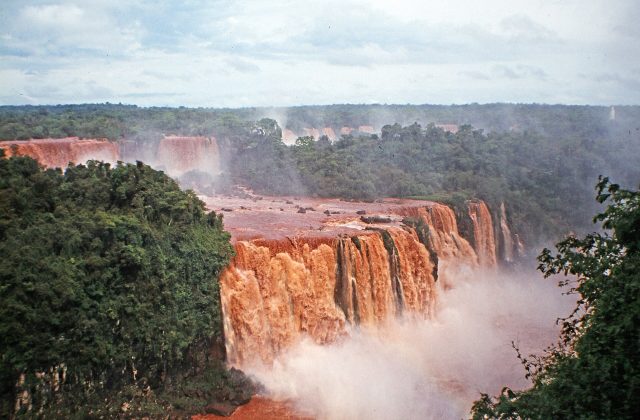
Iguaçu National Park is the Brazilian side of the falls at Foz do Iguaçu, and its visit is one walk: the entrance…
9 tickets & tours
Brazil
The Serra dos Órgãos is the mountain range that closes the northern horizon of Guanabara Bay, whose granite needles are…
5 tickets & tours
Brazil
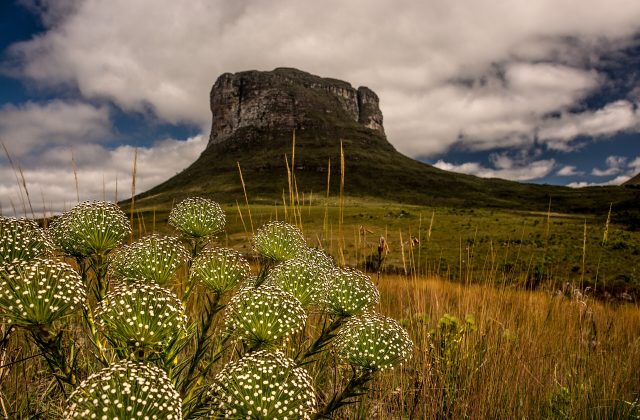
The Chapada Diamantina is a range of table mountains, canyons, waterfalls and caves in the dry interior of the…
3 tickets & tours
Brazil
Jau is one of the largest protected areas of tropical rainforest in the world, in the Brazilian state of Amazonas, on…
2 tickets & tours