Tijuca National Park
Brazil
Tijuca is the rainforest inside the city of Rio de Janeiro, and it is visited on half-day and full-day tours from the…
30 tickets & tours
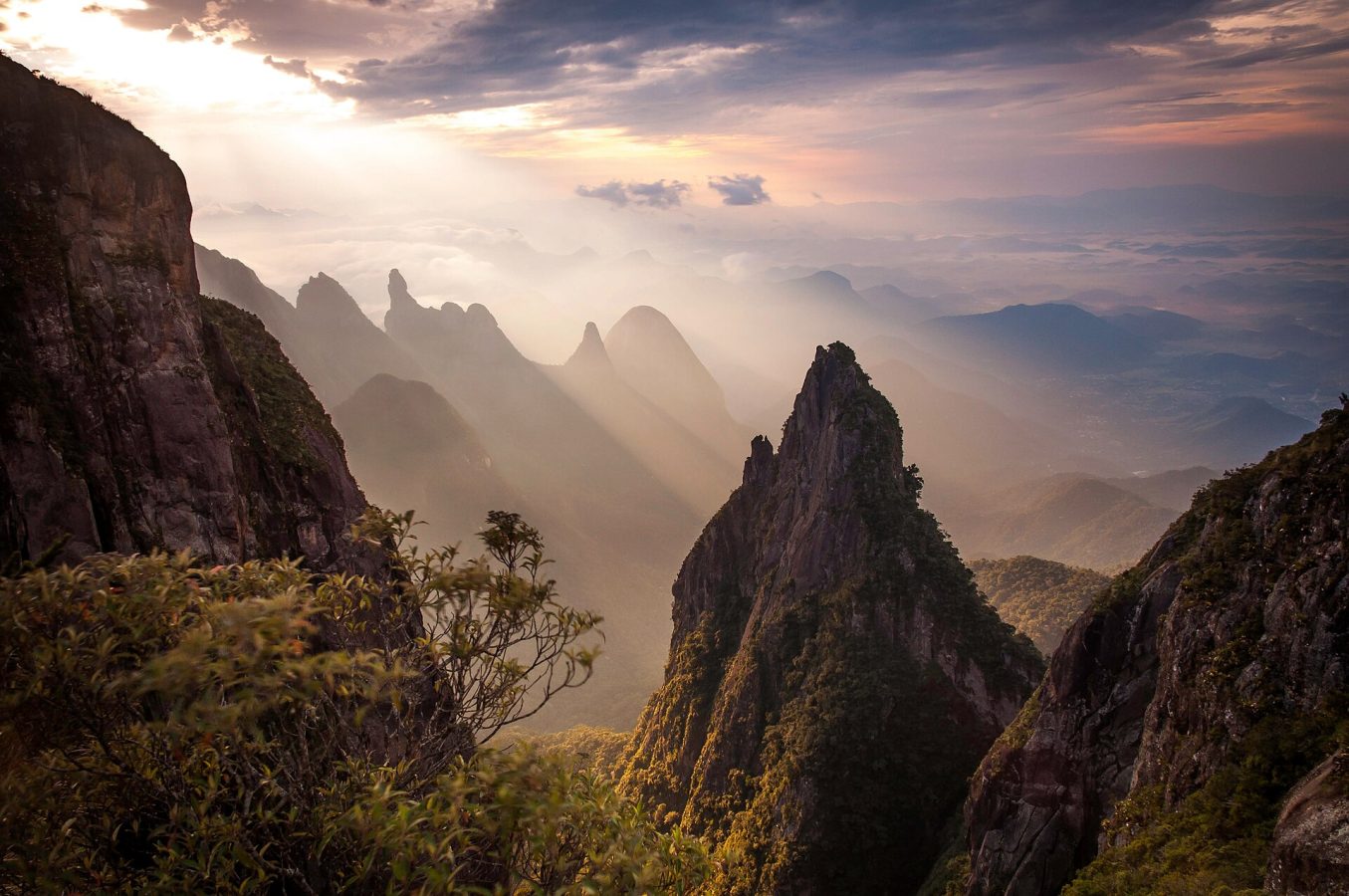
Photo: Carlos Perez Couto, CC BY-SA 3.0
The Serra dos Órgãos is the mountain range that closes the northern horizon of Guanabara Bay, whose granite needles are visible from Rio de Janeiro on a clear day, and the park is one and a half to two hours from the city by the highway that climbs the escarpment. It has three entrances in three towns, and the choice matters. The Teresópolis headquarters, in the town that is home to Brazil's national football team's training centre, is the main one, with the visitor centre, natural swimming pools in the river, easy and moderate trails including a suspended forest walkway, and the start of the climbs to the high peaks. The Petrópolis entrance, in the old imperial summer capital, gives onto the Bonfim valley and the waterfall trail to the Véu da Noiva.
The Guapimirim entrance, at the foot of the range, is the hot, lowland one, with river pools and waterfalls popular with families from the city. The day trips from Rio, by van with a guide, usually go to Teresópolis for a walk to a viewpoint of the Dedo de Deus and a swim, with lunch in the town, or combine the park with Petrópolis's imperial museum; the hiking tours tackle something more demanding, such as the trail to Pedra do Sino. The entrance fee is modest, with higher rates for foreigners, and tickets and campsite or hut places on the mountain are booked through the federal parks' online system. The famous traverse from Petrópolis to Teresópolis, about thirty kilometres over the tops in three days, is sold by Rio's trekking agencies with guides, and climbs of the Dedo de Deus are for roped parties with a mountain guide.
Live dates and prices from GetYourGuide. Free cancellation on most tickets.
The park was created in 1939, the third national park in Brazil, and covers about 200 square kilometres of the Serra do Mar in the municipalities of Teresópolis, Petrópolis, Magé and Guapimirim, rising from about 80 metres near sea level to 2,263 metres at the Pedra do Sino, the bell rock. Its name, the organ range, was given by Portuguese sailors, to whom the row of vertical granite and gneiss pinnacles suggested the pipes of a church organ. The best known of them is the Dedo de Deus, the finger of God, 1,692 metres, a rock tower shaped like a hand with the index finger pointing at the sky, which appears on the flag and arms of the state of Rio de Janeiro; its first ascent, in 1912, by five men from Teresópolis with home-made equipment, after foreign climbers had declared it impossible, is counted as the birth of Brazilian mountaineering, and the park remains the country's chief climbing ground, with the Agulha do Diabo, the devil's needle, among the most prized summits.
The range forces the moist sea air upwards and is drenched in rain and cloud, so that its slopes carry some of the best preserved Atlantic rainforest in the state, a biome reduced elsewhere to a few per cent of its original extent: tall forest hung with bromeliads, orchids and lianas below, cloud forest of stunted, mossy trees higher up, and on the summits above 2,000 metres the campos de altitude, open fields of grasses, bamboos and endemic flowers on bare rock, a habitat found only on the highest mountains of south-eastern Brazil. More than 460 species of birds have been recorded, many of them endemic to the Atlantic forest, including the grey-winged cotinga, discovered only in 1980 and confined to these summits. Muriquis, the largest monkeys of the Americas, howlers, sloths, ocelots and pumas live in the forest. In January 2011 catastrophic landslides in the surrounding valleys killed more than nine hundred people.
The park is open daily, the lower areas from about 8 am to 5 pm, with earlier access for those on the long trails. The dry, cool season from May to September is the time for the peaks and the traverse, with clear skies, cold nights that can fall below freezing on the summits, and the best views;
from November to March it is hot and very wet, with afternoon storms almost daily, flash floods in the rivers, slippery rock and the high trails often closed, though the waterfalls and pools are at their best. Weekends and holidays are busy at the pools. Register at the gate for the long trails. Allow a day from Rio, three days for the traverse. Teresópolis and Petrópolis are the bases, the imperial museum in Petrópolis is the cultural complement, and Rio is an hour and a half away.
Yes. GetYourGuide lists 5 tickets and tours for Serra dos Órgãos National Park, with live dates and prices and free cancellation on most of them.
The entrance fee is modest, with higher rates for foreigners, and tickets and campsite or hut places on the mountain are booked through the federal parks' online system.
The park is open daily, the lower areas from about 8 am to 5 pm, with earlier access for those on the long trails.
Allow a day from Rio, three days for the traverse.
Serra dos Órgãos National Park covers 200 km².
Serra dos Órgãos National Park was established in 1939.
Serra dos Órgãos National Park is in Brazil. The map on this page shows the exact spot.
Brazil
Tijuca is the rainforest inside the city of Rio de Janeiro, and it is visited on half-day and full-day tours from the…
30 tickets & tours
Brazil
Lençóis Maranhenses is the field of white dunes and rainwater lagoons on the coast of Maranhão in north-eastern Brazil,…
12 tickets & tours
Brazil
Iguaçu National Park is the Brazilian side of the falls at Foz do Iguaçu, and its visit is one walk: the entrance…
9 tickets & tours
Brazil
The Chapada Diamantina is a range of table mountains, canyons, waterfalls and caves in the dry interior of the…
3 tickets & tours
Brazil
Itatiaia is the oldest national park in Brazil, in the Mantiqueira mountains on the border of the states of Rio de…
3 tickets & tours
Brazil
Jau is one of the largest protected areas of tropical rainforest in the world, in the Brazilian state of Amazonas, on…
2 tickets & tours