Tijuca National Park
Brazil
Tijuca is the rainforest inside the city of Rio de Janeiro, and it is visited on half-day and full-day tours from the…
30 tickets & tours
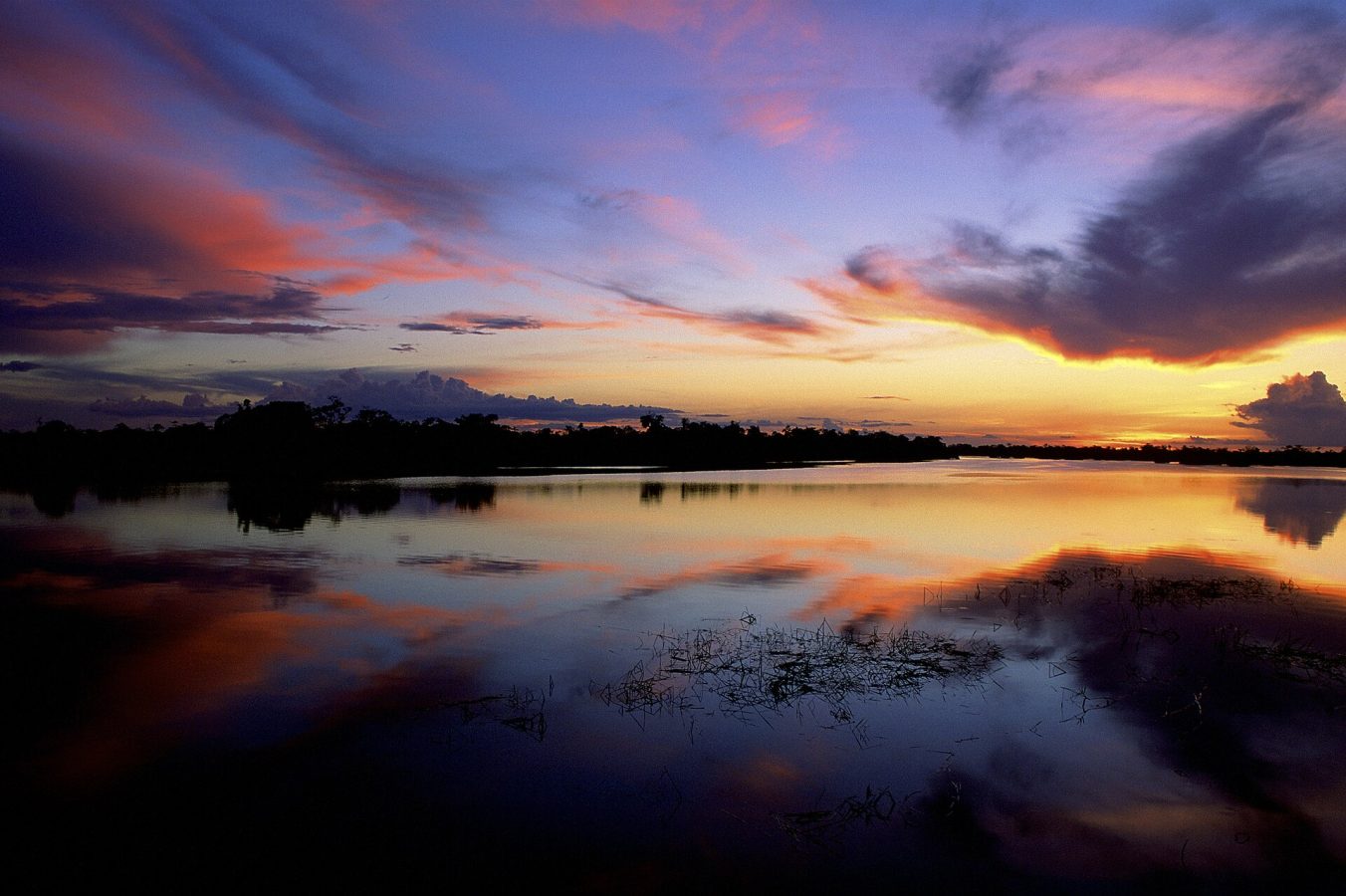
Photo: Diego Lezama, CC BY-SA 4.0
Jau is one of the largest protected areas of tropical rainforest in the world, in the Brazilian state of Amazonas, on the right bank of the Rio Negro about 220 kilometres north-west of Manaus, and it has no roads, no lodges and no trails to speak of: it is a park of rivers, and it is visited only by boat, by small numbers of people. Entry requires an authorisation from the federal parks institute, which is requested in advance and which tour operators normally obtain for their clients, and visitors must be accompanied by an accredited guide. There are two ways of going. The more comfortable is an expedition cruise from Manaus, of five to eight days, aboard one of the wooden or steel riverboats, with cabins, that ply the Rio Negro, which anchor each night in a different place and send their passengers out in canoes and launches at dawn and dusk to explore the side channels, walk in the forest, fish for piranha, look for caimans by torchlight and visit riverside families;
such cruises generally combine Jau with the Anavilhanas archipelago, on the way. The other starts from the small town of Novo Airao, the park's gateway and the seat of its administration, which since the opening of the bridge across the Rio Negro in 2011 can be reached from Manaus by road in about three hours: from there, local boatmen and guides take visitors upstream by fast launch, an hour and a half to two hours, to the mouth of the Jau, where a floating ranger post registers all who enter, and then on up the river and its tributary the Carabinani, to rapids, waterfalls, rock engravings, beaches and the ruins of an abandoned town, sleeping in hammocks on the boat or slung under shelters on the bank. At Novo Airao itself, wild pink river dolphins come to a floating platform to be fed and can be watched at arm's length.
Live dates and prices from GetYourGuide. Free cancellation on most tickets.
The national park was created in 1980 and covers about 23,000 square kilometres, an area rather larger than Wales or the state of New Jersey; it was inscribed as a World Heritage Site in 2000, and in 2003 the inscription was extended to include the Anavilhanas archipelago and the reserves of Amana and Mamiraua, to form the Central Amazon conservation complex, more than six million hectares, the largest protected area in the Amazon basin. Its special significance is that it contains the whole catchment of a river, from the sources to the mouth, some 450 kilometres, the only instance in Brazil of a large blackwater river basin protected in its entirety. The Jau is named after one of the giant catfish of the Amazon, which can exceed a metre and a half and a hundred kilograms. Like the Rio Negro into which it flows, it is a blackwater river: it drains not the young, mineral-rich Andes but ancient, leached, sandy soils, and its water, stained by the tannins and humic acids of decaying leaves, is the colour of tea or, in depth, of black coffee, highly acid, very poor in nutrients, and almost free of the mosquitoes that torment travellers on the white-water rivers, which is a considerable comfort. The level of the rivers rises and falls each year by eight to twelve metres, and for six or seven months the forest along the banks, called igapo, stands deep in water, so that canoes glide among the crowns of the trees, fish swim through the branches eating the fruit that falls, and dolphins hunt among the trunks;
the trees are adapted to spend half their lives submerged. Beyond the reach of the floods lies the tall forest of the terra firme, which covers most of the park, and on patches of pure white sand a low, open, scrubby woodland with many orchids and bromeliads. The park's animals include the jaguar, the puma, the giant otter, which lives in noisy family groups along the quieter creeks, the Amazonian manatee, the pink river dolphin and the grey tucuxi, the black caiman, the largest predator of the basin, the giant river turtle, the arapaima, one of the largest freshwater fish on earth, the golden-backed uakari monkey, howlers, sakis and squirrel monkeys, the harpy eagle, macaws, toucans, hoatzins, and some 470 species of birds in all. On the rocks at the mouth of the Jau and along the Rio Negro, exposed only at low water, are engravings of faces, spirals and animals left by peoples of whom nothing else is known. Near by stand the ruins of Airao, founded as a mission in 1694, which prospered in the rubber boom at the end of the nineteenth century, was abandoned in the 1960s, according to legend because of a plague of ants, and is now a row of roofless stone buildings strangled by fig trees. About a thousand riverside people, descendants of rubber tappers, live within the park, by fishing, manioc and the gathering of Brazil nuts and vines.
The park can be visited throughout the year, and the experience depends entirely on the level of the water. The rivers are highest from about April to July, when the flooded forest can be explored by canoe for hours, animals are dispersed and hard to see, and there are no beaches; they fall from August and are lowest from about October to January, when dazzling white sandbanks emerge along the Rio Negro, the rock engravings and the rapids and waterfalls of the Carabinani are exposed, fish are concentrated in the remaining channels, and caimans, otters, turtles and wading birds are easily watched, though some side creeks become too shallow for the boats.
Rain is heaviest from December to May, falling in violent downpours, and the temperature varies little, 24 to 33 degrees, with very high humidity. A yellow fever vaccination is advisable, precautions against malaria should be discussed with a doctor, and light long clothing, a hat, repellent, a torch and a hammock with a net are needed. Allow five to eight days from Manaus.
Yes. GetYourGuide lists 2 tickets and tours for Jau National Park, with live dates and prices and free cancellation on most of them.
Allow five to eight days from Manaus.
Jau National Park covers 23 673 km².
Jau National Park was established in 1980.
Jau National Park is in Brazil. The map on this page shows the exact spot.
Brazil
Tijuca is the rainforest inside the city of Rio de Janeiro, and it is visited on half-day and full-day tours from the…
30 tickets & tours
Brazil
Lençóis Maranhenses is the field of white dunes and rainwater lagoons on the coast of Maranhão in north-eastern Brazil,…
12 tickets & tours
Brazil
Iguaçu National Park is the Brazilian side of the falls at Foz do Iguaçu, and its visit is one walk: the entrance…
9 tickets & tours
Brazil
The Serra dos Órgãos is the mountain range that closes the northern horizon of Guanabara Bay, whose granite needles are…
5 tickets & tours
Brazil
The Chapada Diamantina is a range of table mountains, canyons, waterfalls and caves in the dry interior of the…
3 tickets & tours
Brazil
Itatiaia is the oldest national park in Brazil, in the Mantiqueira mountains on the border of the states of Rio de…
3 tickets & tours