Tijuca National Park
Brazil
Tijuca is the rainforest inside the city of Rio de Janeiro, and it is visited on half-day and full-day tours from the…
30 tickets & tours
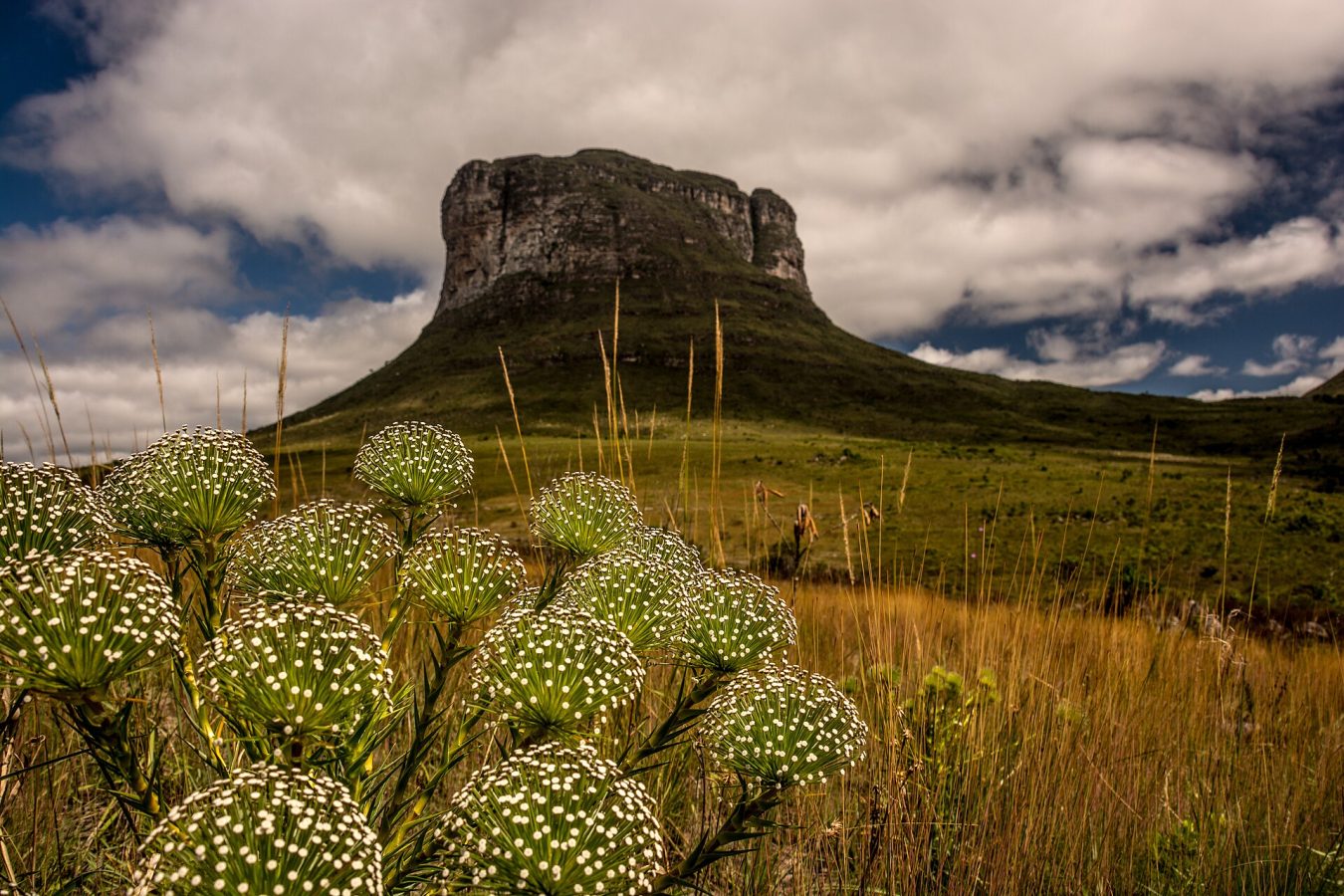
Photo: Jeilsonandrade, CC BY-SA 3.0
The Chapada Diamantina is a range of table mountains, canyons, waterfalls and caves in the dry interior of the Brazilian state of Bahia, about 430 kilometres west of Salvador, and the gateway is the small, pretty colonial town of Lençóis, six to seven hours from Salvador by overnight or daytime bus, or an hour by the flights that operate a few times a week to the little airport nearby. The park has no gates and no entrance fee; many of the most famous sights, the caves and blue pools above all, lie outside its boundary on private land and charge their own admission. The trails inside are largely unmarked, the terrain is confusing, and by local rule and common sense all but the simplest walks are done with a guide, which the agencies and guides' associations of Lençóis, the village of Vale do Capão and the towns of Mucugê, Guiné and Andaraí provide.
Day tours by car from Lençóis combine the classics: the Morro do Pai Inácio, a mesa climbed in twenty minutes for the emblematic view at sunset; the Poço do Diabo waterfall; the Lapa Doce and Pratinha caves; the Poço Azul and Poço Encantado, flooded caves into which, at certain hours and seasons, a shaft of sunlight strikes and turns the water an unearthly blue; and the Cachoeira da Fumaça, reached by a six-kilometre walk from Capão to the lip of the fall. The great experience, however, is the trek through the Vale do Pati, three to six days on foot with a guide, entering from Guiné, Capão or Andaraí and sleeping and eating in the simple houses of the few families who still farm the valley, regularly called the finest trek in Brazil.
Live dates and prices from GetYourGuide. Free cancellation on most tickets.
The national park was created in 1985 and covers about 1,520 square kilometres of the Sincorá range, the central part of the Chapada Diamantina, the northern extension of the Espinhaço mountains, between about 400 and 1,700 metres. It is a landscape of chapadas, flat-topped tablelands of ancient quartzite sandstone and conglomerate, more than a billion years old, tilted, fractured and cut by rivers the colour of strong tea, stained by tannin from the vegetation, into deep green valleys walled by cliffs, with isolated mesas, natural rock slides, swimming holes and hundreds of waterfalls. The Cachoeira da Fumaça, the smoke waterfall, drops some 340 metres free from the edge of the plateau, a thread of water that in the dry season is blown back upwards as mist before it reaches the ground; it was long believed to be the highest in Brazil. The Cachoeira do Buracão, in the south, is reached by swimming through a narrow canyon.
The name of the region records its history: diamonds were found in the gravels of its rivers in 1844, and within a few years tens of thousands of prospectors, the garimpeiros, had poured in, Lençóis, whose name means sheets, from the miners' tents, had a French vice-consulate to deal in the stones, and the region supplied a good part of the world's industrial diamonds until the South African fields and then exhaustion ended the boom; mechanised mining was finally banned in 1996, and the towns, Lençóis, Mucugê, with its extraordinary white Byzantine-style cemetery built against a cliff, Igatu, a half-ruined stone village, and Andaraí, are museums of that era. The vegetation changes every few kilometres with altitude, rock and moisture: thorny caatinga, cerrado savanna, patches of Atlantic forest in the valleys, and on the rocky summits the campos rupestres, rock fields rich in endemic plants, orchids, bromeliads, cacti and everlasting flowers. Jaguars, pumas, giant anteaters, capybaras and the hooded visorbearer, a hummingbird found only here, inhabit the park. The Marimbus wetland lies at its eastern foot.
The park can be visited all year. The rains fall mainly from November to March, when the waterfalls are at their most impressive, the rivers can become impassable for a day or two, and trails are muddy; the dry season, from May to September, has clear skies, cooler nights, easy walking and thinner falls, with the Fumaça sometimes reduced to nothing by August and September. April to June is probably the best compromise.
The beam of light enters the Poço Encantado from about April to September and the Poço Azul from about February to October, around midday. Brazilian holidays, especially June's São João festival and New Year, fill Lençóis. Allow five days at the least, more for the Pati. Lençóis is the main base, Vale do Capão the alternative, Mucugê and Igatu in the south, and Salvador six hours east.
Yes. GetYourGuide lists 3 tickets and tours for Chapada Diamantina National Park, with live dates and prices and free cancellation on most of them.
The park has no gates and no entrance fee; many of the most famous sights, the caves and blue pools above all, lie outside its boundary on private land and charge their own admission.
The park has no gates and no entrance fee; many of the most famous sights, the caves and blue pools above all, lie outside its boundary on private land and charge their own admission.
Allow five days at the least, more for the Pati.
Chapada Diamantina National Park covers 1 540 km².
Chapada Diamantina National Park was established in 1985.
Chapada Diamantina National Park is in Brazil. The map on this page shows the exact spot.
Brazil
Tijuca is the rainforest inside the city of Rio de Janeiro, and it is visited on half-day and full-day tours from the…
30 tickets & tours
Brazil
Lençóis Maranhenses is the field of white dunes and rainwater lagoons on the coast of Maranhão in north-eastern Brazil,…
12 tickets & tours
Brazil
Iguaçu National Park is the Brazilian side of the falls at Foz do Iguaçu, and its visit is one walk: the entrance…
9 tickets & tours
Brazil
The Serra dos Órgãos is the mountain range that closes the northern horizon of Guanabara Bay, whose granite needles are…
5 tickets & tours
Brazil
Itatiaia is the oldest national park in Brazil, in the Mantiqueira mountains on the border of the states of Rio de…
3 tickets & tours
Brazil
Jau is one of the largest protected areas of tropical rainforest in the world, in the Brazilian state of Amazonas, on…
2 tickets & tours