Pieniny National Park
Poland
Pieniny is a very small park in the far south of Poland, on the Slovak border two hours from Kraków and an hour east of…
5 tickets & tours
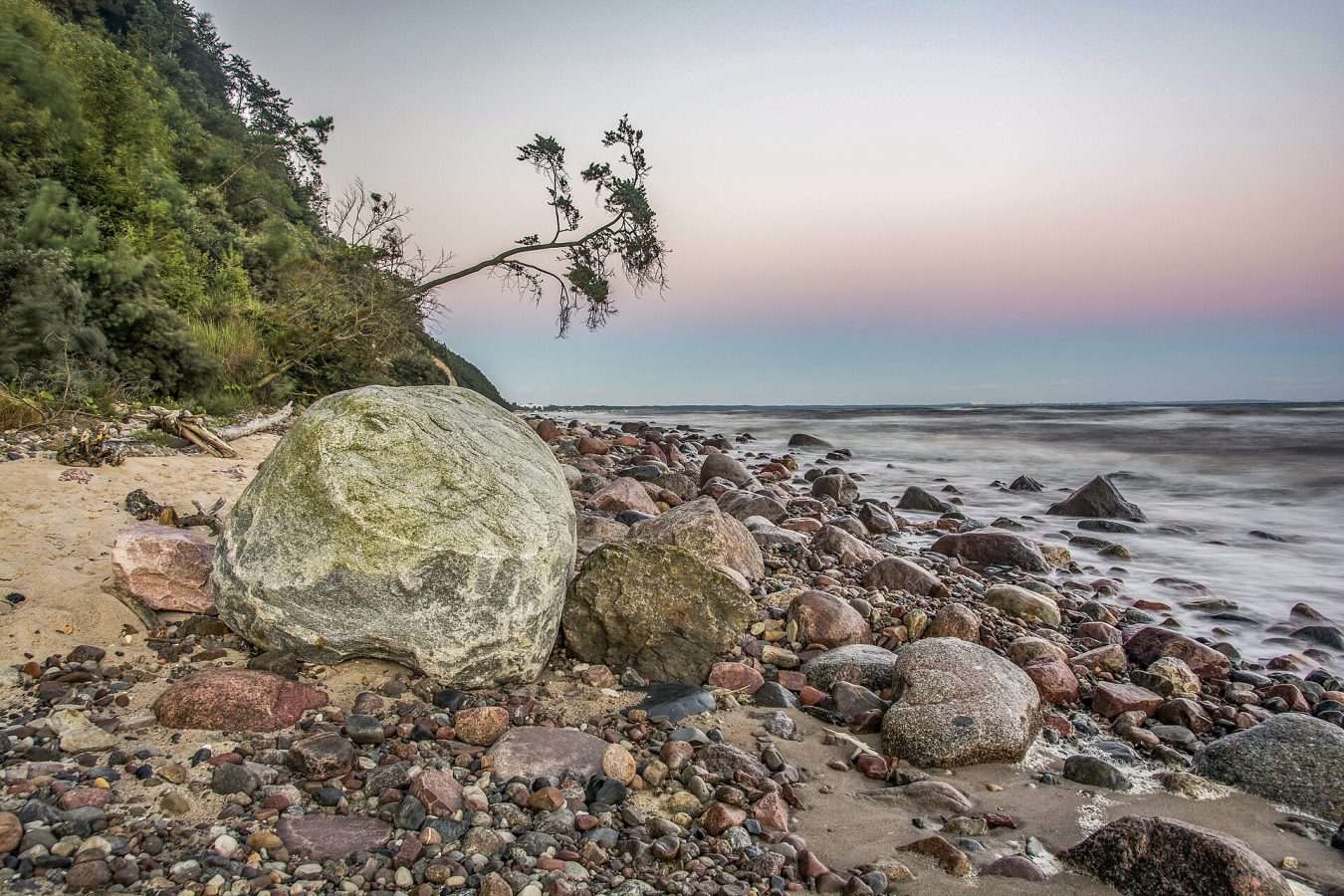
Photo: Shoovareck, CC BY 3.0
Wolin is the largest island of Poland, lying in the far north-western corner of the country between the Baltic and the Szczecin lagoon, close to the German border, and its national park covers the central and most attractive part of it, immediately adjoining the old seaside resort of Miedzyzdroje, where the park has its headquarters and museum. Miedzyzdroje is about a hundred kilometres, an hour and a quarter by expressway, from the port city of Szczecin, from which private guided day tours are run, and it has a railway station with direct trains from Szczecin and, in summer, from much of Poland; the ferry port of Swinoujscie, with its German neighbour resorts, is fifteen kilometres to the west. The park is compact and is explored on foot or by bicycle along marked trails, which are free, small charges being made at the museum and the bison enclosure. Three short excursions from the town make up the usual visit.
The first follows the red trail eastwards along the beach beneath the cliffs, or the parallel path through the beech woods on top of them, to the viewpoints of Kawcza Gora, which has a long wooden stairway down to the sand, and Gosan, the highest point of the Polish coast. The second leads through the forest, a walk of about a kilometre and a half from the edge of town, to the demonstration reserve of European bison, where a small herd lives in large wooded paddocks, with deer, wild boar and rescued eagles in others. The third, best made by car or bicycle, goes to the southern side of the island, to the Turquoise lake at Wapnica, the viewpoint of Zielonka above it, and the village of Lubin, from whose hill one looks over the archipelago of the Swina delta. East of the park, the trail continues to the lakes round Wiselka and the lonely Kikut lighthouse.
Live dates and prices from GetYourGuide. Free cancellation on most tickets.
The national park was established in 1960 and enlarged in 1996 to about 109 square kilometres, when it took in a strip of the Baltic a nautical mile wide and the islands of the Swina delta, becoming the first maritime national park in Poland. The heart of the island is a ridge of moraine, sand, gravel and boulder clay pushed up by the Scandinavian ice sheet some fifteen thousand years ago, rising to over a hundred metres inland, which the sea has cut back, on the northern shore, into a line of cliffs fifteen kilometres long and up to ninety-five metres high at Gosan, the finest on the southern Baltic. They are made of loose material and are alive: undermined by winter storms, they slump and retreat at an average of some eighty centimetres a year, carrying trees down with them, and the sea sorts the debris along the beach, where amber is sometimes found. On the lagoon side there are lower cliffs. The ridge is clothed in beech forest, which covers three quarters of the park, in several forms, including a Pomeranian type with a carpet of grasses and one on lime-rich slopes that shelters a dozen kinds of orchid, with old oaks, pines planted in the Prussian period, and honeysuckle climbing into the trees. South-west of the ridge lies the most unusual landscape of the park, the reverse delta of the Swina, the strait that connects the lagoon with the sea: storm surges drive Baltic water backwards through the strait, and the sand it carries has built, on the lagoon side, a maze of some forty-four flat, marshy islands divided by channels, grazed by cattle, flooded in winter, and crowded with birds.
More than 230 species have been recorded, and the white-tailed eagle, the largest bird of prey of northern Europe, which nests in the old forest and hunts over the lagoon, is the emblem of the park; the aquatic warbler, one of the rarest songbirds of Europe, breeds in the delta marshes, with dunlins, redshanks and large numbers of migrating geese, ducks and cranes. Grey seals and porpoises occasionally appear off the beach. The European bison, exterminated in the wild in 1919 and rebuilt from animals in zoos, has been kept at the show reserve since 1976, as part of the national breeding programme; there is no evidence that it lived on the island in historical times. The Turquoise lake is a flooded chalk pit, worked until 1945, whose blue-green colour comes from the scattering of light by dissolved calcium compounds. In the woods near Zalesie are the concrete emplacements of a secret German weapon of 1944, a multi-charge long-range cannon, tested here before being used against Luxembourg. The town of Wolin, at the island's south-eastern tip, was in the tenth century one of the largest ports of the Baltic, a Slavic and Viking trading city that chroniclers called the greatest in Europe and legend remembers as Vineta and Jomsborg, and a festival of Slavs and Vikings is held there each August.
The park is open all year, from dawn to dusk; the bison reserve and the museum keep shorter hours and are generally closed on Mondays. July and August are the Polish seaside season, with the beach, the pier and the promenade of Miedzyzdroje packed, water at 17 to 20 degrees, and the trails near the town busy, though one has only to walk half an hour to be alone. May and June, with the beeches in fresh leaf, woodland flowers and nesting birds, and September, mild and quiet, are the best months for walking and cycling;
autumn colours are fine in October, and spring and autumn bring the migrants to the delta. Winter is grey and windy, with storms that make the cliffs spectacular and sometimes close the beach path, which should never be walked close under the cliff face, because of falls. Bring binoculars and a windproof. Allow a day or two. Swinoujscie, with the tallest lighthouse on the Baltic and its forts, is twenty minutes away, the town of Wolin half an hour, and Szczecin an hour and a quarter.
Yes. GetYourGuide lists one ticket or tour for Wolin National Park, with live dates and prices and free cancellation on most of them.
The park is open all year, from dawn to dusk; the bison reserve and the museum keep shorter hours and are generally closed on Mondays.
May and June, with the beeches in fresh leaf, woodland flowers and nesting birds, and September, mild and quiet, are the best months for walking and cycling; autumn colours are fine in October, and spring and autumn bring the migrants to the delta.
Wolin National Park covers 109 km².
Wolin National Park was established in 1960.
Wolin National Park is in Poland. The map on this page shows the exact spot.
Poland
Pieniny is a very small park in the far south of Poland, on the Slovak border two hours from Kraków and an hour east of…
5 tickets & tours
Poland
Białowieża is the last large remnant of the primeval lowland forest that once covered the European plain, on…
3 tickets & tours
Poland
The Slowinski National Park lies on the Baltic coast of northern Poland, in Pomerania, midway between the ports of…
2 tickets & tours
Poland
The Biebrza marshes lie in the north-east of Poland, in the region of Podlasie, along a lazy, unregulated river that…
No online ticket
Poland
The Bieszczady are the wildest and emptiest mountains in Poland, in the extreme south-eastern corner of the country,…
No online ticket
Poland
The Karkonosze, called the Giant Mountains in English, the Krkonose in Czech and the Riesengebirge in German, are the…
No online ticket