Pieniny National Park
36 km away
Pieniny is a very small park in the far south of Poland, on the Slovak border two hours from Kraków and an hour east of…
5 tickets & tours
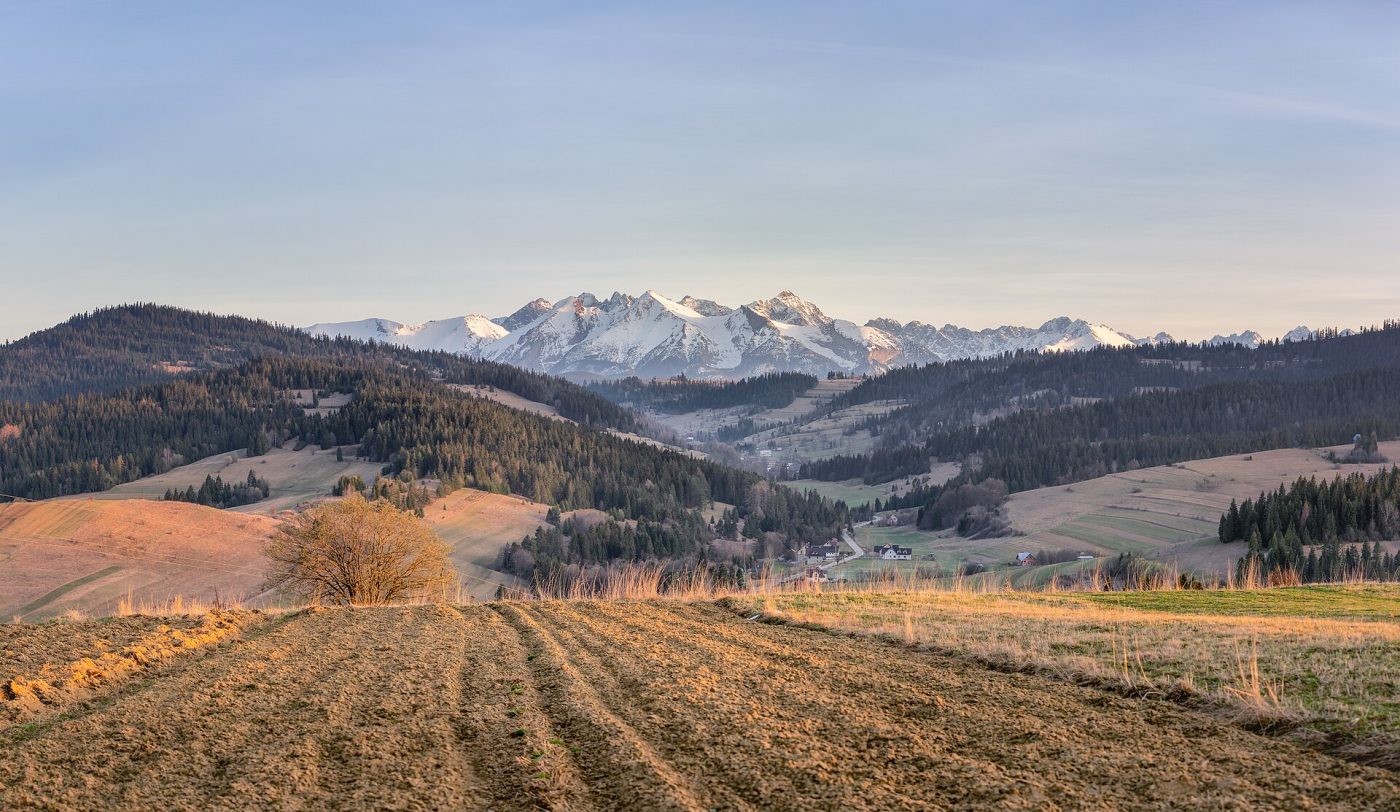
Photo: Qvidemus, CC BY 3.0
The Polish Tatra National Park occupies the northern side of the Tatras above the resort town of Zakopane, two hours south of Kraków by road, and it is both the most visited national park in Poland, with well over four million entries a year, and one of the most popular day trips sold from Kraków. Those tours come in three kinds. The commonest goes to Morskie Oko, the lake that every Pole feels obliged to see once: from the car park at Palenica Białczańska it is nine kilometres and about two hours each way up an asphalt road closed to cars, with horse-drawn wagons covering most of the distance for a fee, and the tour provides the early transfer, the park ticket and, often, an afternoon in a thermal-bath complex at Chochołów or Bukowina to soothe the legs.
The second kind rides the cable car from Kuźnice, on the edge of Zakopane, to Kasprowy Wierch at 1,987 metres, and walks down or along the border ridge; timed cable-car tickets are sold online and sell out in summer and in the ski season. The third is a proper guided mountain day, or two days with a night in a hut, with a licensed Tatra guide, to the valleys of the Five Lakes or Gąsienicowa or a summit. Independent visitors find it easy: buses run constantly from Kraków to Zakopane and minibuses from there to every trailhead; the entrance fee is small, paid at booths or online; the car park at Palenica must be booked online in advance; and the trails are impeccably marked. Dogs are not admitted, and drones are banned.
The park was created in 1954, after proposals going back to the 1880s, and covers about 212 square kilometres, the whole of the Polish Tatras, which is only about a fifth of the range, the rest lying in Slovakia, with whose park it forms a UNESCO biosphere reserve. It has two distinct halves. The High Tatras in the east are granite, glaciated and severe: Rysy, on the border, is Poland's highest point at 2,499 metres, a long, steep day's walk with chains, from whose summit both countries lie spread out; below it Morskie Oko, the eye of the sea, fills a cirque at 1,395 metres under a wall of peaks a thousand metres high, with a wooden hut of 1908 on its moraine and the darker, higher lake of Czarny Staw an hour's climb above.
The Valley of Five Polish Lakes, reached past the Siklawa waterfall, the highest in Poland at about seventy metres, and the Gąsienicowa valley under the pyramids of Kościelec and Świnica are the other great cirques, and along the crest between them runs the Orla Perć, the eagle's path, a route of chains, ladders and exposed ledges laid out in the 1900s, the hardest marked trail in the country, on which more than a hundred and forty people have died. The Western Tatras are limestone and dolomite, gentler and greener, with caves, six of them open to walkers with torches, and long valleys, Kościeliska and Chochołowska, the latter carpeted with purple crocuses in April. Giewont, the summit above Zakopane with a fifteen-metre iron cross raised in 1901, is seen as a sleeping knight, and is deadly in thunderstorms. Chamois, marmots, brown bears, lynx, red deer and golden eagles are the wildlife. Zakopane itself, with its steep-roofed wooden villas in the style that Stanisław Witkiewicz devised in the 1890s, its highland music, smoked sheep's cheese and the crowded Krupówki street, is part of the experience.
The park is open all year. June to September is the hiking season, with July and August extremely crowded, queues forming at the chains on Giewont and Rysy, and thunderstorms building most afternoons, so that early starts are essential; September and early October, stable, clear and coloured, are the best weeks; the crocuses flower in Chochołowska in the first half of April;
winter, from December to March, brings skiing on Kasprowy Wierch, serious avalanche danger on the high routes, and Morskie Oko frozen and white, still walkable by the road. Snow lingers on the high passes into June, when crampons and an ice axe may be needed. Allow a day from Kraków, three days in Zakopane. The Slovak side is an hour and a half away by road, the Dunajec gorge raft trips in the Pieniny an hour east, and Kraków two hours north.
36 km away
Pieniny is a very small park in the far south of Poland, on the Slovak border two hours from Kraków and an hour east of…
5 tickets & tours
205 km away
The Hortobagy is the great treeless plain of eastern Hungary, the puszta of song and legend, and its national park lies…
1 ticket or tour
No online tour for Tatra National Park (Poland) is listed on GetYourGuide; entry, where it is charged, is paid at the gate or through the park authority. Nearby parks with bookable tours are listed on this page.
Independent visitors find it easy: buses run constantly from Kraków to Zakopane and minibuses from there to every trailhead; the entrance fee is small, paid at booths or online; the car park at Palenica must be booked online in advance; and the trails are impeccably marked.
The park is open all year.
Allow a day from Kraków, three days in Zakopane.
Tatra National Park (Poland) covers 212 km².
Tatra National Park (Poland) was established in 1954.
Tatra National Park (Poland) is in Poland. The map on this page shows the exact spot.
Poland
Pieniny is a very small park in the far south of Poland, on the Slovak border two hours from Kraków and an hour east of…
5 tickets & tours
Poland
Białowieża is the last large remnant of the primeval lowland forest that once covered the European plain, on…
3 tickets & tours
Poland
The Slowinski National Park lies on the Baltic coast of northern Poland, in Pomerania, midway between the ports of…
2 tickets & tours
Poland
Wolin is the largest island of Poland, lying in the far north-western corner of the country between the Baltic and the…
1 ticket or tour
Poland
The Biebrza marshes lie in the north-east of Poland, in the region of Podlasie, along a lazy, unregulated river that…
No online ticket
Poland
The Bieszczady are the wildest and emptiest mountains in Poland, in the extreme south-eastern corner of the country,…
No online ticket