Camargue Regional Natural Park
117 km away
The Camargue is the Rhône delta south of Arles, an hour from Avignon and Montpellier, and its regional park is visited…
14 tickets & tours

Photo: Myrabella, CC BY-SA 3.0
The Cevennes are the rugged south-eastern edge of the Massif Central, in the south of France, a country of granite summits, schist ridges clothed in chestnut, and bare limestone plateaus cut by gorges, and their national park is unlike any other in the country in being lived in and farmed throughout, including its core. It is reached from Nimes or Montpellier in an hour and a half to two hours, by way of Ales or Le Vigan, and from the north by Mende; public transport is thin, and a car, or one's own legs, is the means of getting about. The little town of Florac, in the valley of the Tarnon at the foot of the limestone cliffs, holds the park's headquarters and main visitor centre in its castle, and makes the best base, with others at Le Pont-de-Montvert, Meyrueis, Saint-Jean-du-Gard and Genolhac.
The park is free and has no gates, and it offers an enormous network of marked paths, several hundred short circular walks described in leaflets sold at the information centres, and long-distance routes of which one is famous: the Stevenson trail, the GR70, which follows for some 270 kilometres the route taken in 1878 by the young Robert Louis Stevenson, and is walked in about twelve days, or in part, by thousands each year, many of them leading a hired donkey, which carries the bags and sets the pace. By car, the essential circuit includes the summit of Mont Aigoual, to which a road leads, with its weather station and exhibition; the Corniche des Cevennes, a ridge road between Florac and Saint-Jean-du-Gard; the crossing of Mont Lozere by the Col de Finiels, from which the rounded summit is an easy walk; the empty plateau of the Causse Mejean, with its wild horses; and the gorges of the Tarn and the Jonte, at the park's western edge, where vultures are watched from a viewing centre.
The national park was created in 1970, with a core of about 935 square kilometres and a wider zone several times that, and it is the only French national park in middle mountains and the only one on the mainland whose core has a permanent population, some six or seven hundred people, whose farming, grazing and chestnut growing the park exists to sustain. It has been a UNESCO biosphere reserve since 1985, and in 2011 the Causses and the Cevennes were inscribed as a World Heritage Site, as a cultural landscape shaped by three thousand years of Mediterranean agro-pastoralism, the last region of France where sheep are still driven on foot each June up the ancient drove roads, the drailles, to the summer pastures. Three landscapes meet. Mont Lozere, 1,699 metres, is a long whaleback of granite, strewn with rounded boulders, with moorland, peat bogs and hamlets of massive stone houses; Mont Aigoual, 1,567 metres, the water mountain, stands on the divide between the Atlantic and the Mediterranean and receives more than two metres of rain a year, which in autumn may fall in a few catastrophic storms, and its observatory, built like a fortress in 1894, was the last staffed mountain weather station in France; and the Causse Mejean is a high, waterless, almost treeless tableland of limestone, a steppe of feather grass riddled with caves and swallow holes, such as the Aven Armand, with its forest of stalagmites.
Between them the Cevennes proper are a maze of steep, narrow valleys, whose slopes were terraced over centuries with dry-stone walls and planted with the sweet chestnut, the bread tree, which fed people and pigs, the nuts being dried in small stone smokehouses, and with mulberries for the silk industry, which flourished until disease struck the silkworms in the 1850s, when Pasteur came to Ales to study it. These valleys were the stronghold of French Protestantism. After Louis XIV revoked the edict of Nantes in 1685, the Huguenots of the Cevennes worshipped in secret in the wilderness, and in 1702 the murder of a persecuting priest at Le Pont-de-Montvert began the war of the Camisards, in which a few thousand peasants led by young prophets held off the royal armies for two years; a museum at Mialet tells the story, and an assembly is held there every September. On the Cham des Bondons, below Mont Lozere, stand more than a hundred and fifty granite menhirs, the largest group in France after Carnac. Much of the forest, destroyed by overgrazing, was replanted at the end of the nineteenth century, and the park has reintroduced red and roe deer, beavers, capercaillie, and, in the gorges of the Jonte, the griffon vulture, from 1981, followed by the black, the bearded and the Egyptian. A herd of Przewalski's horses lives half wild on the Causse Mejean, from which animals have been sent to Mongolia. The park has some 2,300 species of flowering plants, and its skies are an international dark sky reserve, the largest in Europe.
The park is open all year. May and June are the best months, with the causses covered in orchids and feather grass, broom in flower on Mont Lozere, the transhumance in mid-June, and long, mild days; September and October bring the chestnut harvest, mushrooms and superb autumn colour in the valleys, but this is also the season of the violent Mediterranean storms known as Cevennes episodes, which can drop hundreds of millimetres of rain in a day and cause flash floods, so that weather warnings must be heeded.
July and August are hot in the valleys, 30 degrees and more, fresh on the summits, and busy in the Tarn gorges. Winter is cold, with snow on Lozere and Aigoual, where there is a little cross-country skiing, and many lodgings close. Walkers on the Stevenson trail should book their nights, and their donkey, well ahead for May, June and September. Allow three days to a week. The Tarn gorges, the Millau viaduct, the bamboo garden of Anduze and the Roman monuments of Nimes are all within an hour or two.
117 km away
The Camargue is the Rhône delta south of Arles, an hour from Avignon and Montpellier, and its regional park is visited…
14 tickets & tours
122 km away
The Alpilles are a small range of jagged white limestone hills in the heart of Provence, rising abruptly from the plain…
2 tickets & tours
164 km away
The Luberon is a range of wooded limestone hills in the heart of Provence, in the south of France, running east and…
1 ticket or tour
No online tour for Cevennes National Park is listed on GetYourGuide; entry, where it is charged, is paid at the gate or through the park authority. Nearby parks with bookable tours are listed on this page.
The park is open all year.
Allow three days to a week.
Cevennes National Park covers 935 km².
Cevennes National Park was established in 1970.
Cevennes National Park is in France. The map on this page shows the exact spot.
France
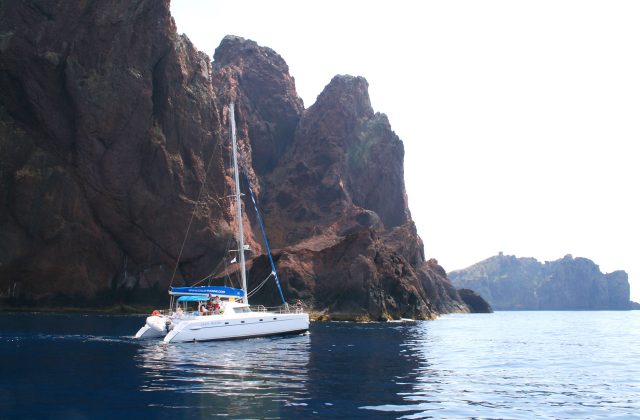
Scandola is the red-rock peninsula on the west coast of Corsica, and the reserve is closed to walkers and to anchoring,…
17 tickets & tours
France
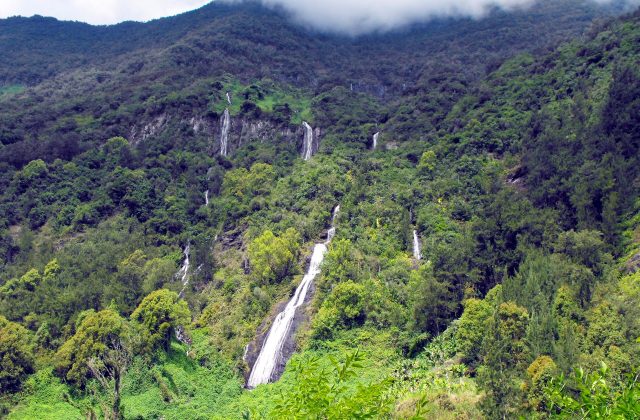
The national park covers the mountainous interior of Réunion, the French island in the Indian Ocean east of Madagascar,…
15 tickets & tours
France
The Camargue is the Rhône delta south of Arles, an hour from Avignon and Montpellier, and its regional park is visited…
14 tickets & tours
France
The Verdon gorge is the deepest and most spectacular river canyon in France, in the hills of Haute-Provence between the…
4 tickets & tours
France
Port-Cros is one of the three Îles d'Hyères, the Golden Isles, off the coast of the Var between Toulon and…
3 tickets & tours
France
The Alpilles are a small range of jagged white limestone hills in the heart of Provence, rising abruptly from the plain…
2 tickets & tours